
 English
 Russian
 French
 Spanish
 Portuguese
 Korean
 Japanese
 Thai
ThaiVacuum Emulsifying Mixer Technological Innovation: Recent Progress and Future Trends
Vacuum emulsifying mixer is a specialized industrial core equipment widely applied in cosmetics, pharmaceuticals, food processing and fine chemical industries. Its core working principle is to complete the mixing, homogenization and deaeration of immiscible phases such as oil and water under a closed vacuum environment, so as to obtain a stable, fine and bubble-free emulsion product. In recent years, with the continuous upgrading of downstream industry requirements for product consistency, production efficiency and production compliance, the technology of vacuum emulsifying mixer has been continuously iterated, and a series of remarkable innovative achievements have been made in automation control, material optimization, miniaturization design and compliance adaptation. This paper sorts out the technical characteristics of vacuum emulsifying mixer, summarizes the recent key development directions, analyzes the current market demand characteristics, and looks forward to the future development trend of the industry, providing reference for relevant practitioners in equipment research and development, production application and process optimization.
1. Introduction
Emulsification technology is one of the core process links in the production of high-end cream, lotion, ointment and other products. Traditional open mixing equipment is easy to introduce air bubbles in the production process, which leads to product oxidation, uneven texture, shortened shelf life, and it is difficult to meet the increasingly strict quality control requirements. As an integrated equipment integrating high-shear mixing, homogenization and vacuum deaeration, vacuum emulsifying mixer effectively solves many pain points in traditional mixing processes, and has become an essential core production equipment in many high-precision manufacturing fields.
According to the global market research data, the main end-user industries of vacuum emulsifying mixer are concentrated in the pharmaceutical and cosmetics fields, and the two together account for about 70% of the market share. At the same time, the demand for small-scale test equipment in the fields of laboratory research and development and small-batch customized production is also growing rapidly. In this context, the technological innovation of vacuum emulsifying mixer is no longer limited to the optimization of basic mixing performance, but is developing in a more systematic and intelligent direction, and the technical boundaries are constantly expanding.
2. Core Working Principle and Basic Technical Characteristics of Vacuum Emulsifying Mixer
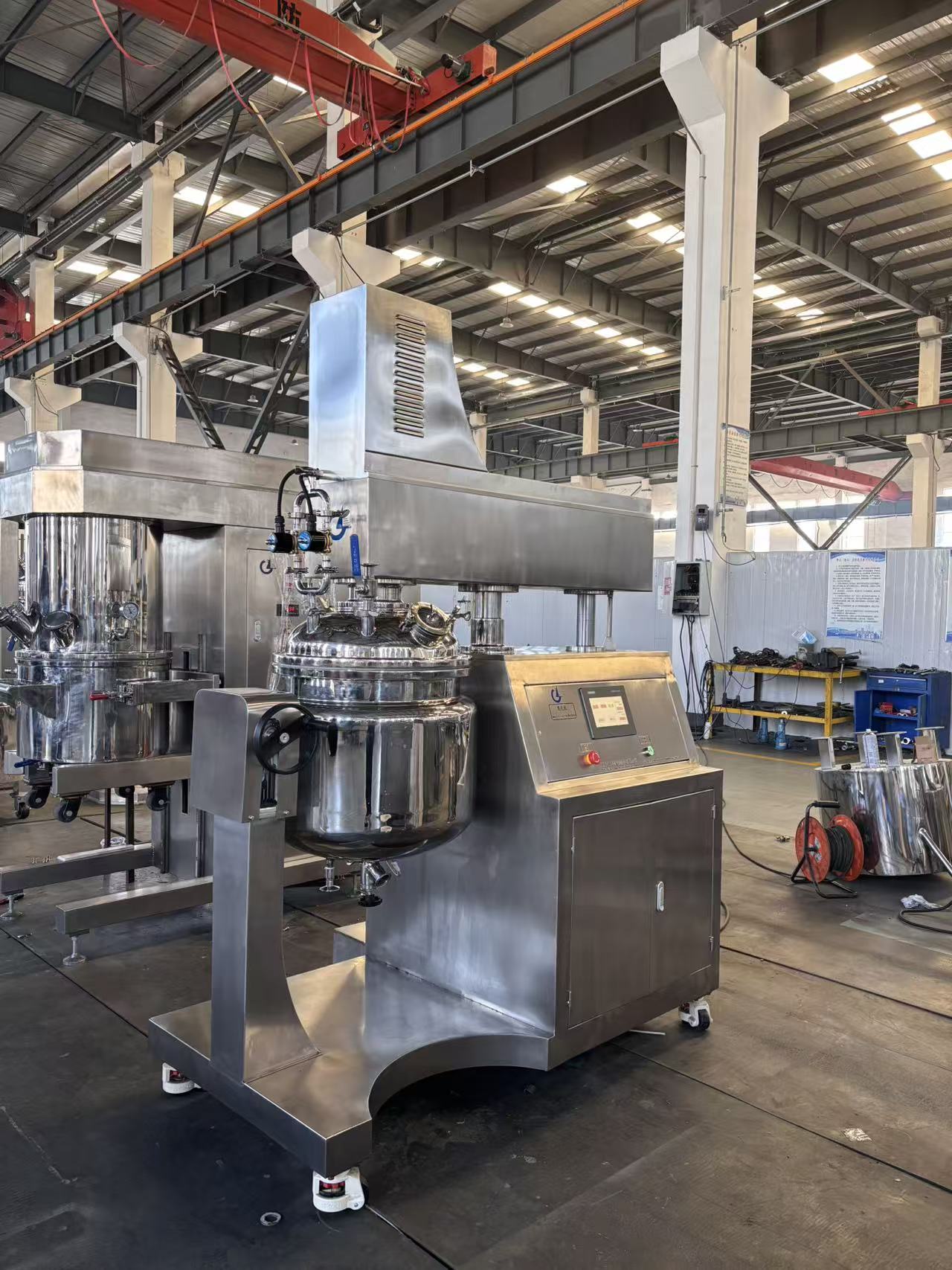
The core working logic of vacuum emulsifying mixer is to complete the efficient dispersion of materials in a narrow gap between the stator and rotor by means of the strong mechanical motion energy generated by the built-in high-shear homogenizer under the vacuum environment. Through the comprehensive effects of hydraulic shearing, centrifugal extrusion, impact crushing and high-frequency turbulence, the materials can be subjected to more than 100,000 ultra-fine treatments per minute, so that one or more phases can be rapidly and uniformly distributed into another continuous phase. After high-frequency reciprocating circulation, a stable, bubble-free and fine finished emulsion can be finally obtained.
At the technical level, the mature vacuum emulsifying mixer on the market has a number of core basic characteristics:
It is equipped with an independent frequency conversion speed regulation system, which can flexibly adjust the main mixing speed and homogenizing speed according to different process requirements, so as to adapt to the emulsification processing of materials with different viscosities.
The built-in vacuum system can realize automatic defoaming, and the vacuum feeding mode can effectively avoid dust flying and material pollution, especially suitable for the addition process of powdery raw materials.
The contact parts of materials are mostly made of high-grade stainless steel, and the tank body and pipelines are treated by mirror polishing, which can well meet the hygiene standards of the production process.
It supports a variety of heating modes such as electric heating or steam heating, which can be selected according to the actual production conditions of the enterprise, with strong process adaptability.
3. Recent Key Technological Innovations and Development Progress
In recent years, the technological innovation of vacuum emulsifying mixer mainly focuses on four directions: automation and digital control, new material application, miniaturization and modular design, and compliance-oriented structural optimization, and the comprehensive performance of equipment has been significantly improved.
3.1 Automation and Digital Intelligence Control
The new generation of vacuum emulsifying mixer is increasingly integrated with automatic control and digital monitoring systems. Through the built-in high-precision sensors, the equipment can realize real-time collection and accurate control of core parameters such as material temperature, stirring speed, homogenizing time, vacuum degree and system power. The whole production process does not need excessive manual intervention, which not only reduces the error rate caused by human operation, but also ensures that the quality of each batch of products has high repeatability. At the same time, the digital system can also automatically generate the full-process production data log, which lays a foundation for the traceability of the production process.
3.2 Upgrading of Material and Process Performance
In terms of material technology, the vacuum emulsifying mixer has made obvious progress in corrosion resistance, durability and easy cleaning performance. The key parts in contact with materials are made of high-grade stainless steel, which can adapt to the long-term processing of various corrosive raw materials, and the service life of the equipment is significantly extended. The optimized tank body and pipeline structure almost eliminate the mixing dead angle, and the built-in rotary sanitary cleaning ball can realize no dead angle cleaning in the kettle, which greatly reduces the residual rate of materials between batches and improves the convenience of equipment maintenance.
3.3 Miniaturization and Scenario-based Design
While the large-scale production equipment is continuously optimized, the small and miniaturized vacuum emulsifying mixer for laboratory research and development and small-batch production has become a hot direction of technological development in recent years. This kind of small equipment retains the complete functions of vacuum mixing, heating and high-shear homogenization of large equipment, but it is much smaller in volume, low in operation noise, and the operation interface is more friendly. It can well meet the needs of formula test in R&D laboratories and small-batch customized production of niche products, filling the long-term gap in the market demand for small-scale emulsification equipment.
3.4 Compliance-adaptive Structural Optimization
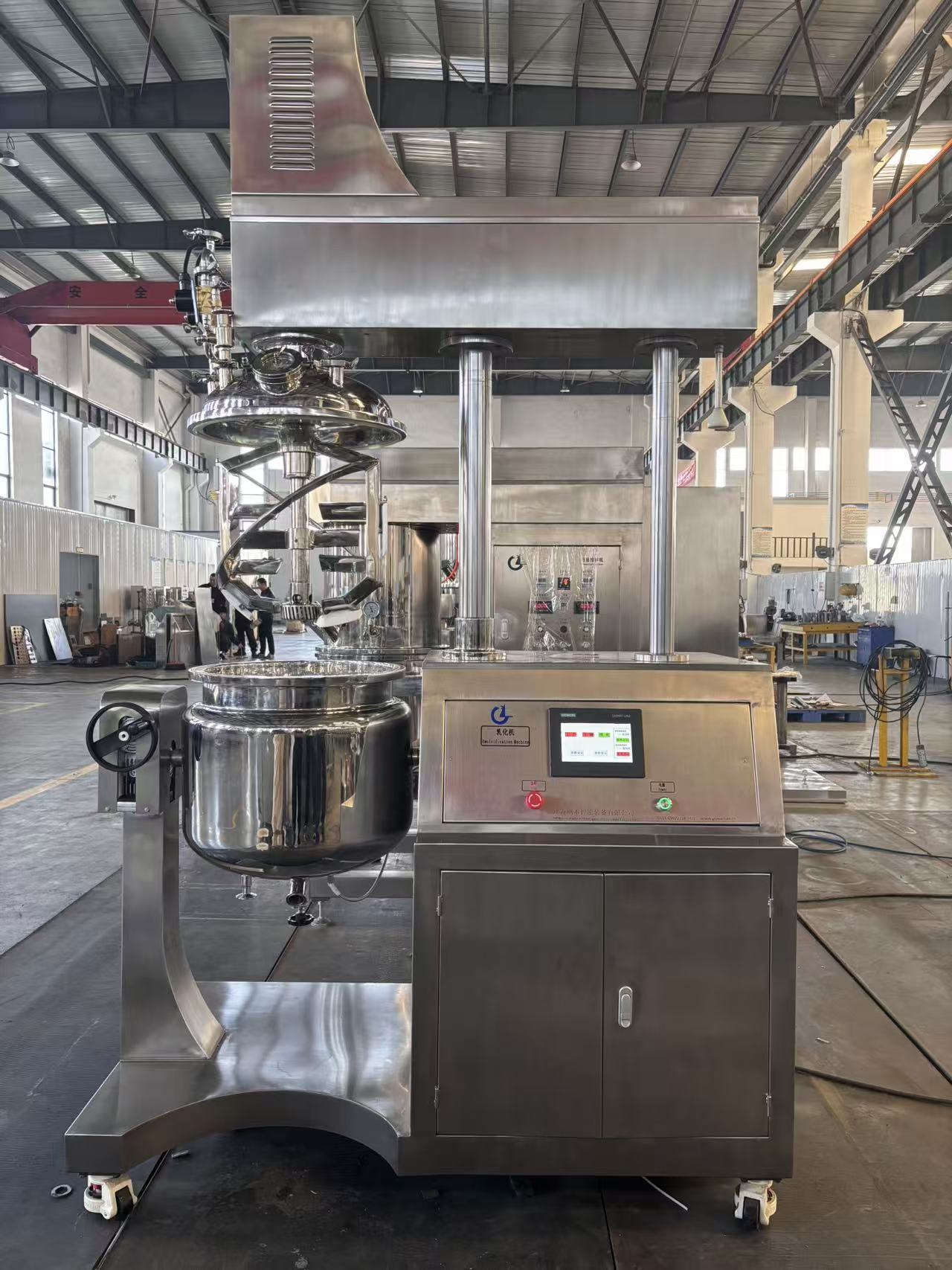
Affected by the increasingly strict production management specifications in the pharmaceutical and food industries, the structural design of vacuum emulsifying mixer is more oriented to meet GMP and related international safety standards. The new generation of equipment adopts the full-direction wall-scraping stirring and homogenizing structure, and the materials are turned over without dead angle in the kettle. It is also equipped with automatic feeding and discharging system, hydraulic lifting and dumping structure, which not only improves the production efficiency, but also makes the whole production process more in line with the requirements of standardized and hygienic production.
4. Current Market Demand and End-user Characteristics
From the perspective of market demand, different types of vacuum emulsifying mixer products show obvious differentiated characteristics in corresponding to user groups:
Large-scale vacuum emulsifying mixer is the dominant segment in the current market. Its unique vacuum deaeration function can effectively avoid material oxidation and significantly improve the stability of finished products. It is highly recognized by large cosmetics and food production enterprises, and users pay the most attention to the smooth product texture, easy cleaning of equipment and stable air-free processing effect.
The high-shear homogenization type emulsifying equipment is mainly targeted at pharmaceutical and dairy production scenarios. Users have high requirements for the motor power, stepless adjustable speed and blade durability of the equipment, hoping to obtain extremely fine droplet size through high-performance homogenization, so as to produce high-quality products that meet the high standards of the industry.
Small laboratory portable vacuum emulsifying mixer is in a stage of rapid growth in market demand. A large number of R&D institutions and small entrepreneurial enterprises have put forward clear demands for small-scale test equipment, and the use experience at the level of operation noise, interface friendliness and space occupation has become the core indicator for such users to select equipment.
In addition, although the traditional manual mixing process and low-end emulsifying equipment have certain cost advantages, due to the limitations of low production efficiency, unstable product quality and difficult to scale up, they are increasingly unable to adapt to the current high-standard production demand, and the market space is gradually being replaced by high-performance vacuum emulsifying mixer.
5. Future Development Trend Outlook
Looking forward to the future, the technological innovation of vacuum emulsifying mixer will continue to deepen in the existing direction, and at the same time derive more new development dimensions:
First, the degree of intelligent interconnection of equipment will be further improved. The future vacuum emulsifying mixer will be more deeply integrated with the factory MES production management system, realizing remote monitoring, automatic early warning of faults and intelligent optimization of process formulas, and the equipment will evolve from a single processing unit to a core node of intelligent manufacturing.
Second, the green and low-carbon design will become an important direction of equipment iteration. Through the optimization of structural fluid mechanics and the upgrading of power system, the energy consumption per unit of material processing will be significantly reduced, and the comprehensive production cost of enterprises will be reduced. At the same time, the equipment will further improve the recycling rate of cleaning fluid, and reduce the discharge of production waste water.
Third, the specialized customization ability for subdivided scenarios will be continuously enhanced. For the processing demands of special high-viscosity materials, nanomaterial dispersion and other special scenarios, more targeted customized vacuum emulsifying mixer products will appear in the market, and the technical boundary of equipment application will be further expanded.
Fourth, the whole-process compliance traceability system will become the standard configuration of high-end equipment. The equipment will automatically complete the full collection and archiving of all data in the production process, which can directly meet the audit requirements of regulatory authorities, and provide more solid technical support for enterprises to carry out high-standard production.
As the core equipment in the field of emulsification production, the technological innovation of vacuum emulsifying mixer has been promoting the overall upgrading of production technology in cosmetics, pharmaceutical, food and other industries. In recent years, the industry has made a series of remarkable achievements in digital control, material upgrading, miniaturization design and compliance optimization, which not only meets the differentiated needs of different user groups, but also lays a solid foundation for the subsequent technological iteration. In the future, with the continuous integration of intelligent manufacturing, green production and other concepts, the vacuum emulsifying mixer will develop in a more efficient, precise, safe and environmentally friendly direction, and continue to release greater value in more industrial scenarios.
News
- Latest News
- Solutions
- FAQ
Recommend Products
-
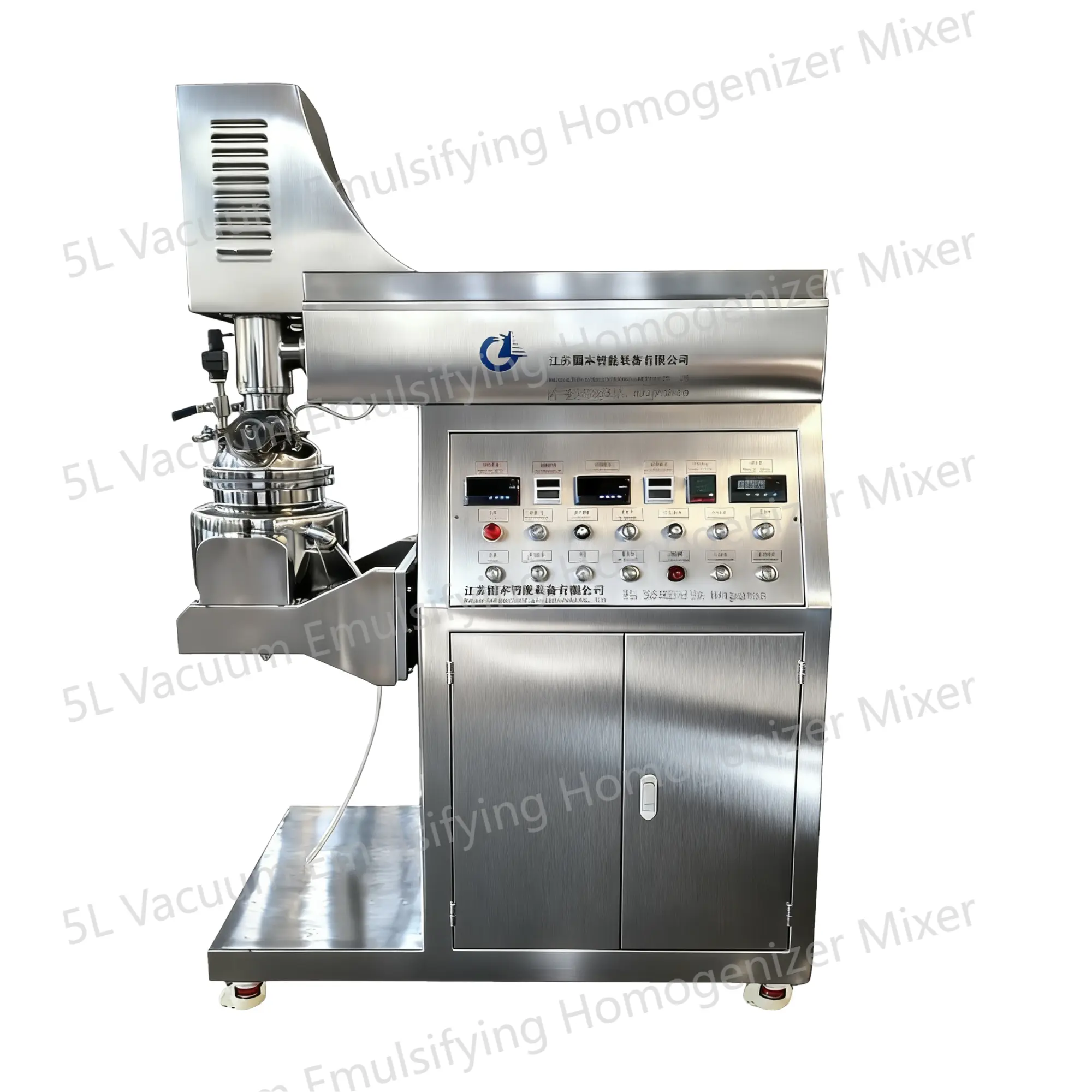 5L Vacuum Emulsifying Homogenizer Mixer
The 5L vacuum emulsifying mixer is a device designed for emulsifying and mixing various substances in a vacuum environment. This equipment is equipped with a mixing tank with a capacity of 5 liters and is widely applied in industries such as food, pharmaceuticals, cosmetics, and pesticides.
-
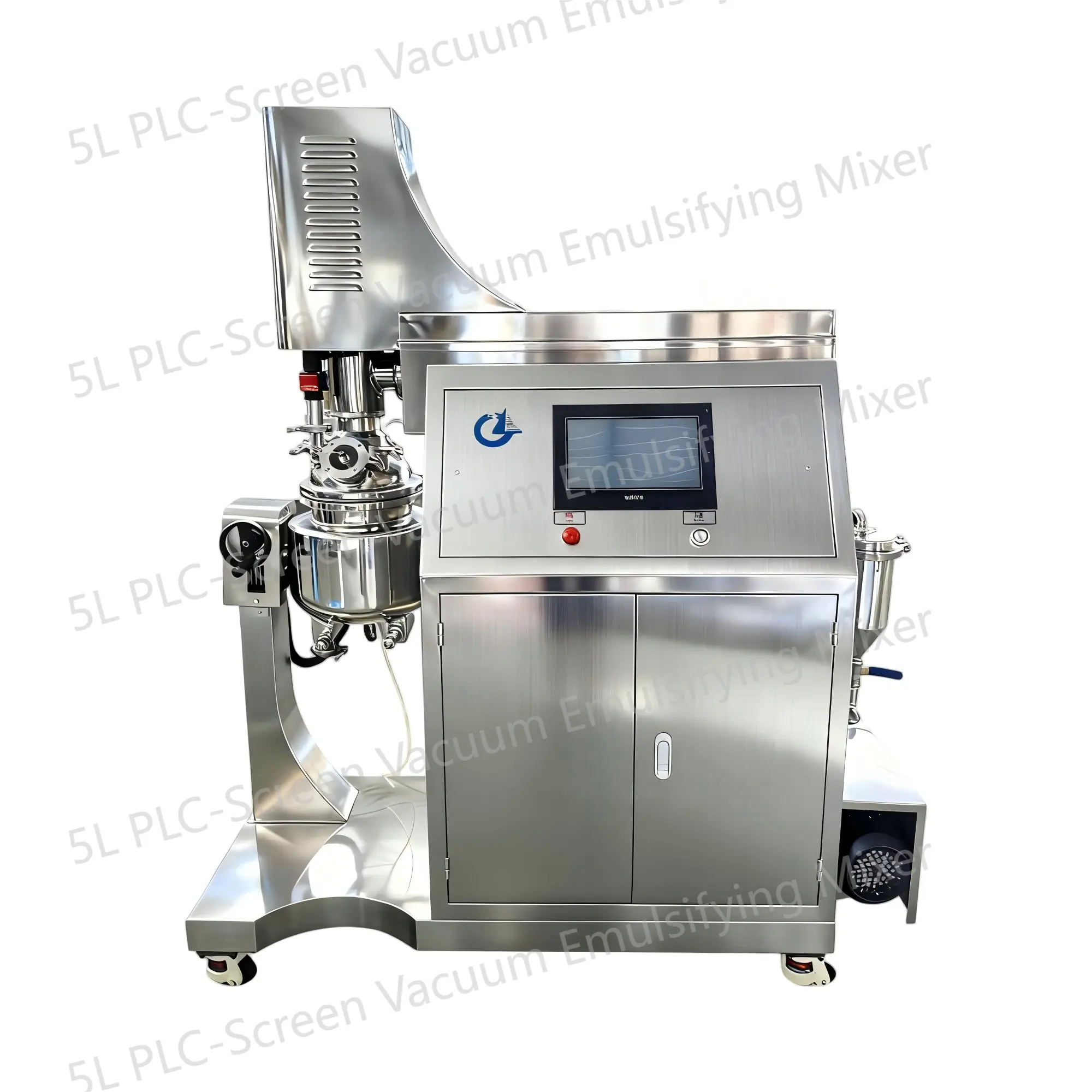 5L PLC-Screen Vacuum Emulsifying Mixer
The 5L PLC-Screen Vacuum Emulsifying Mixer is a device designed for emulsifying and mixing various substances in a vacuum environment. This equipment is equipped with a mixing tank with a capacity of 5 liters and is widely applied in industries such as food, pharmaceuticals, cosmetics, and pesticides.
-
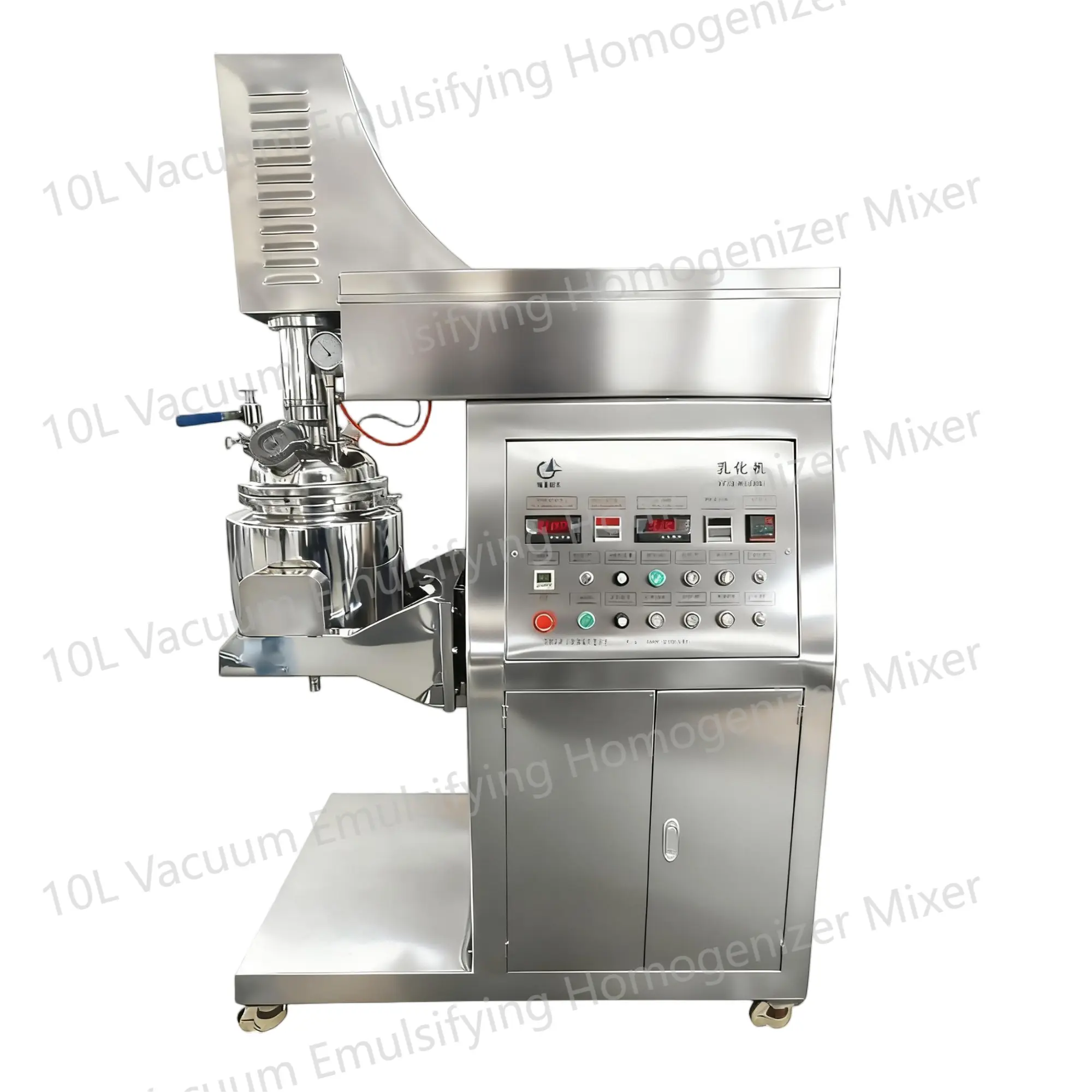 10L Vacuum Emulsifying Homogenizer Mixer
The 10L Vacuum Emulsifying Mixer is a device used for emulsifying and mixing various substances in a vacuum environment. It is commonly used in industries such as food, cosmetics, and pharmaceuticals.