

 English
 Russian
 French
 Spanish
 Portuguese
 Korean
 Japanese
 Thai
ThaiFrom the laboratory to the production line: How does the vacuum emulsifier achieve precise emulsification of high-viscosity materials?
In industries such as cosmetics, food, and pharmaceuticals, precise emulsification of high-viscosity materials is a crucial step in enhancing product quality. The vacuum emulsification machine, with its unique working principle and advanced technical design, has become the core equipment for achieving this goal. This article will analyze, from a laboratory to production line perspective, how the vacuum emulsification machine, through multi-level shearing, vacuum degassing, intelligent temperature control and other technologies, completes the precise emulsification of high-viscosity materials.
1. Laboratory Phase: Small-scale R&D to Verify Process Feasibility
The laboratory vacuum emulsifier is the starting point of process development. Its core function is to verify the feasibility of the formula and optimize the process parameters. For high-viscosity materials (such as creams and ointments), the laboratory equipment needs to solve two major problems:
Particle size control of the dispersed phase: High viscosity materials are prone to causing local overload of the emulsifier head, and traditional equipment is difficult to reduce the particle size to the micrometer level. The laboratory vacuum emulsifier machine optimizes the fixed and rotating rotor structure and adopts a claw-type dual-mating design, allowing the material to be simultaneously sucked in from the top and bottom, doubling the shear probability and avoiding dead corners. For example, a certain laboratory equipment uses a three-level shearing strategy: the first level crushes large particles, the second level reduces the particle size to the target size, and the third level achieves uniform distribution. The final particle size range can be controlled within 10-50 μm.
Vacuum degassing and oxidation inhibition: When high viscosity materials are stirred, air is easily entrained, resulting in product bubble formation, bacterial contamination, and oxidation deterioration. Laboratory equipment uses a vacuum system to reduce the pressure inside the tank to -0.095 MPa, quickly removing bubbles and simultaneously inhibiting oxidation reactions. For example, in the production of mayonnaise, a certain laboratory vacuum emulsifier machine reduces the oxidation value of the product by 30% in a vacuum environment, and the shelf life is extended to 6 months.
2. Pilot-scale stage: Process scaling and equipment adaptation
During the pilot-scale stage, it is necessary to verify the feasibility of the laboratory process in large-scale production, and focus on solving the following problems:
Shear force and viscosity matching: For high-viscosity materials (such as asphalt, chocolate sauce), the shear threshold is relatively high. Traditional equipment is prone to problems such as uneven emulsification and larger particle sizes. The pilot-scale vacuum emulsifier reduces the gap between the stationary and rotating parts to 0.1-0.5mm, and combines it with a 2000-15000 rpm adjustable speed, enabling the particle size distribution concentration (D90) of the asphalt emulsion to be reduced from 15μm to below 8μm, with the emulsification efficiency increasing by 40%.
Temperature control accuracy: High-viscosity materials are sensitive to temperature, and temperature fluctuations may cause the material to clog or the active components to deactivate. The pilot-scale equipment adopts a PID temperature control system, achieving ±0.5℃ precision control through jacketed circulating water or heat transfer oil. For example, a pharmaceutical enterprise using this system reduced the sterilization temperature fluctuation range of ointment from ±2℃ to ±0.3℃, increasing the product qualification rate to 99.2%.
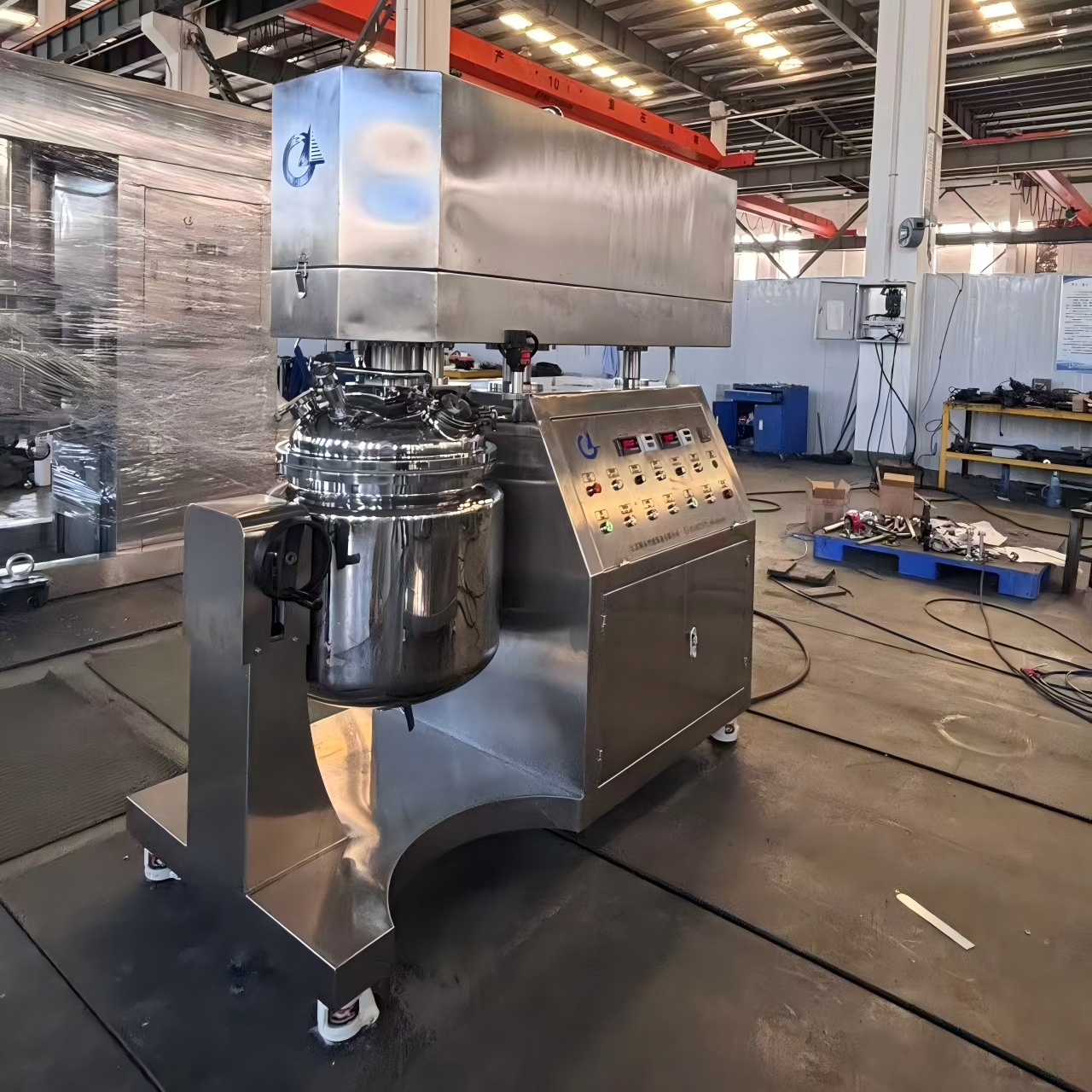
3. Production Line Stage: Large-scale Production and Intelligent Control
The vacuum emulsifier of the production line needs to meet the requirements of efficient, stable, and traceable production. Its core technologies include:
Multi-stage homogenization and cyclic emulsification: For high-viscosity materials (such as nanomaterial dispersion solutions), the production line equipment adopts a three-stage homogenization system: the first stage reduces the particle size from millimeter level to below 100 μm, the second stage further refines it to 10 μm, and the third stage stabilizes the particle size within the range of 1-5 μm through high-pressure homogenization (with a pressure up to 200 MPa). Combined with a forced circulation path, the material is pushed back to the container by the rotor/stator to ensure uniform mixing and constant temperature. For example, a new material enterprise achieved a D50 of 50 nm and a D90 of 80 nm for nanometer particles through this technology, and the product performance reached international advanced levels.
Intelligent control system: The production line equipment integrates PLC, HMI and Internet of Things technology to achieve digital management of the formula, automatic feeding, programmed operation and real-time data monitoring. The system can monitor indicators such as viscosity, pH value, and particle size distribution, and display data trends through a visual interface. When detecting data deviations from the preset range, the equipment automatically stops and alerts the fault point. For example, a cosmetics production line shortened the production cycle by 20% and reduced the defect rate to below 0.5% through this system.
Modular design and clean validation: The production line equipment adopts a modular design, supporting online cleaning and sterilization with CIP/SIP, and meeting GMP, FDA and other hygiene standards. For instance, a food enterprise shortened the equipment cleaning time from 4 hours to 1 hour by this design, while avoiding the risk of cross-contamination.
4. Technical breakthroughs: Seamless connection from laboratory to production line
To address the "scale effect" during process scaling-up, Jiangsu GangBen Mixer Manufacturer achieved seamless connection through the following innovations:
Rotor-stator structure optimization: The laboratory and production line equipment adopt the same claw-type dual-mating design to ensure uniform distribution of shear force. For instance, in a certain asphalt emulsification project, by setting the same rotor-stator clearance (0.3mm) and speed range (5000-12000 rpm), the standard deviation (SD) of particle size distribution in both pilot testing and production line was controlled within 2μm.
Collaboration of vacuum system: Both the laboratory and production line equipment use water ring vacuum pumps to ensure consistent degassing efficiency. For example, in a certain ointment production line, through coordinated control of vacuum degree at -0.096MPa, the bubble rate of the product was reduced from 3% to 0.1%.
Data traceability and process reproducibility: The production line equipment integrates a recipe management system, which can store over 2000 sets of process parameters. After the operator selects the recipe, the equipment automatically calculates the amount of materials to be added, adjusts the stirring speed and time, and combines with automatic weighing, liquid transportation and cleaning systems to achieve continuous production. For instance, a certain cosmetics enterprise used this system to reduce the particle size variation (CV value) of different batches of products from 15% to below 5%.
5. Future Trends: Intelligence and Greening
With the development of Industry 4.0, vacuum emulsifiers are evolving in the following directions:
AI Adaptive Emulsification: By analyzing historical data through machine learning algorithms, it automatically optimizes parameters such as shear speed and temperature curves. For instance, a pilot project of an enterprise achieved a 18% reduction in energy consumption while enhancing product stability through AI control.
Green Energy-saving Technology: Utilizing technologies such as variable frequency drive and waste heat recovery to reduce energy consumption. For example, a production line reduced the energy consumption of the main motor by 25% through the use of a frequency converter, and shortened the heating time by 30% through the waste heat recovery system.
Nanometer-level Emulsification: Achieving large-scale production of nanoparticles through ultra-high pressure homogenization (above 500 MPa). For instance, a pharmaceutical enterprise used this technology to reduce the particle size of the drug to below 100 nm, significantly improving bioavailability.
From the laboratory to the production line, the vacuum emulsifier has overcome various challenges such as particle size control, oxidation inhibition, and process scaling for high-viscosity materials through core technologies including multi-level shearing, vacuum degassing, and intelligent temperature control. Jiangsu GangBen Mixer Manufacturer, with its modular design, intelligent control, and process collaboration capabilities, has provided complete solutions from research and development to production for industries such as cosmetics, food, and pharmaceuticals. In the future, as technologies such as AI and green energy efficiency are integrated, the vacuum emulsifier will further drive industrial production towards more efficient, precise, and sustainable directions.
Related product links
News
- Latest News
- Solutions
- FAQ
Recommend Products
-
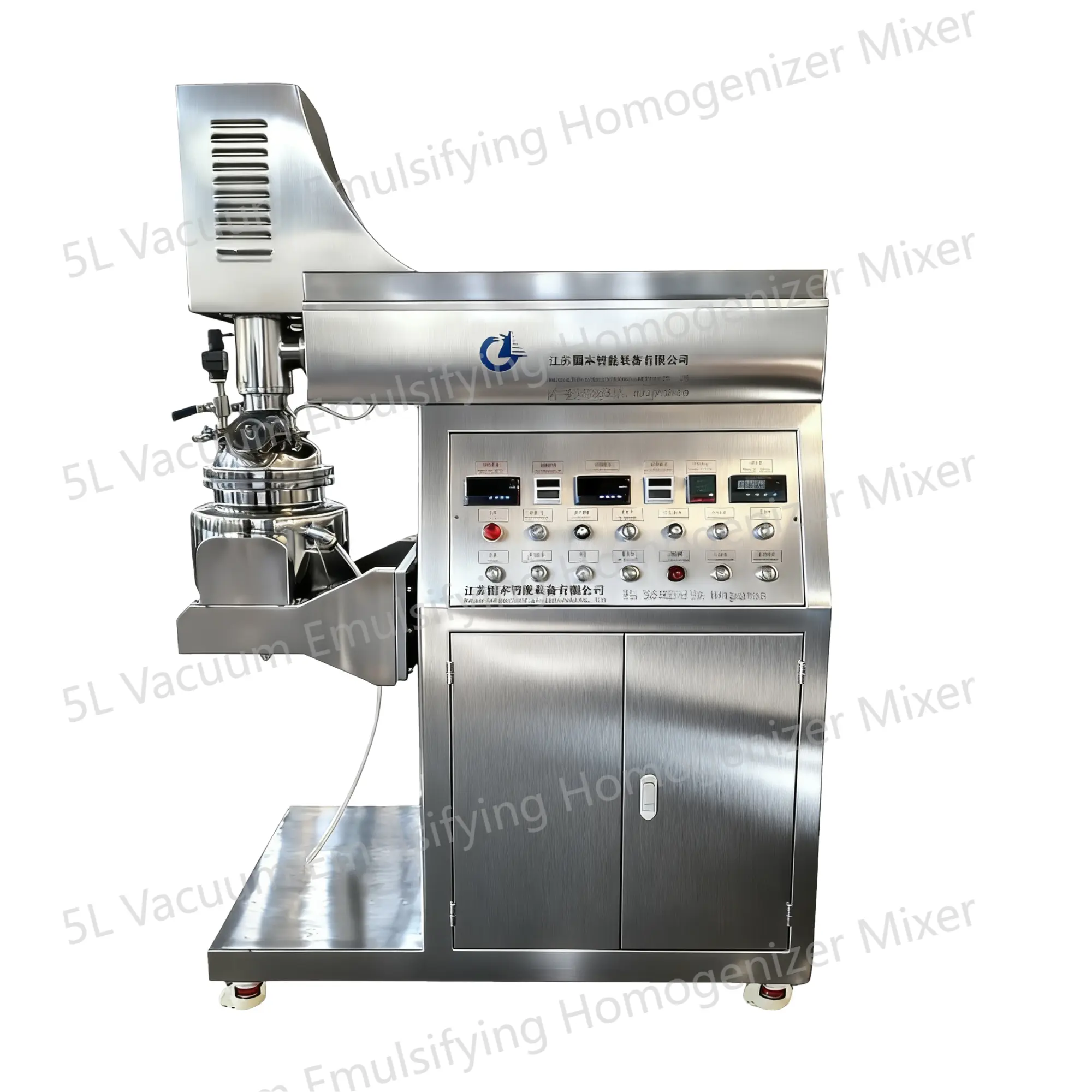 5L Vacuum Emulsifying Homogenizer Mixer
The 5L vacuum emulsifying mixer is a device designed for emulsifying and mixing various substances in a vacuum environment. This equipment is equipped with a mixing tank with a capacity of 5 liters and is widely applied in industries such as food, pharmaceuticals, cosmetics, and pesticides.
-
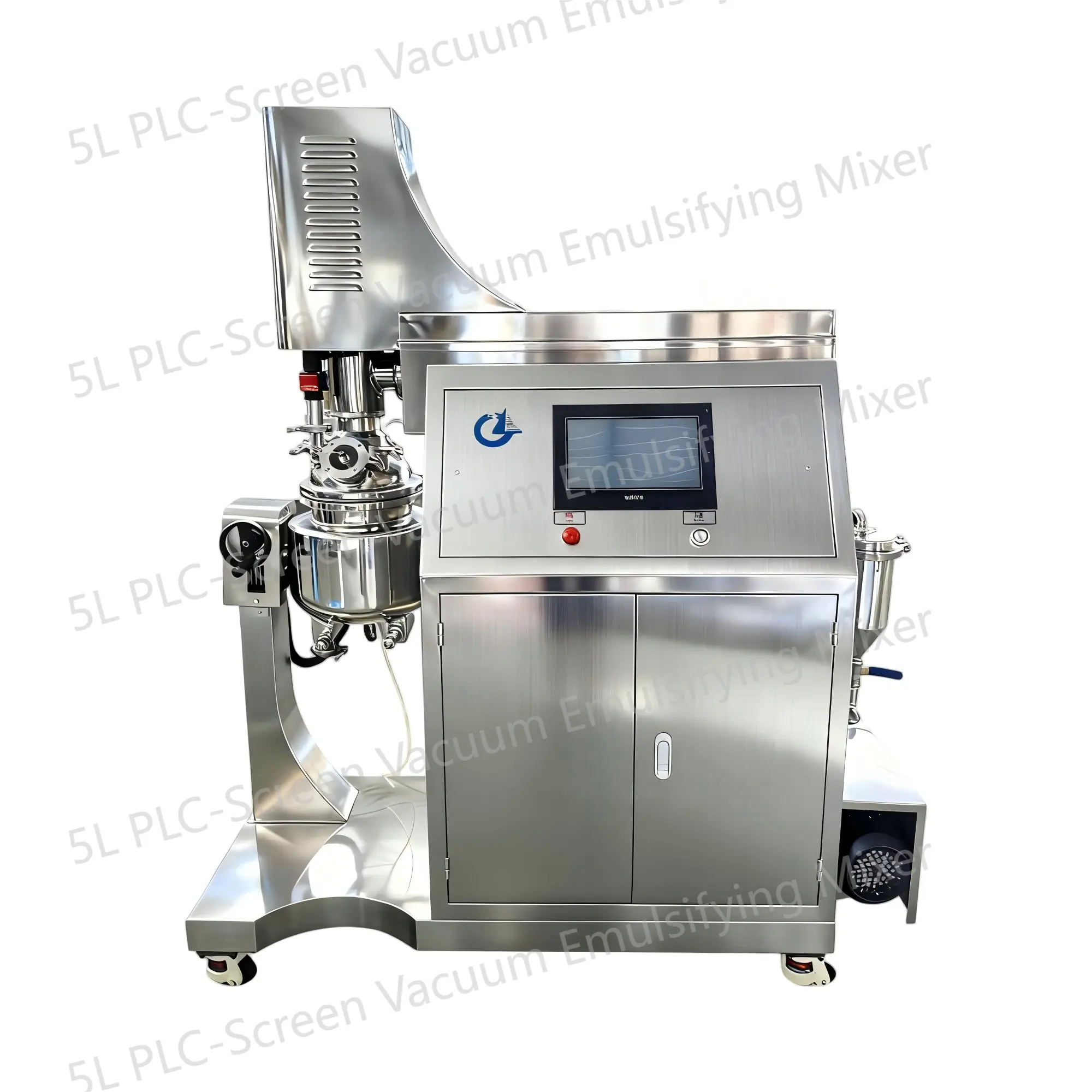 5L PLC-Screen Vacuum Emulsifying Mixer
The 5L PLC-Screen Vacuum Emulsifying Mixer is a device designed for emulsifying and mixing various substances in a vacuum environment. This equipment is equipped with a mixing tank with a capacity of 5 liters and is widely applied in industries such as food, pharmaceuticals, cosmetics, and pesticides.
-
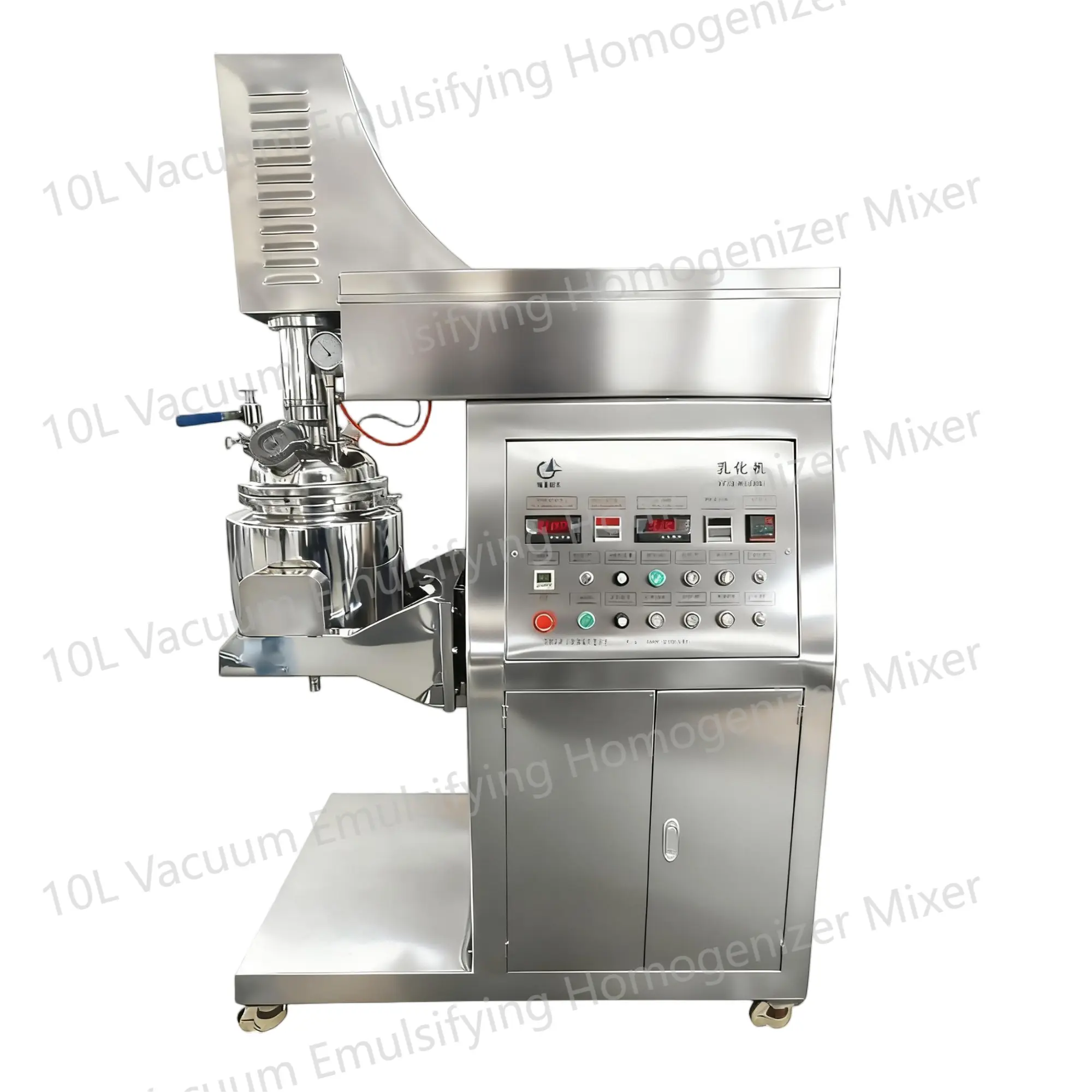 10L Vacuum Emulsifying Homogenizer Mixer
The 10L Vacuum Emulsifying Mixer is a device used for emulsifying and mixing various substances in a vacuum environment. It is commonly used in industries such as food, cosmetics, and pharmaceuticals.
Recommend Faq
-
 Sep 17,2026
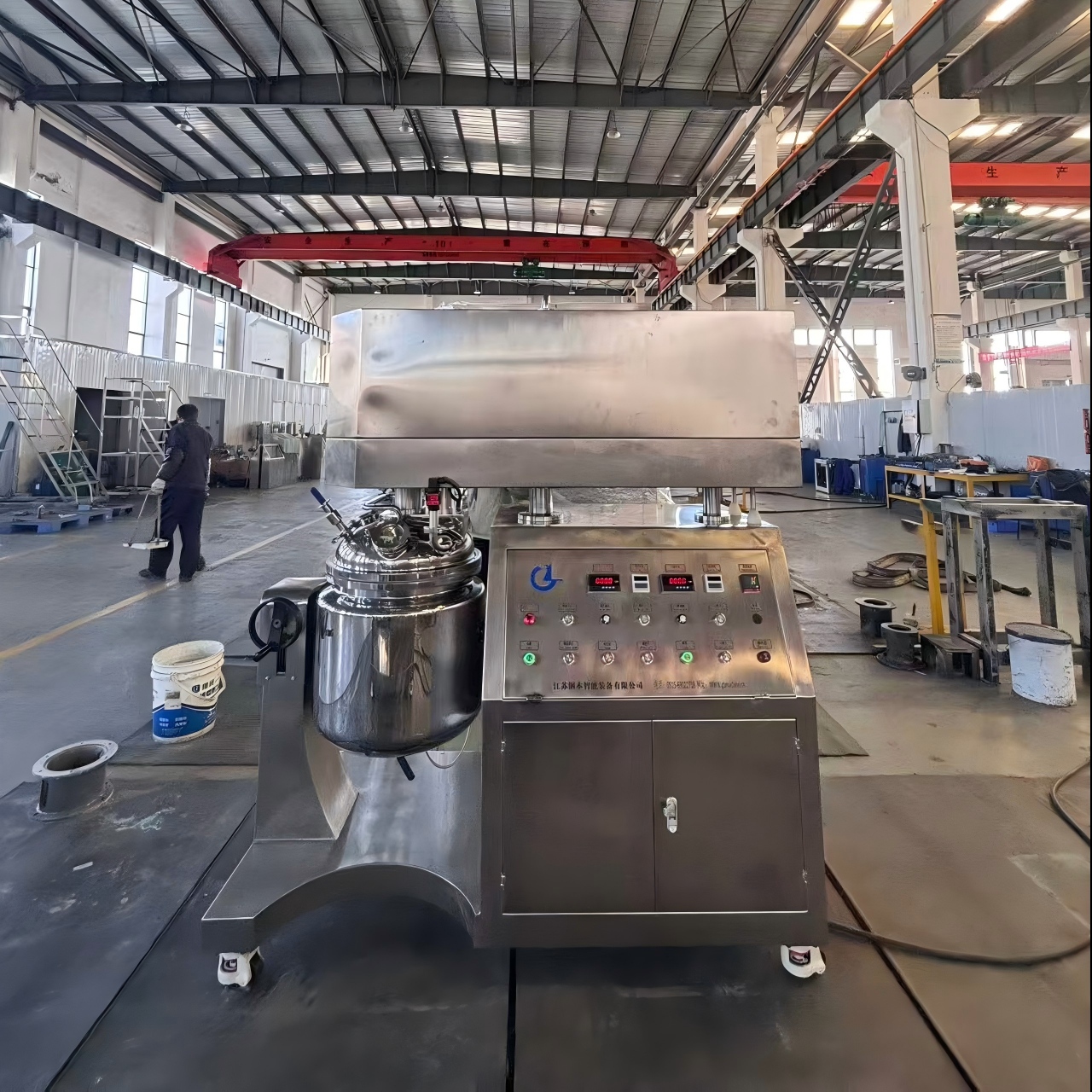
The Role of Temperature and Pressure Control in Achieving Optimal Emulsification
-
 Sep 17,2026
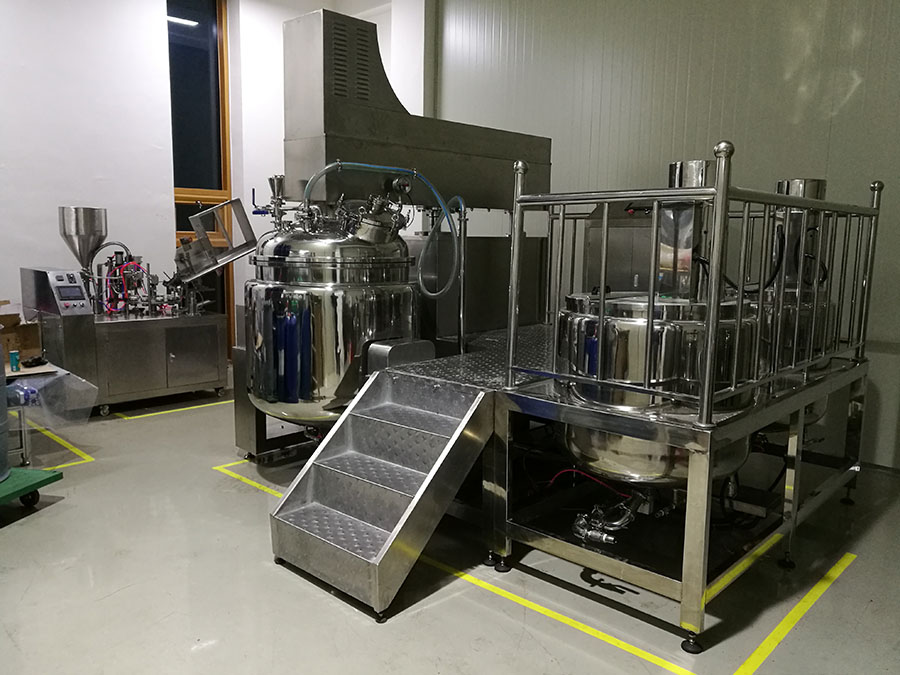
From Dispersion to Bubble-Free Homogenization: The Road of Dual-Effect Technological Innovation Combining High Shear Force and Vacuum Degassing
-
 Sep 09,2026
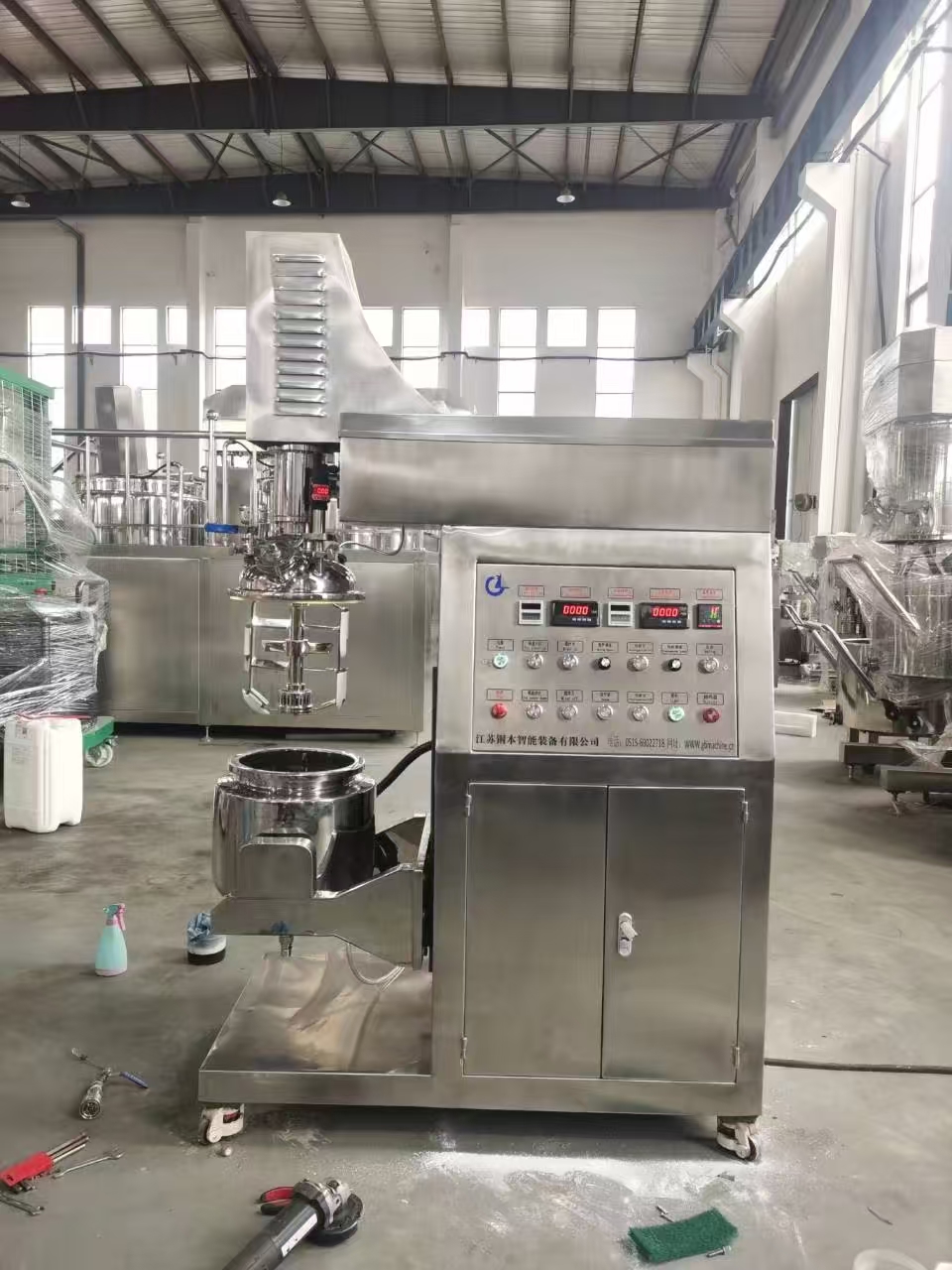
Scalable Production: Full-Range Vacuum Emulsifying Mixers from 5L Lab Scale to 2000L Industrial Capacity


