

 English
 Russian
 French
 Spanish
 Portuguese
 Korean
 Japanese
 Thai
ThaiIntelligent Vacuum Emulsifier: How does the Internet of Things achieve 'One-Click Emulsification'?
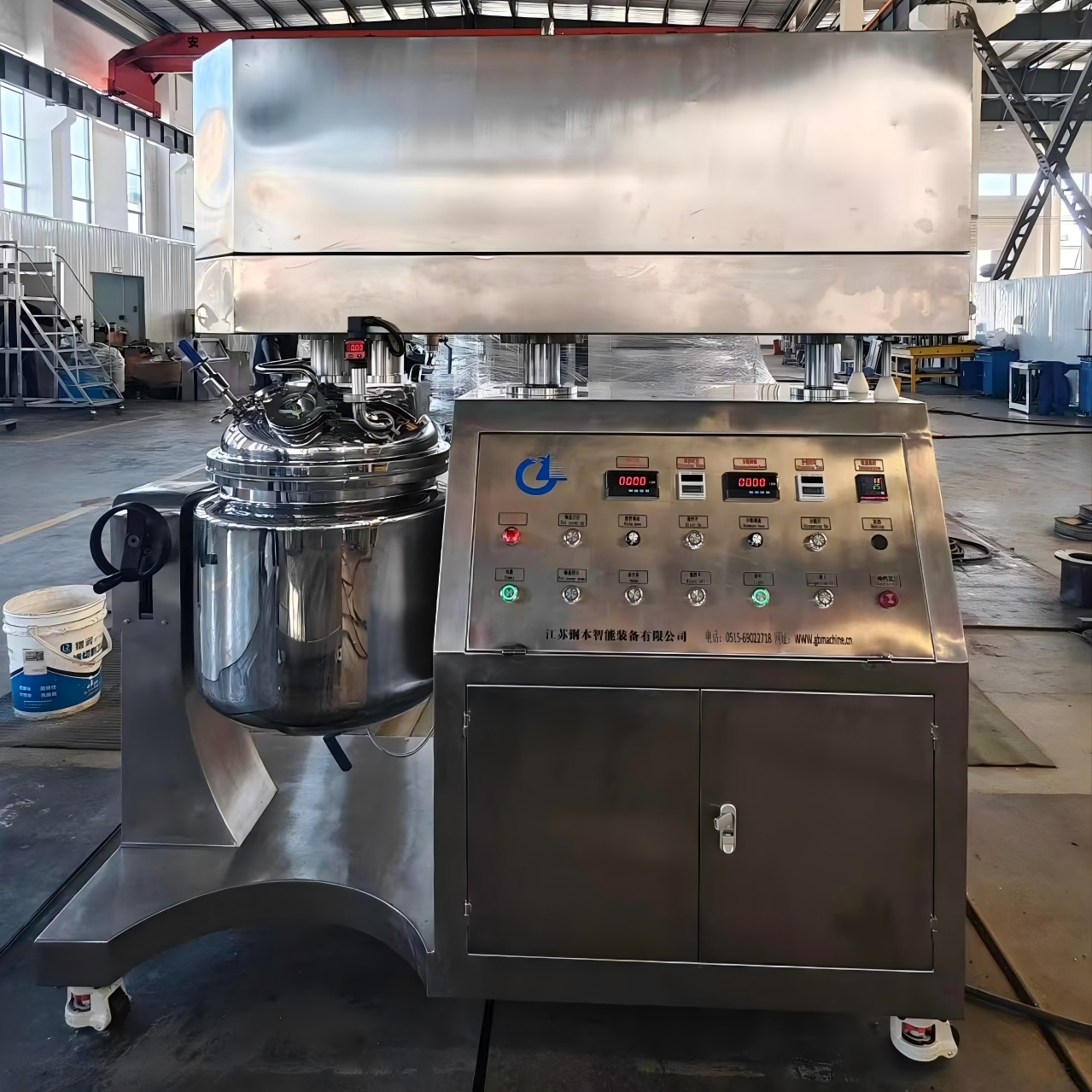
In Jiangsu GangBen Mixer Manufacturer’s intelligent vacuum emulsifiers, Internet of Things (IoT) technology integrates advanced control systems, sensor networks, and automated actuators to achieve "one-click emulsification"—a seamless, fully automated production process. Here’s how it works:
1. Intelligent Control System: Centralized Decision-Making & Parameter Optimization
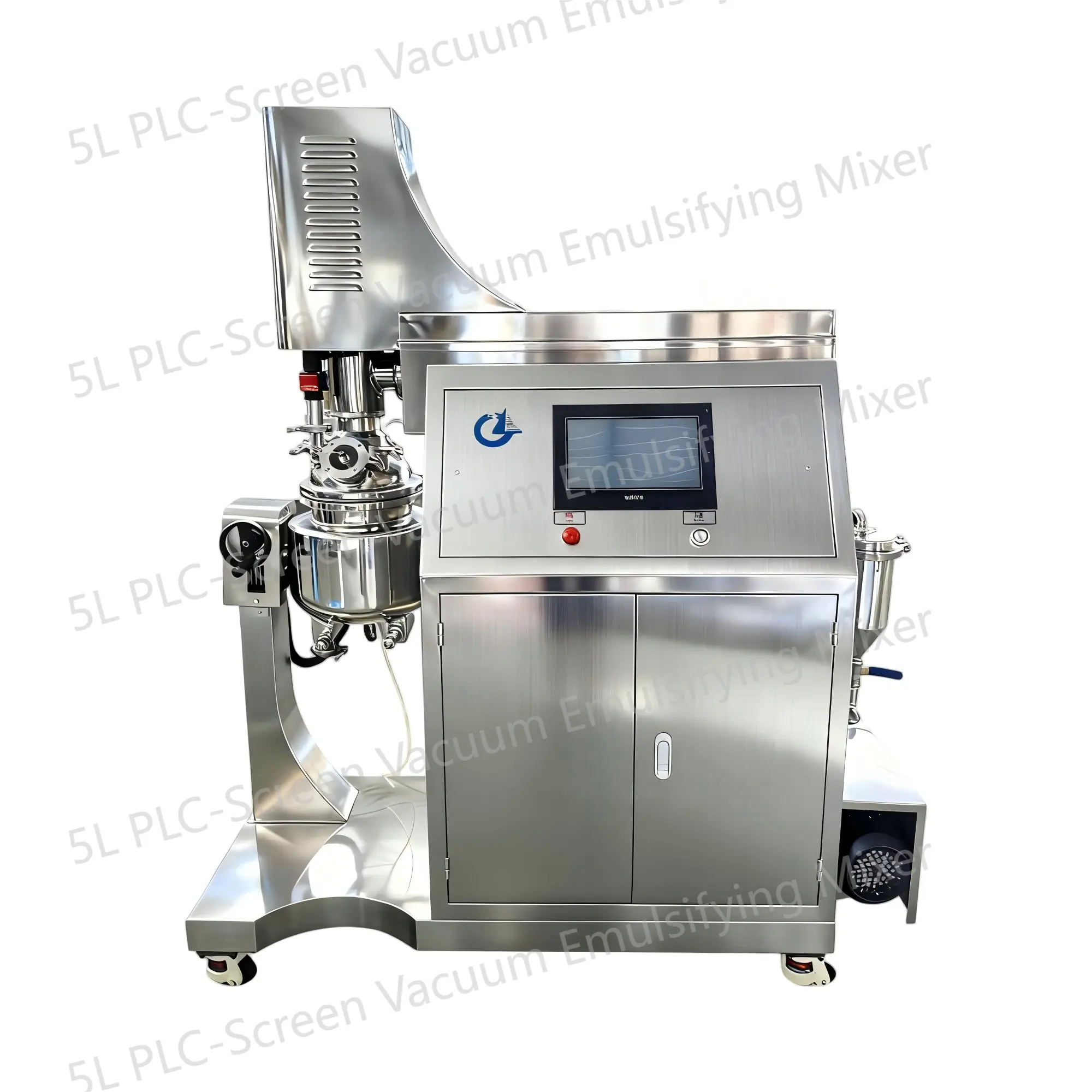
PLC & Touchscreen Integration: The emulsifier uses a Programmable Logic Controller (PLC) as its core control unit, paired with a user-friendly touchscreen interface. Operators can select pre-set recipes or customize parameters (e.g., temperature, vacuum level, stirring speed, emulsification time) and initiate production with a single button press.
Adaptive Algorithms: Built-in AI-driven algorithms automatically adjust parameters based on material properties (e.g., viscosity, solid content). For instance:
High-viscosity materials require slower stirring to prevent over-shearing.
High-solid-content formulations need extended emulsification time for uniform dispersion.
Remote Monitoring & Diagnostics: IoT connectivity allows the equipment to link to a cloud-based platform, enabling engineers to monitor operations, troubleshoot issues, or update control programs remotely—reducing downtime and on-site maintenance needs.
2. Sensor Network: Real-Time Data Acquisition & Feedback
Multi-Parameter Monitoring: The emulsifier is equipped with temperature, pressure, liquid level, and torque sensors to continuously track critical process variables:
Temperature sensors ensure precise heating/cooling control to prevent material degradation.
Vacuum sensors maintain a vacuum level below -0.095 MPa, preventing air incorporation and bubble formation.
Torque sensors monitor motor load, dynamically adjusting stirring speed to match material resistance.
Closed-Loop Control: Sensor data is fed back to the PLC in real time, enabling automatic parameter corrections. For example:
If vacuum pressure drops, the system activates the vacuum pump to restore pressure.
If temperature deviates, the heating/cooling system responds instantly to stabilize it.
3. Automated Actuators: Precision Execution & Process Synchronization
Hydraulic Lifting System: The main mixing vessel’s lid is controlled by a hydraulic mechanism, enabling one-touch opening/closing for easy material loading and cleaning while maintaining vacuum integrity.
Variable-Frequency Stirring & Emulsifying Head: The stirring motor and emulsifying head use variable-frequency drives (VFDs) for stepless speed adjustment:
Low-speed stirring for gentle mixing.
High-speed emulsification (up to 3,000 RPM) for efficient shear dispersion.
Vacuum Degassing & Material Suction: The vacuum system supports one-click degassing to remove trapped air and automatic vacuum suction for water, oil, or powder feeding—minimizing manual intervention.
Automatic Discharge & Cleaning (CIP): After emulsification, the vessel tilts for gravity-assisted discharge into downstream filling lines. Some models feature Clean-in-Place (CIP) systems for automated internal cleaning via recirculating spray nozzles.
4. Simplified User Interface & Workflow
Preset Recipe Library: The system stores standardized recipes for various materials, allowing operators to select a recipe and let the machine auto-configure parameters for "one-click production."
Visual Operation Interface: The touchscreen displays real-time data, process flowcharts, and fault alerts, enabling intuitive operation without specialized training.
Safety Interlocks: Multiple safety features (e.g., overload protection, vacuum leak alarms, emergency stop buttons) ensure operator safety.
Application Example: Cosmetic Cream Production
Material Loading: The operator selects the "Cream Recipe" on the touchscreen. The system auto-sets:
Temperature: 80°C
Vacuum: -0.095 MPa
Stirring speed: 50 RPM
Mixing Phase: Water and oil phases are heated separately, then vacuum-sucked into the main vessel for low-speed blending.
Emulsification Phase: The emulsifying head activates at 2,500 RPM, shear-dispersing the mixture into a stable emulsion while the vacuum system continuously degasses.
Cooling Phase: Circulating cooling water reduces the temperature to 40°C, with stirring slowed to 30 RPM to prevent separation.
Discharge Phase: The vessel tilts, and the cream flows via pipeline to the filling machine—fully automated with one button press.
Key Advantages of IoT-Enabled One-Click Emulsification
Efficiency Boost: Automation reduces manual steps, cutting production cycles by 30%+.
Consistent Quality: Precise parameter control ensures 99.5% batch-to-batch uniformity.
Flexible Adaptation: Supports multi-recipe storage and rapid switching for small-batch, diversified production.
Data Traceability: IoT logs production data for quality tracking and process optimization.
By leveraging IoT technology, Jiangsu GangBen’s intelligent vacuum emulsifiers transform traditional emulsification into a smart, automated, and highly efficient process. From cosmetics to pharmaceuticals and food industries, this innovation ensures precision, reliability, and scalability—redefining modern manufacturing standards.
Jiangsu GangBen Mixer Manufacturer: Pioneering IoT-Driven Emulsification Solutions for Global Industries.
News
- Latest News
- Solutions
- FAQ
Recommend Products
-
 5L Vacuum Emulsifying Homogenizer Mixer
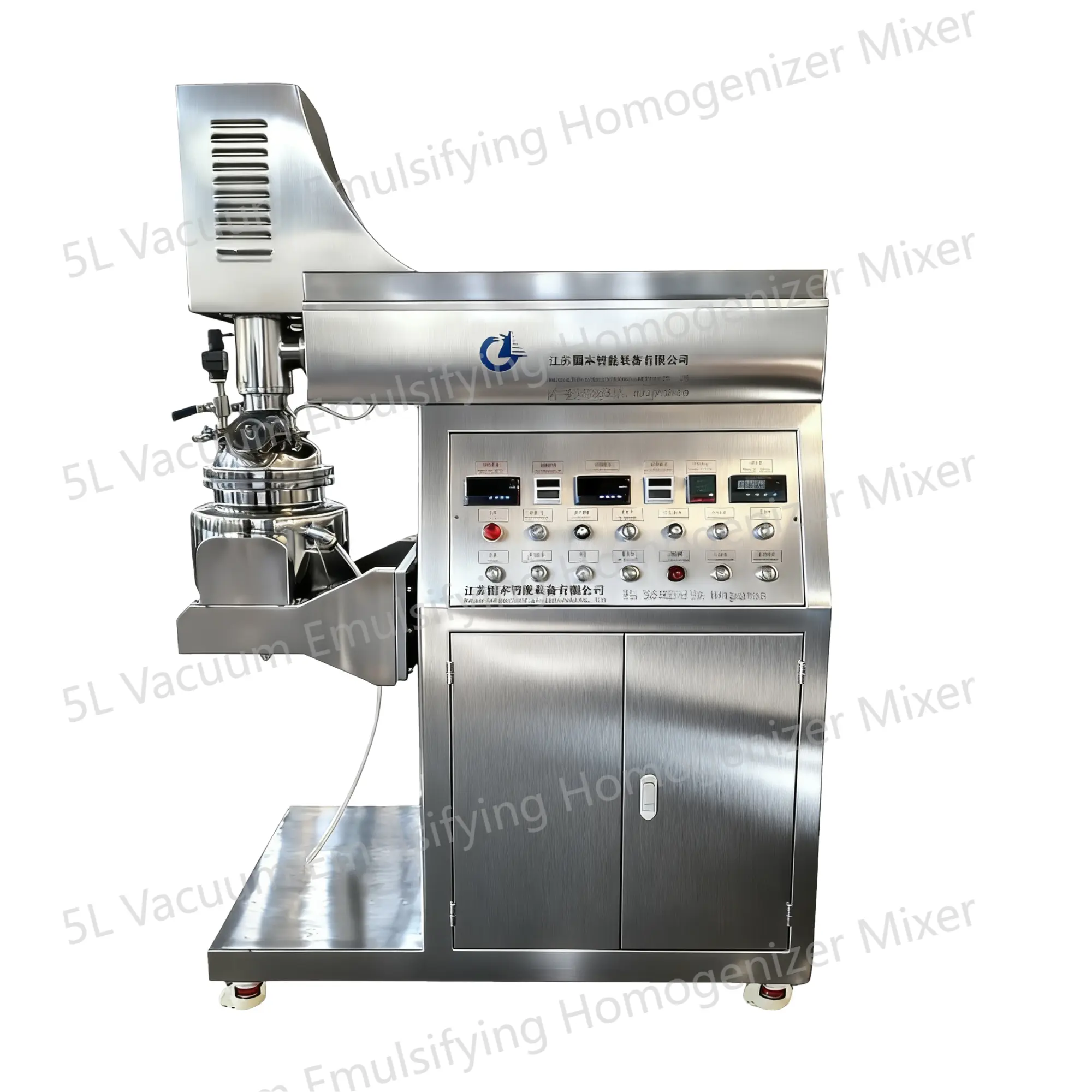
The 5L vacuum emulsifying mixer is a device designed for emulsifying and mixing various substances in a vacuum environment. This equipment is equipped with a mixing tank with a capacity of 5 liters and is widely applied in industries such as food, pharmaceuticals, cosmetics, and pesticides.
-
 5L PLC-Screen Vacuum Emulsifying Mixer
The 5L PLC-Screen Vacuum Emulsifying Mixer is a device designed for emulsifying and mixing various substances in a vacuum environment. This equipment is equipped with a mixing tank with a capacity of 5 liters and is widely applied in industries such as food, pharmaceuticals, cosmetics, and pesticides.
-
 10L Vacuum Emulsifying Homogenizer Mixer
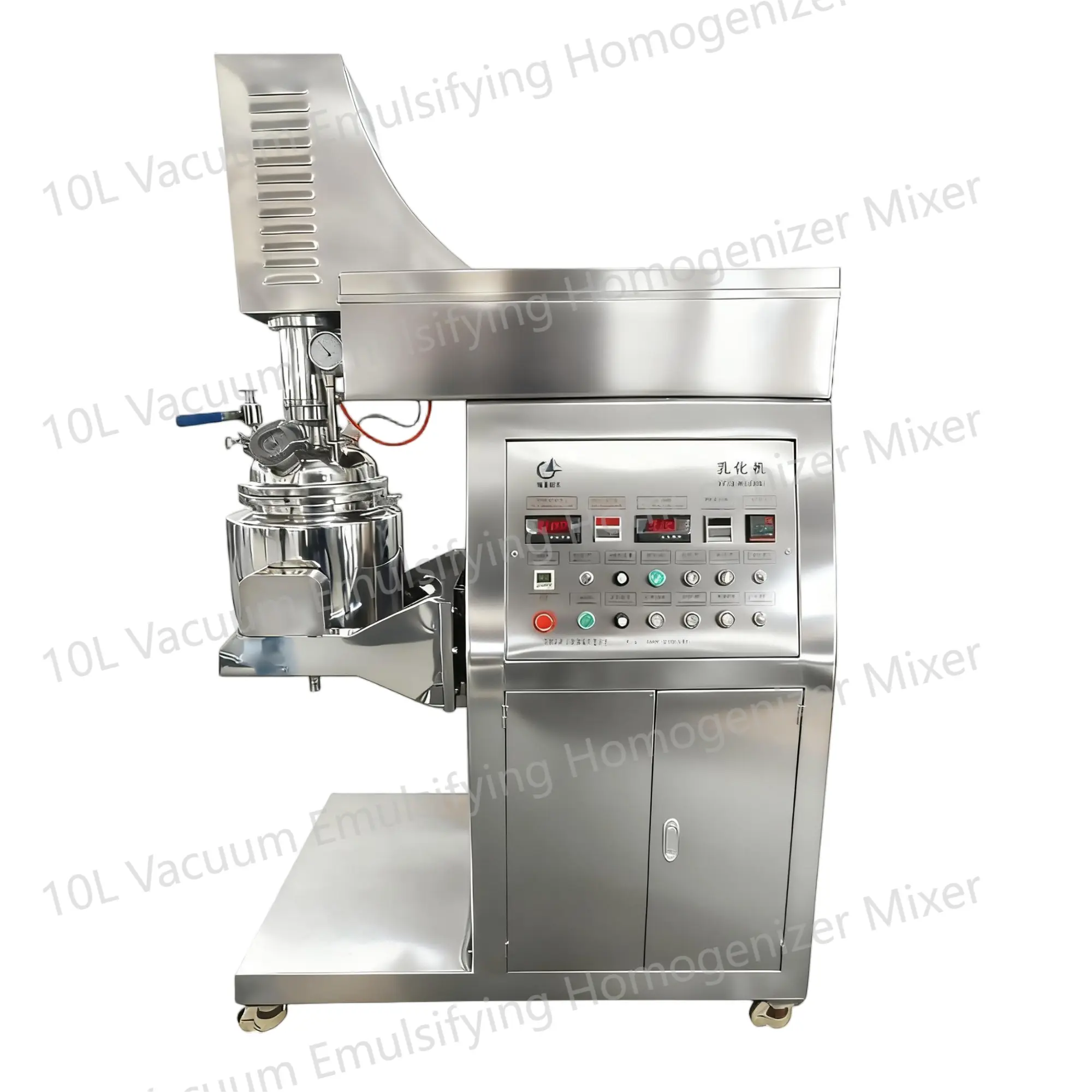
The 10L Vacuum Emulsifying Mixer is a device used for emulsifying and mixing various substances in a vacuum environment. It is commonly used in industries such as food, cosmetics, and pharmaceuticals.
Recommend Faq
-
 Sep 17,2026
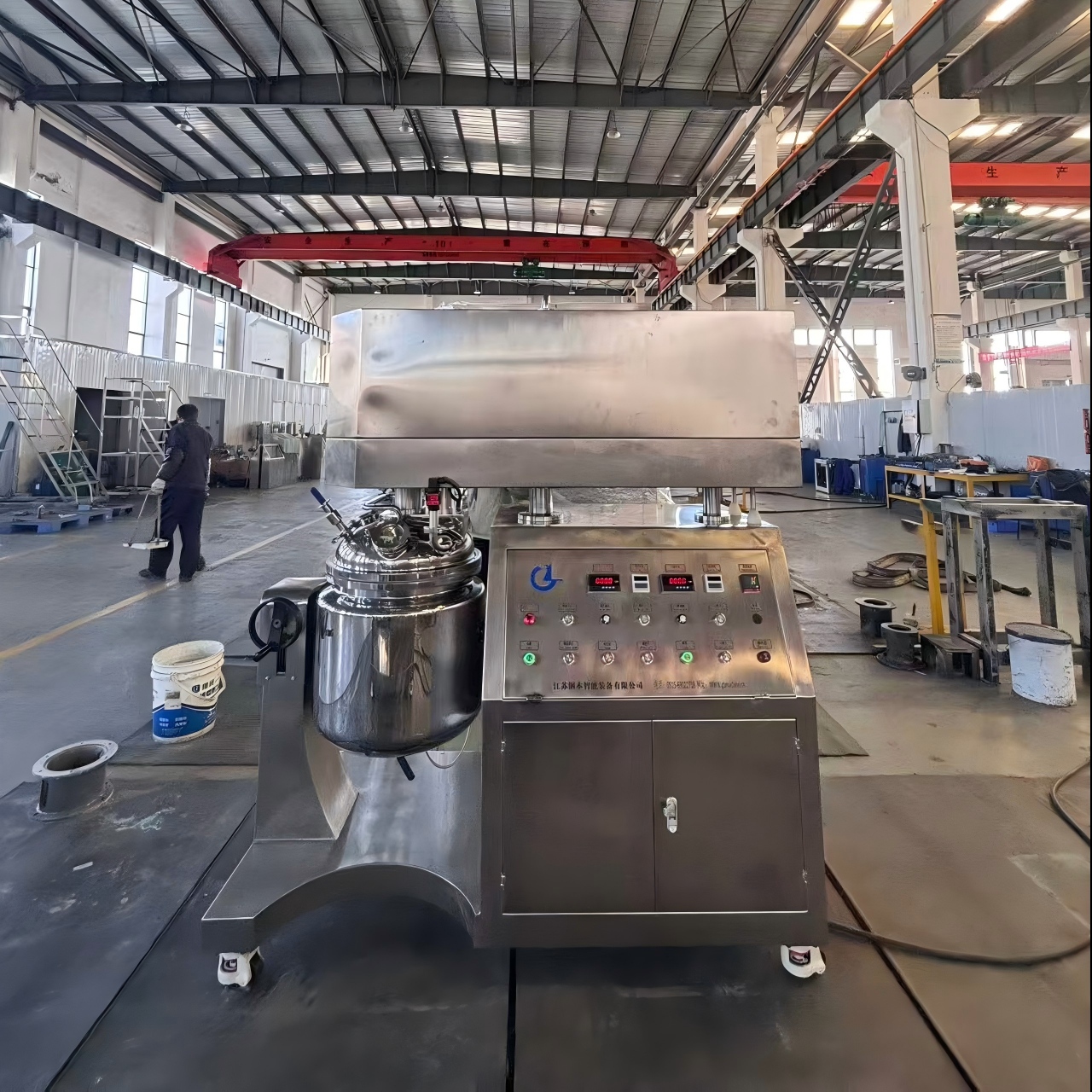
The Role of Temperature and Pressure Control in Achieving Optimal Emulsification
-
 Sep 17,2026
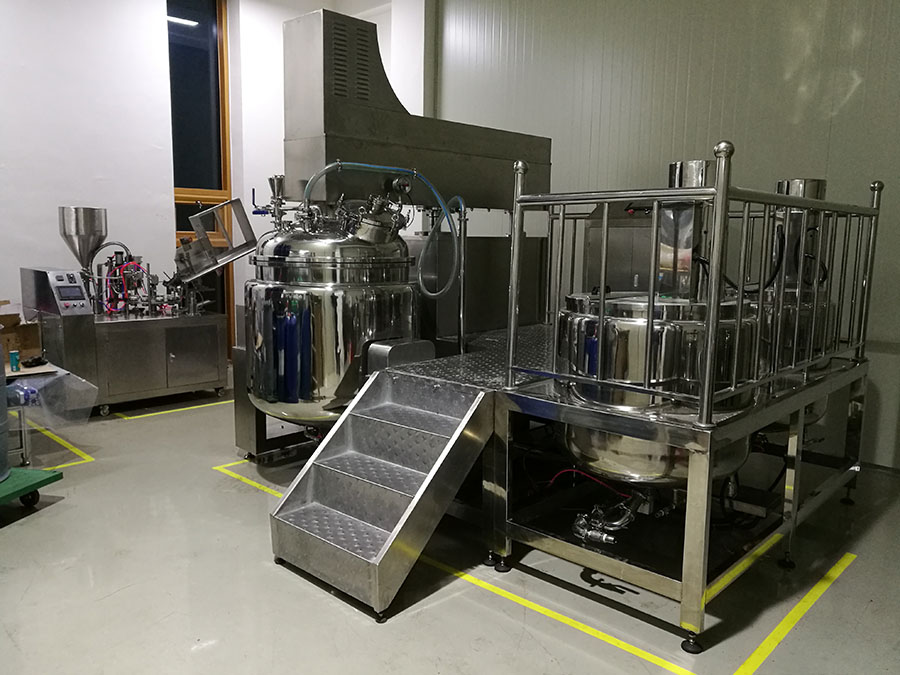
From Dispersion to Bubble-Free Homogenization: The Road of Dual-Effect Technological Innovation Combining High Shear Force and Vacuum Degassing
-
 Sep 09,2026
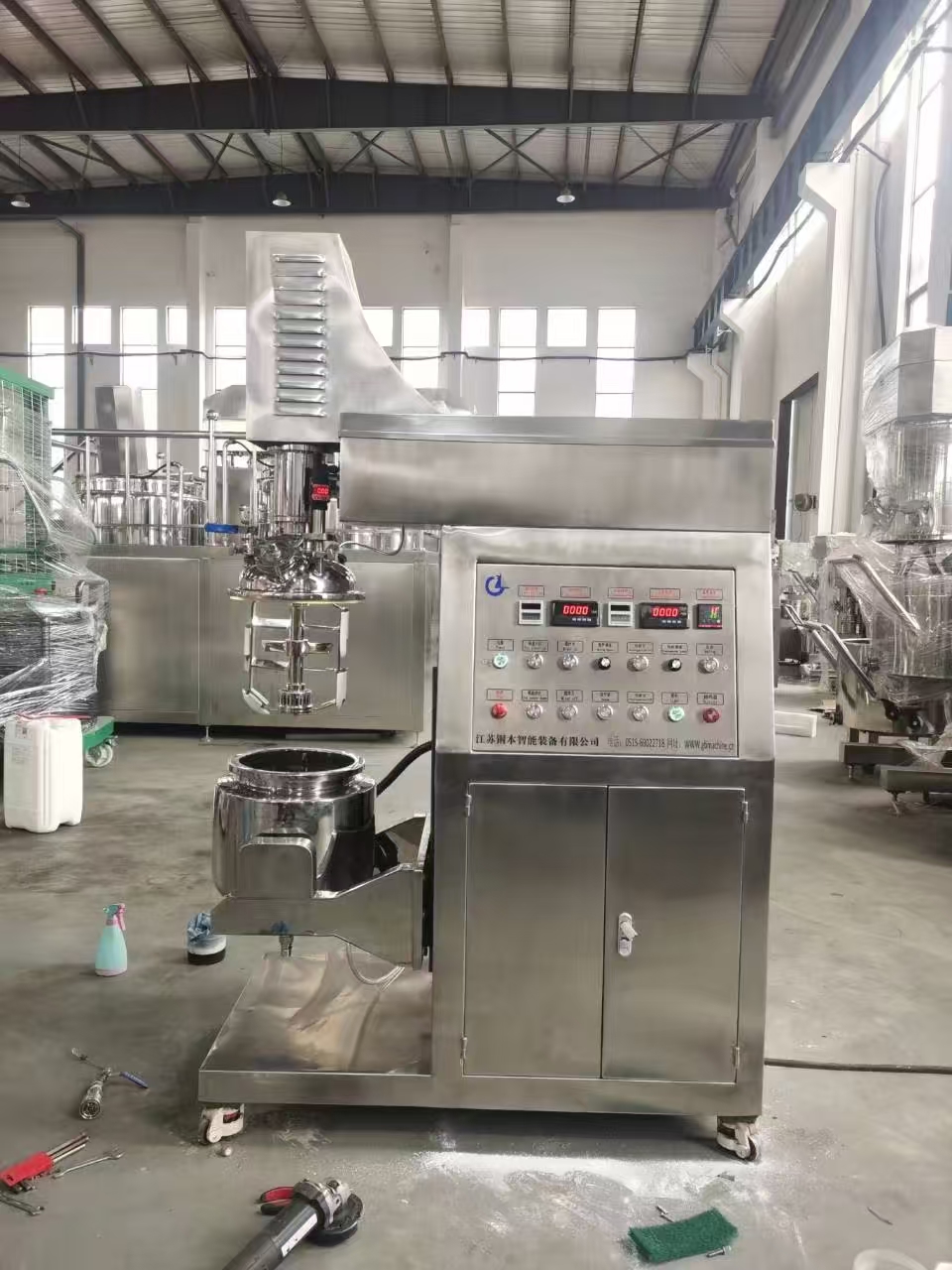
Scalable Production: Full-Range Vacuum Emulsifying Mixers from 5L Lab Scale to 2000L Industrial Capacity


