
 English
 Russian
 French
 Spanish
 Portuguese
 Korean
 Japanese
 Thai
ThaiVacuum Emulsifying Homogenizer Mixer: The Gold Standard for Bubble-Free Creams and Lotions
Why Air Bubbles Are the Enemy of Premium Skincare
In the world of cosmetics and personal care, perception is everything. A cream loaded with micro-bubbles looks dull, feels gritty, and degrades faster on the shelf. Consumers associate smooth, glossy, bubble-free texture with quality — and brands know that one bad batch can cost thousands in returns and reputational damage.
This is where the Vacuum Emulsifying Homogenizer Mixer earns its reputation as the gold standard.
What Makes It Different From a Regular Mixer?
A standard high-shear mixer blends ingredients under atmospheric pressure. The problem? It whips air into the product. Even tiny trapped bubbles cause:
Oxidation — active ingredients break down faster
Texture defects — gritty or grainy feel
Reduced shelf life — microbial risk increases with oxygen exposure
Aesthetic failure — dull, matte finish instead of glossy smoothness
The vacuum emulsifying homogenizer solves all four problems in one process.
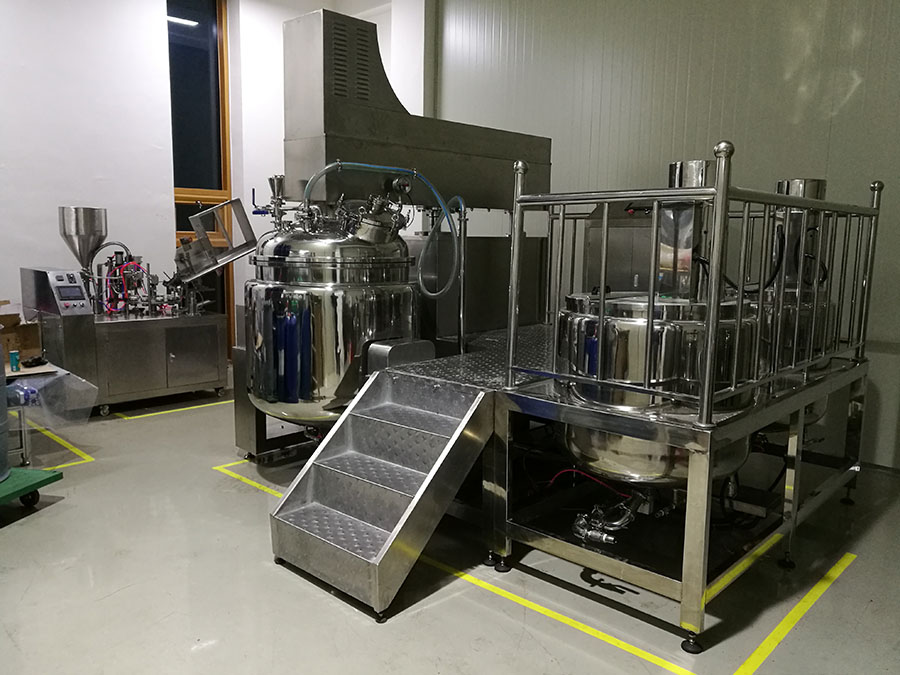
How It Works: Three Stages, One Machine
Stage Function Key Benefit
1. Vacuum Loading All air is evacuated from the mixing chamber before processing begins Zero oxygen environment from the start
2. High-Shear Homogenization Rotor-stator system generates intense shear forces (up to 3,000+ RPM), breaking particles down to 1–5 μm Ultra-fine, uniform emulsion
3. Vacuum Discharging Product is pumped out under continued vacuum No air re-enters during transfer
The result: a perfectly homogeneous, bubble-free emulsion — every single batch.
The Three Pillars of Performance
1. Bubble-Free by Design
Vacuum pressure typically operates between -0.06 to -0.095 MPa. At this level, dissolved gases are pulled out of the liquid phase before emulsification even starts. You don't need degassing as a separate step — it's built into the process.
2. Particle Size You Can See (and Feel)
High-shear homogenization reduces droplet size to the micron level. For creams and lotions, this means:
Smoother skin feel
Better absorption
Higher active ingredient bioavailability
Longer-lasting moisture barrier
3. Stability That Lasts
Without oxygen and with uniformly dispersed phases, emulsions resist:
Phase separation
Color shifting
Viscosity changes
Microbial contamination
Shelf life can extend by 30–50% compared to atmospheric processing.
Where It Shines: Application Scenarios
Industry Typical Products Why Vacuum Matters
Cosmetics Face creams, body lotions, sunscreens Glossy finish, no air pockets
Pharmaceuticals Ointments, medicated creams, gels Sterile environment, precise dosing
Food & Beverage Mayonnaise, salad dressings, sauces Smooth texture, extended freshness
Chemical Adhesives, coatings, emulsions Consistent viscosity, no defects
Key Specs to Look For When Selecting a Unit
Parameter Recommended Range
Working Volume 5L – 10,000L (lab to production)
Vacuum Degree -0.06 to -0.095 MPa
Homogenizer Speed 0 – 3,500 RPM (variable frequency)
Temperature Control Jacketed heating/cooling, 20°C – 85°C
Control System PLC touchscreen, recipe storage
Cleaning CIP-compatible (Clean-In-Place)
Material SS316L stainless steel (pharma-grade optional)
The Bottom Line
If your product demands a glossy, smooth, long-lasting emulsion — and you can't afford batch-to-batch inconsistency — the vacuum emulsifying homogenizer mixer isn't a luxury. It's the baseline.
It eliminates air at the source, not as an afterthought. It homogenizes at the micron level, not the millimeter level. And it does it under vacuum, not under pressure.
News
- Latest News
- Solutions
- FAQ
Recommend Products
-
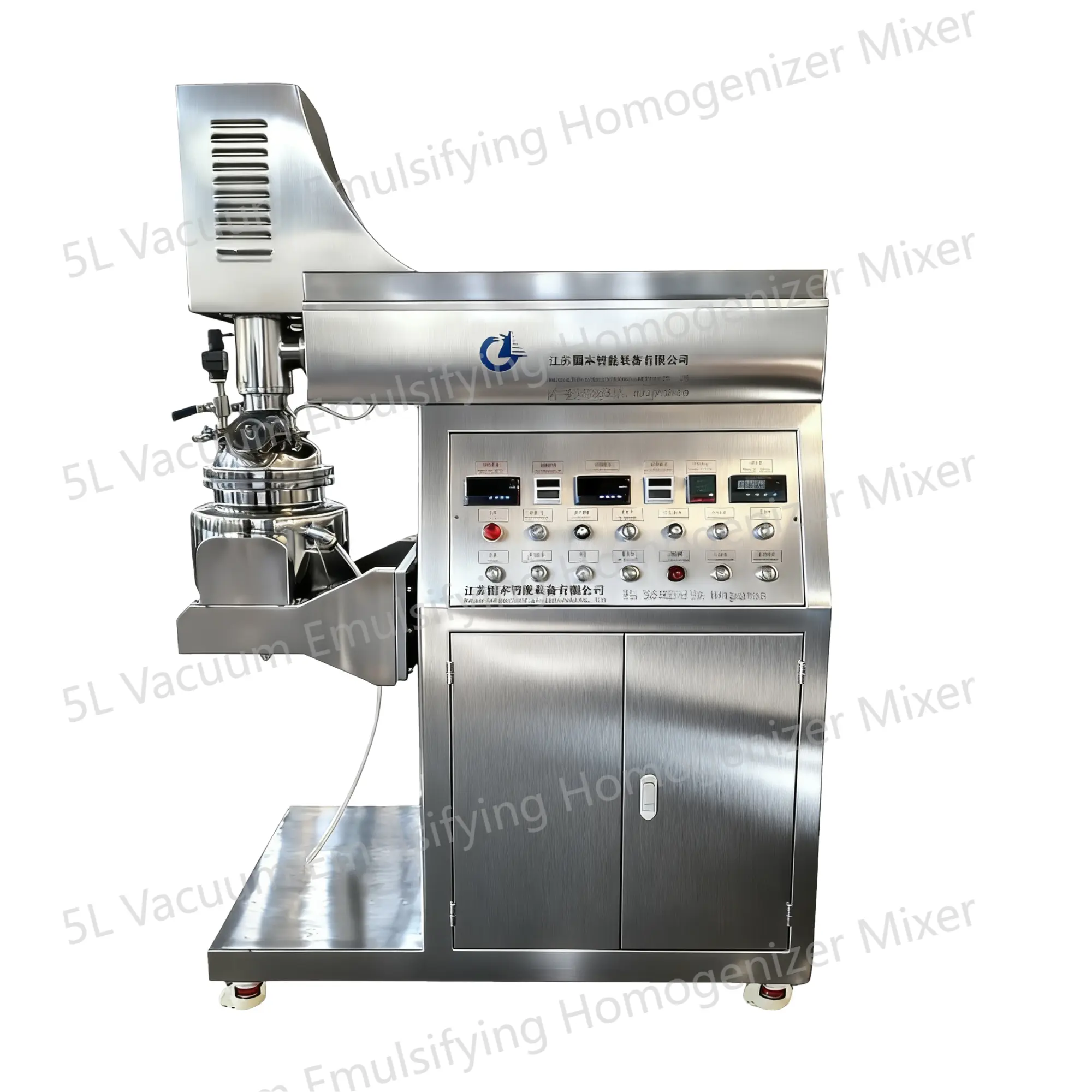 5L Vacuum Emulsifying Homogenizer Mixer
The 5L vacuum emulsifying mixer is a device designed for emulsifying and mixing various substances in a vacuum environment. This equipment is equipped with a mixing tank with a capacity of 5 liters and is widely applied in industries such as food, pharmaceuticals, cosmetics, and pesticides.
-
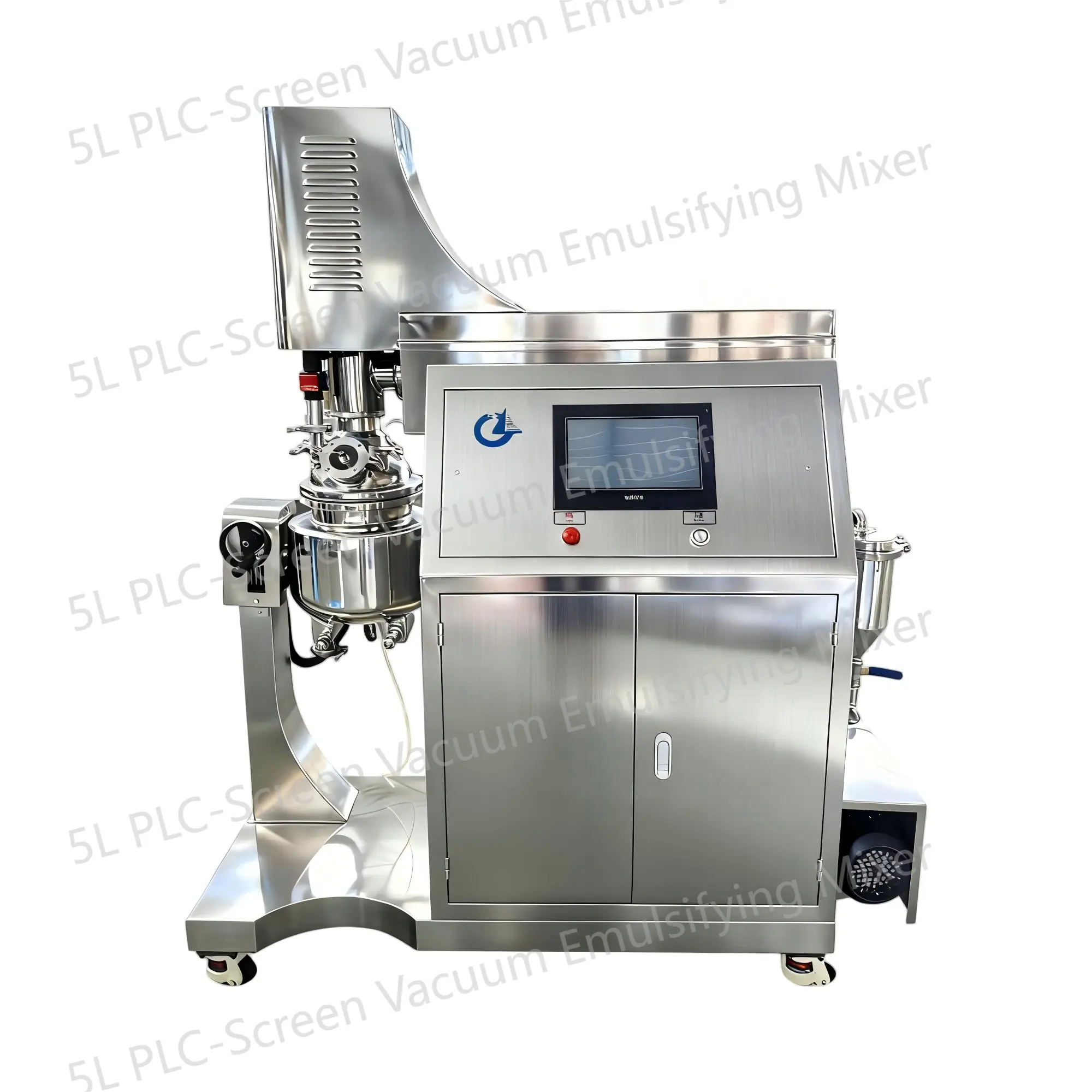 5L PLC-Screen Vacuum Emulsifying Mixer
The 5L PLC-Screen Vacuum Emulsifying Mixer is a device designed for emulsifying and mixing various substances in a vacuum environment. This equipment is equipped with a mixing tank with a capacity of 5 liters and is widely applied in industries such as food, pharmaceuticals, cosmetics, and pesticides.
-
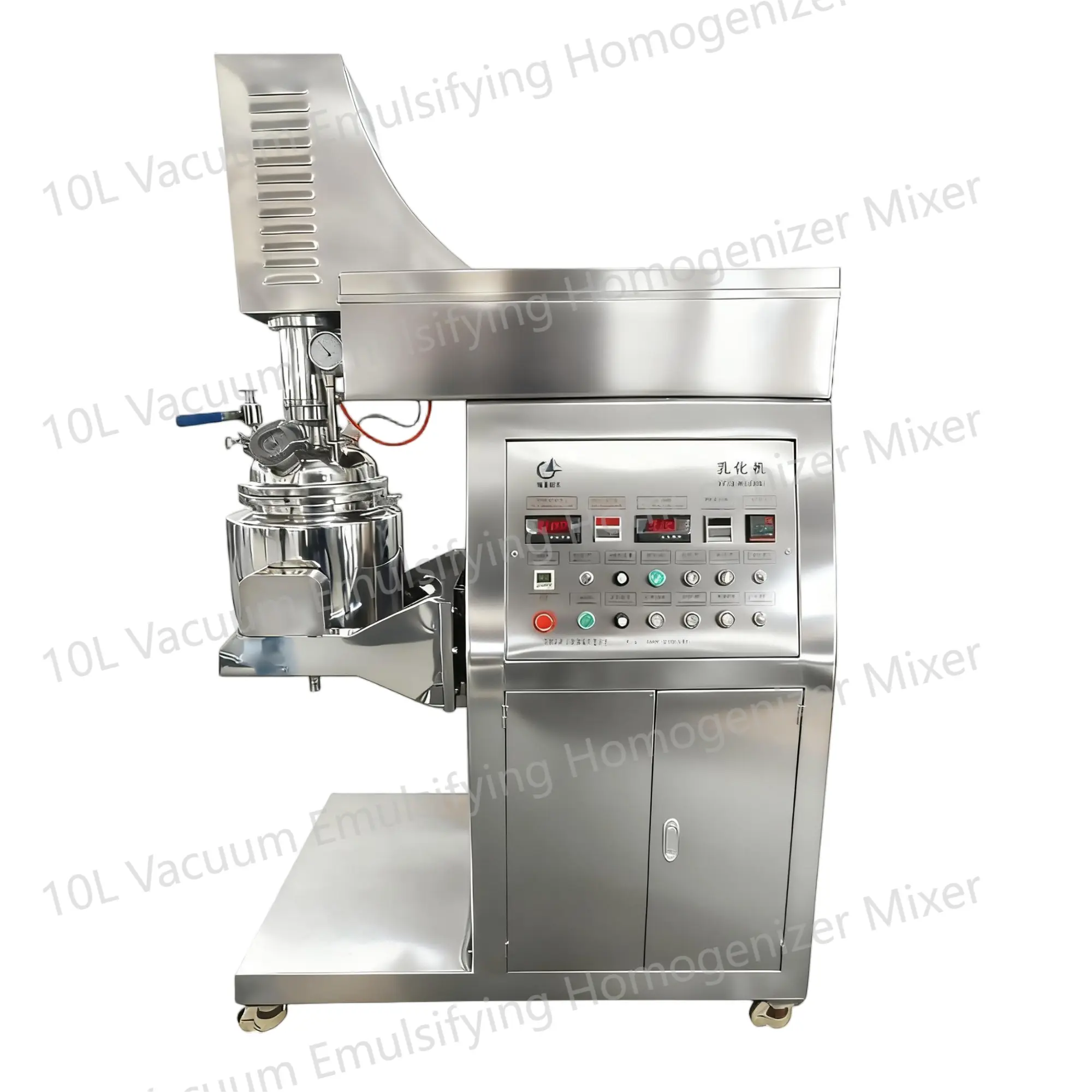 10L Vacuum Emulsifying Homogenizer Mixer
The 10L Vacuum Emulsifying Mixer is a device used for emulsifying and mixing various substances in a vacuum environment. It is commonly used in industries such as food, cosmetics, and pharmaceuticals.