
 English
 Russian
 French
 Spanish
 Portuguese
 Korean
 Japanese
 Thai
ThaiFrom Bubbles to Perfection: The Science Behind Vacuum Homogenization Technology
Bubbles are the silent killers of product quality.
In cosmetics, they cause rough texture and premature separation. In pharmaceuticals, they oxidize active ingredients and compromise sterility. In food, they accelerate spoilage and ruin mouthfeel. Yet for decades, the industry treated bubbles as an unavoidable byproduct of mixing — something to be managed, not eliminated.
Vacuum homogenization changed that. By marrying two physical principles — vacuum deaeration and high-shear dispersion — into a single, synchronized process, this technology doesn't just reduce bubbles. It prevents them from ever forming in the first place.
Part 1: Why Bubbles Are a Bigger Problem Than You Think
The Physics of Trapped Air
When a conventional mixer agitates a liquid, it pulls air into the bulk phase through the vortex at the surface. This isn't just surface foam — it's micro-bubbles (10–500 μm) dispersed throughout the entire volume. These bubbles are invisible to the naked eye but catastrophic at the molecular level.
Bubble Type Size Impact
Macro bubbles >1 mm Visible defects, surface pitting
Micro bubbles 10–500 μm Emulsion instability, oxidation acceleration
Nano bubbles <1 μm Long-term phase separation, texture degradation
The problem compounds because bubbles act as nucleation sites. They provide a surface where oil and water phases can re-separate, where oxygen can concentrate, and where crystalline structures can grow unevenly. A cream that looks perfect on day one can separate by day thirty — all because of air that was mixed in during processing.
The Traditional "Fix" and Why It Fails
The conventional workaround: mix first, then degas in a separate vacuum chamber. This introduces three critical failures:
Re-aeration: Transferring product between vessels re-introduces air.
Time waste: Sequential processing doubles cycle time.
Incomplete removal: Static vacuum chambers can only extract free-floating bubbles — not those trapped in high-viscosity matrices.
The industry needed a system where mixing and deaeration happen simultaneously, in the same vessel, under continuous vacuum.
Part 2: The Two Engines of Vacuum Homogenization
Vacuum homogenization works because it attacks the bubble problem from two directions at once.
Engine 1: Vacuum Deaeration — Making Bubbles Impossible
When pressure inside the mixing vessel drops to -0.08 to -0.1 MPa (near-complete vacuum), something counterintuitive happens: existing bubbles expand, then collapse.
Here's the physics:
At atmospheric pressure (0.1 MPa), a 50 μm air bubble sits quietly in the liquid.
At -0.09 MPa vacuum, that same bubble expands to roughly 500 μm (Boyle's Law: P₁V₁ = P₂V₂).
The expanded bubble rises rapidly to the surface — but instead of floating, it bursts at the liquid-vacuum interface because there's no atmospheric pressure holding it together.
Simultaneously, the vacuum pump actively extracts the released gas.
The result: near-zero dissolved oxygen and near-zero entrapped air — not after a separate step, but during mixing itself.
Condition Dissolved O₂ (mg/L) Entrapped Air
Atmospheric mixing 8–12 High
Post-mix vacuum degassing 2–4 Moderate
In-process vacuum homogenization <0.5 Near zero
This is why products made in vacuum homogenizers have dramatically longer shelf lives — there's simply no oxygen left to drive oxidation.
Engine 2: High-Shear Homogenization — Destroying What Vacuum Can't Reach
Vacuum removes free and loosely trapped bubbles. But in high-viscosity systems (creams, pastes, emulsions), some air is mechanically locked inside the matrix. That's where high-shear homogenization takes over.
The rotor-stator system operates on three simultaneous mechanical principles:
Mechanism What It Does Scale
Hydraulic shear Liquid is forced through the narrow gap (0.2–0.5 mm) between rotor and stator at 200+ m/s Breaks droplets to 0.1–5 μm
Centrifugal extrusion Rotor blades fling material outward at 3,000+ rpm, creating intense impact against the stator Disrupts air pockets in viscous matrices
Cavitation Rapid pressure drops at the rotor tips create micro-vacuum zones that implode Generates localized temperatures of 5,000 K for microseconds — enough to shatter trapped gas pockets
The cavitation effect is the key differentiator. In a conventional mixer, cavitation is random and destructive. In a vacuum homogenizer, it's controlled and purposeful — the ambient vacuum ensures that when cavitation bubbles collapse, the released gas is instantly evacuated rather than re-dissolving into the product.
Part 3: The Synergy — Why 1 + 1 = 3
The real breakthrough isn't either technology alone. It's their synchronization.
Process Vacuum Only Homogenizer Only Vacuum Homogenizer
Bubble removal 60–70% 30–40% 99%+
Droplet size N/A 1–10 μm 0.1–2 μm
Oxidation control Good Poor Excellent
Processing time Slow (sequential) Fast Fast (simultaneous)
Product stability Weeks Days Months to years
Here's what happens inside the vessel, step by step:
Vacuum activates → pressure drops to -0.095 MPa → existing bubbles expand and burst.
Rotor spins up → high-shear zone forms → droplets are shredded to sub-micron size.
Cavitation fires → trapped micro-bubbles in the viscous phase are imploded → gas is instantly evacuated by the vacuum pump.
Emulsion forms under vacuum → oil and water phases combine without ever contacting atmospheric air.
Product exits bubble-free → stable, smooth, oxidation-resistant.
All of this happens in 3–8 minutes. A process that used to take 30+ minutes across multiple vessels.
Part 4: The Science of "Perfect" — What the Numbers Actually Mean
"Perfection" in manufacturing isn't poetic — it's measurable.
Quality Metric Conventional Mixer Vacuum Homogenizer Improvement
Mean droplet size 5–20 μm 0.2–1.5 μm 10× smaller
Polydispersity index (PDI) 0.3–0.6 0.05–0.2 3× more uniform
Dissolved oxygen 6–10 mg/L <0.5 mg/L >95% reduction
Viscosity consistency (batch-to-batch) ±15% ±3% 5× more repeatable
Shelf life (cosmetic cream) 6–12 months 24–36 months 2–3× longer
A PDI below 0.2 means virtually every droplet in the emulsion is the same size. This is what gives vacuum-homogenized creams their signature silky, non-greasy feel — there are no large oil droplets sitting on the surface, no air pockets creating a "light" but unstable texture. Every molecule is where it should be.
Part 5: Where the Science Goes Next
Vacuum homogenization isn't standing still. Current R&D is pushing three frontiers:
Frontier What's Changing Why It Matters
Nano-emulsions (<100 nm) Rotor speeds exceeding 6,000 rpm with gap sizes <0.1 mm Enables transparent emulsions and enhanced bioavailability in pharma
In-line monitoring Real-time laser diffraction + dissolved O₂ sensors inside the vessel Moves from "batch quality" to "continuous quality assurance"
AI-optimized shear profiles Machine learning adjusts rotor speed, vacuum level, and temperature in real time based on viscosity feedback Eliminates human guesswork — every batch is mathematically optimal
The Bottom Line
Bubbles aren't a cosmetic nuisance. They're a thermodynamic defect — a sign that air has invaded a system that should be sealed. Vacuum homogenization doesn't just remove bubbles after the fact. It creates a physical environment where bubbles cannot survive.
The science is elegant in its simplicity:
Vacuum says: "Bubbles cannot exist here."
Shear says: "Nothing stays large enough to hide them."
Together: "Perfection is the only outcome."
From cosmetics to pharmaceuticals, from food to batteries, the message is the same. The products you use every day are only as good as the science that made them. And the best science doesn't tolerate bubbles.
News
- Latest News
- Solutions
- FAQ
Recommend Products
-
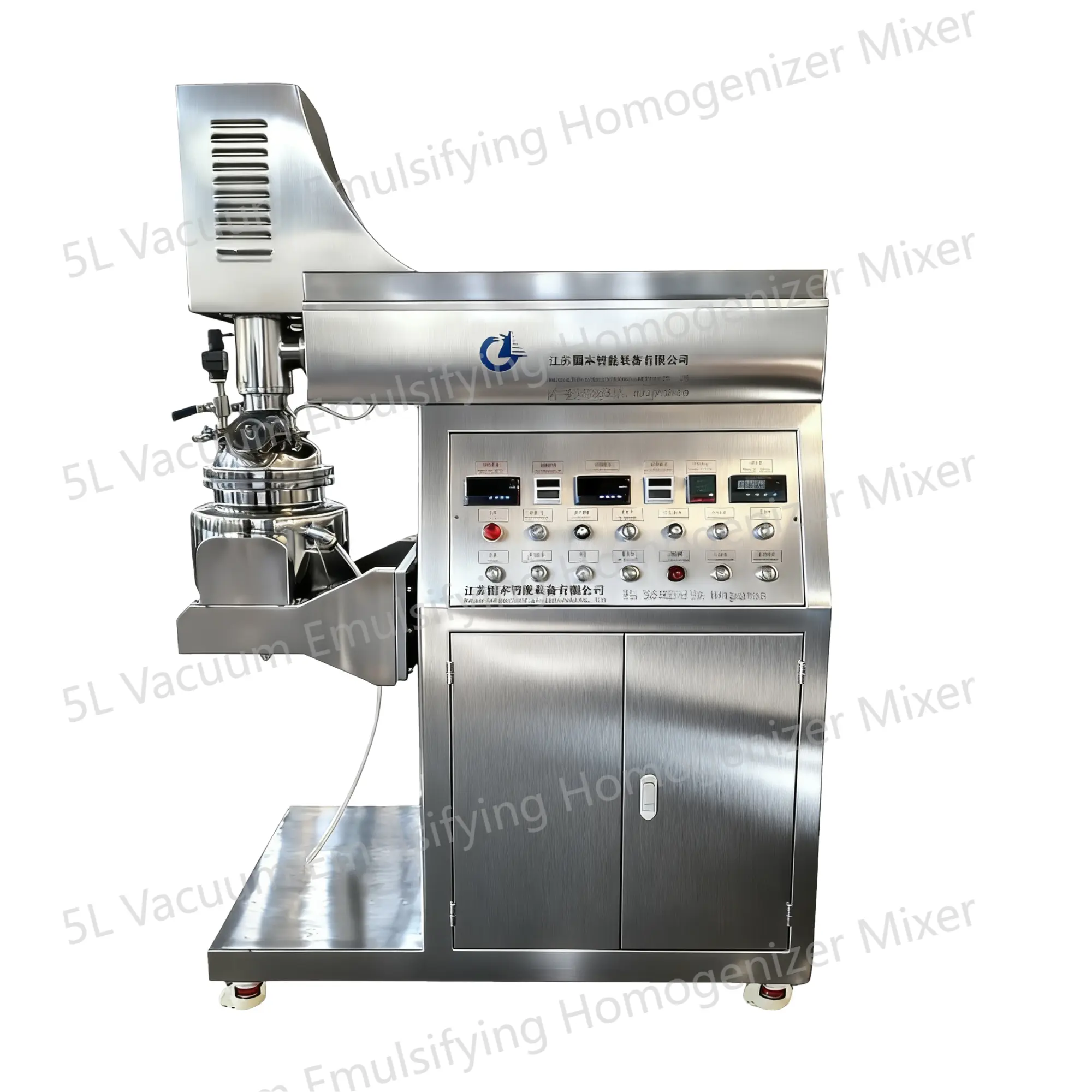 5L Vacuum Emulsifying Homogenizer Mixer
The 5L vacuum emulsifying mixer is a device designed for emulsifying and mixing various substances in a vacuum environment. This equipment is equipped with a mixing tank with a capacity of 5 liters and is widely applied in industries such as food, pharmaceuticals, cosmetics, and pesticides.
-
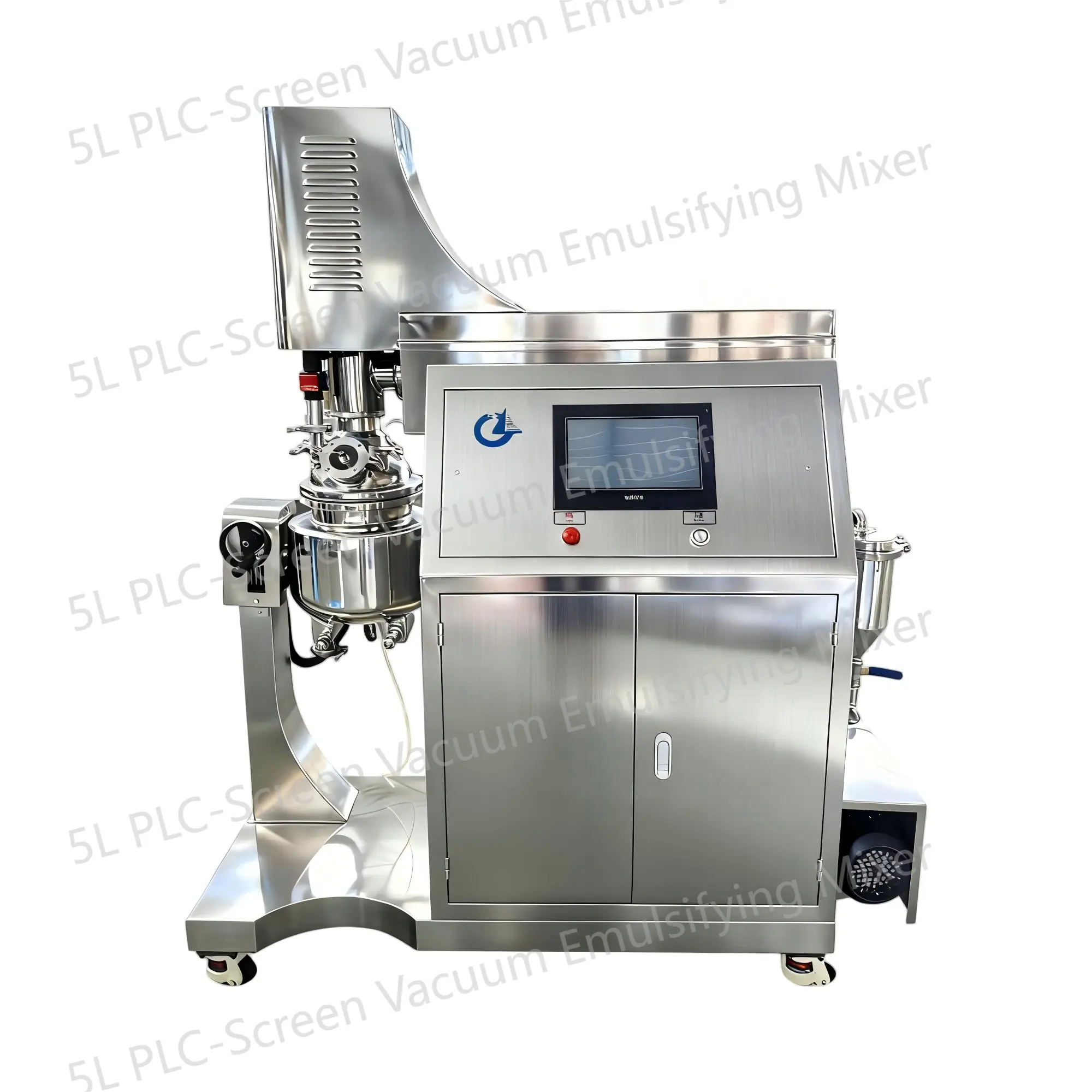 5L PLC-Screen Vacuum Emulsifying Mixer
The 5L PLC-Screen Vacuum Emulsifying Mixer is a device designed for emulsifying and mixing various substances in a vacuum environment. This equipment is equipped with a mixing tank with a capacity of 5 liters and is widely applied in industries such as food, pharmaceuticals, cosmetics, and pesticides.
-
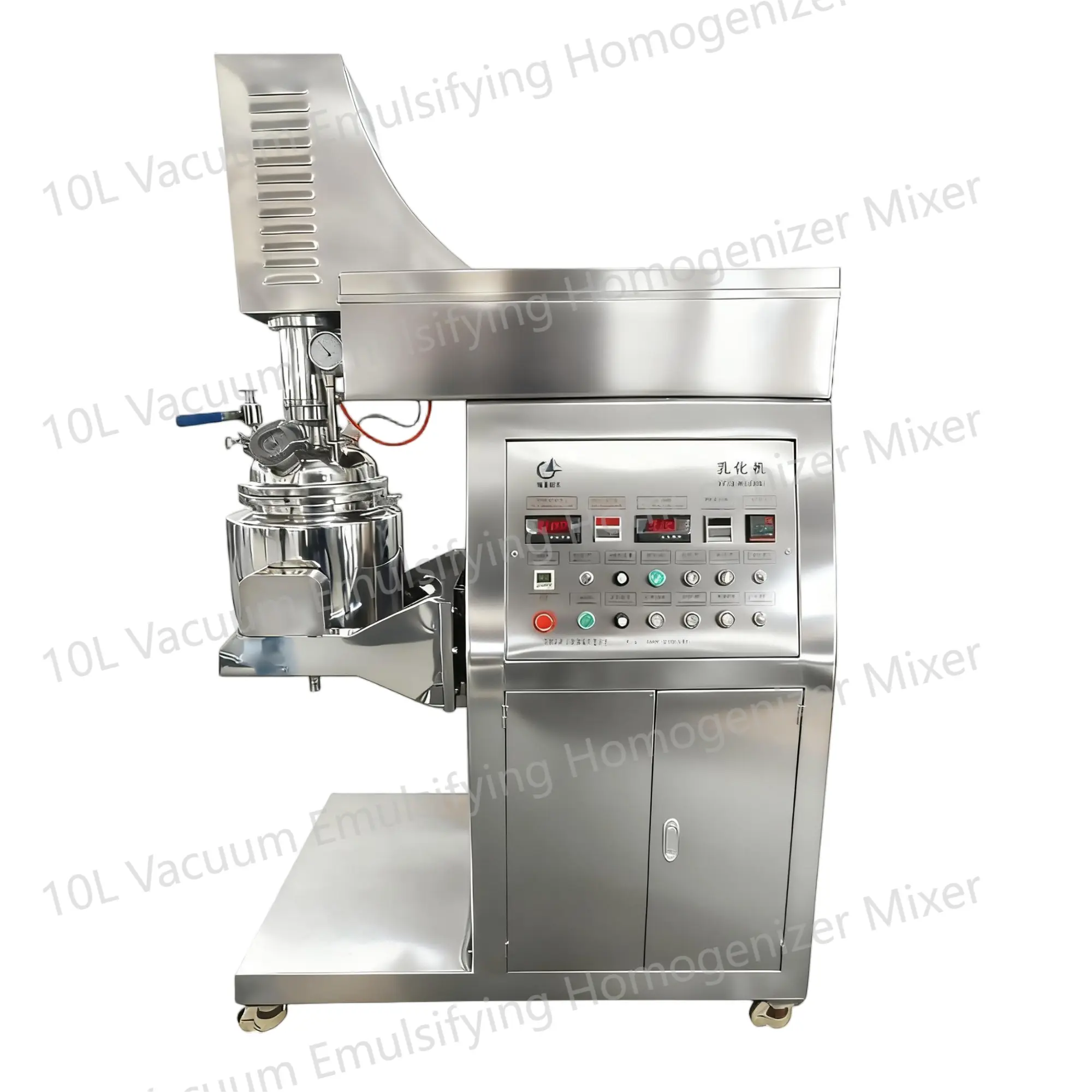 10L Vacuum Emulsifying Homogenizer Mixer
The 10L Vacuum Emulsifying Mixer is a device used for emulsifying and mixing various substances in a vacuum environment. It is commonly used in industries such as food, cosmetics, and pharmaceuticals.