

 English
 Russian
 French
 Spanish
 Portuguese
 Korean
 Japanese
 Thai
ThaiThe Role of Temperature and Pressure Control in Achieving Optimal Emulsification
In industrial production scenarios ranging from food processing, pharmaceutical preparation to daily chemical manufacturing, the performance of an emulsified product — covering particle size uniformity, long-term stability and functional expression — is never a random result of simple mixing. It relies on the precise regulation of multiple core process parameters, among which temperature and pressure control stand out as the two most critical pillars that determine the final emulsification quality. A well-tuned emulsifying machine, supported by accurate temperature and pressure management, can break through the performance bottleneck of traditional mixing processes and deliver consistent, high-quality emulsion products for large-scale production.
Temperature: The foundational driver for interfacial activity and phase compatibility
Temperature runs through every stage of the emulsification process, and its regulation directly affects the interaction state between different phases and the performance of emulsifying active substances.
At the initial pre-mixing stage, a reasonable temperature setting can significantly reduce the viscosity of the oil phase, eliminate the flow resistance difference between the oil phase and the aqueous phase, and make the two immiscible phases fully pre-dispersed before entering the high-shear working zone. This avoids the problem of uneven initial mixing, which would otherwise lead to excessively large local droplets that subsequent shearing cannot fully refine.
For emulsifiers and protein-based stabilizers in the system, precise temperature control is the core premise to maintain their optimal interfacial activity. Too low a temperature will make the emulsifier unable to fully dissolve and diffuse, failing to quickly adsorb to the newly formed oil-water interface after shearing, which leads to droplet re-coalescence. Excessively high temperature will inactivate the emulsifier, destroy the spatial barrier structure formed by protein particles at the interface, and even cause unnecessary evaporation and component loss of heat-sensitive materials.
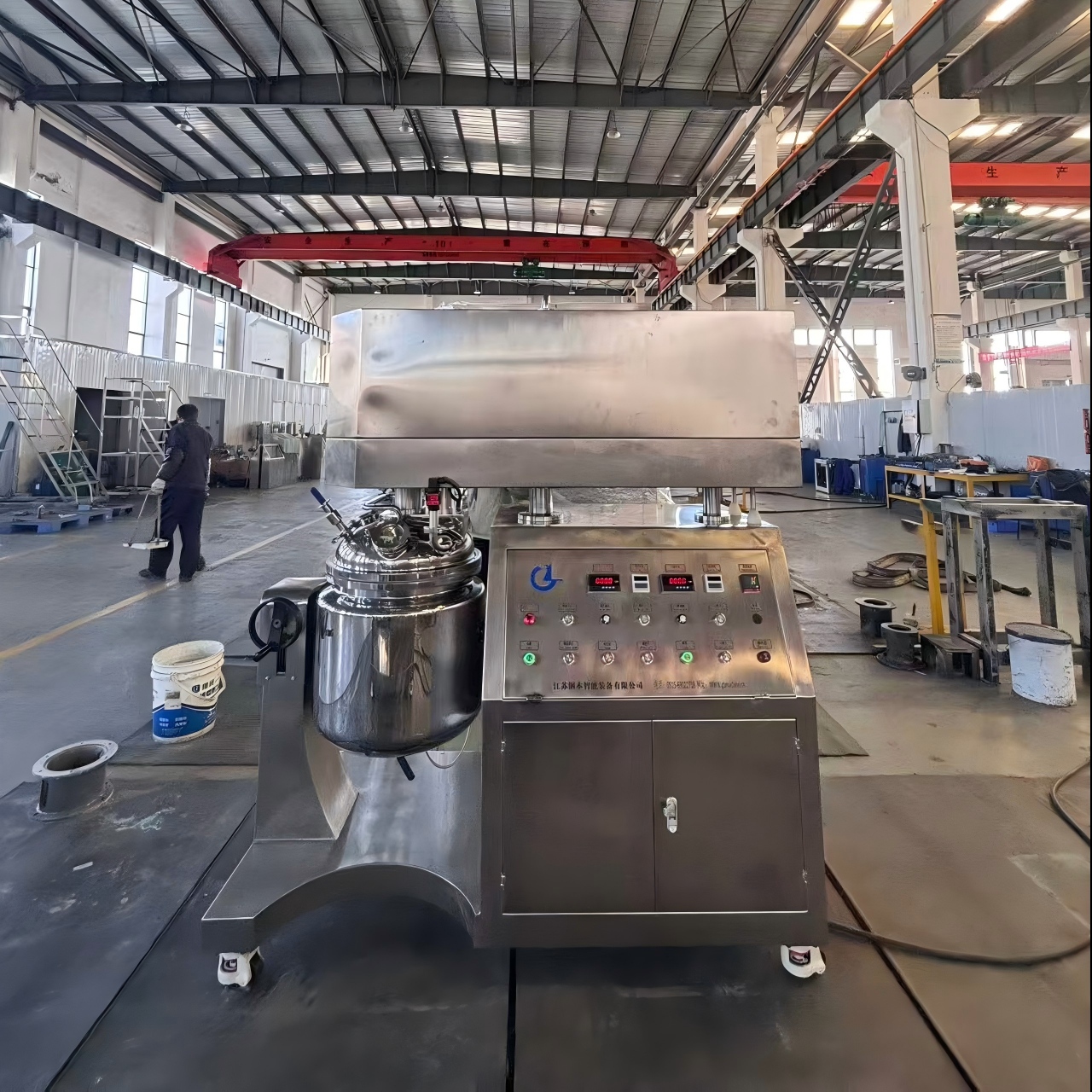
A well-designed emulsifying machine integrates real-time temperature sensors and a closed-loop temperature regulation system. It can dynamically adjust the heating and cooling power according to the real-time state of the material, so that the entire emulsification process can be stably maintained within the optimal temperature window. This avoids the quality fluctuation caused by local overheating or insufficient temperature, and lays a stable foundation for uniform droplet refinement.
Pressure: The core guarantee for shear refinement and system stability
Pressure control runs through both the high-shear homogenization stage and the subsequent system stabilization stage, and it is a key variable that cannot be ignored to achieve optimal emulsification.
In the high-shear working area inside the emulsifying machine, the pressure level directly determines the intensity of the shear force acting on the material. When the system pressure is gradually increased within a reasonable range, the material is subjected to stronger impact, crushing and turbulent shearing in the narrow rotor-stator gap. This can quickly break large droplets into micron or even nano-scale fine particles, and obtain a more uniform particle size distribution. In contrast, emulsification under insufficient pressure often leaves a large number of large unrefined droplets in the system, which will become the starting point for subsequent emulsion stratification and aggregation.
At the degassing and post-homogenization stage, stable negative pressure control can effectively remove the tiny bubbles entrained in the material during the high-speed shearing process. These hidden bubbles are often the main cause of product oxidation, texture coarsening and shelf life reduction. By maintaining a continuous and stable vacuum environment, the emulsifying machine can discharge the tiny bubbles wrapped in the paste while completing the homogenization, avoiding the quality defects such as pores and uneven texture of the final product.
Reasonable pressure gradient setting can also significantly improve the physical stability of the emulsion. The synergistic effect of moderate temperature and pressure can greatly reduce the water separation rate after centrifugation and the oil separation rate during freeze-thaw cycles, making the emulsion system maintain a uniform and stable state for a long time.
Synergistic regulation: The core path to optimal emulsification
Temperature and pressure do not act as independent parameters in the emulsification process — their precise synergistic control is the core path to truly achieve optimal emulsification.
A high-performance emulsifying machine can realize the collaborative matching of temperature curve and pressure curve according to the characteristics of different materials. In the initial pre-dispersion stage, it sets a suitable temperature to reduce the viscosity difference between phases and a low pressure to complete the preliminary mixing. In the core homogenization stage, it raises the pressure step by step under the constant optimal temperature, so that the droplets are gradually refined under graded shear, avoiding the quality problem of uneven particle size caused by one-time high shear. In the final cooling and defoaming stage, it appropriately reduces the system temperature while maintaining stable negative pressure, so that the emulsifier can form a dense and firm interface protective film on the surface of the refined droplets, locking the homogenization effect.
This kind of fine collaborative regulation can not only significantly improve the stability and uniformity of the emulsion, but also reduce the unnecessary energy consumption and material loss in the production process. It helps industrial production to obtain high-quality emulsion products that cannot be achieved by traditional single-parameter control, and pushes the emulsification process from extensive mixing to a high-precision manufacturing stage.
News
- Latest News
- Solutions
- FAQ
Recommend Products
-
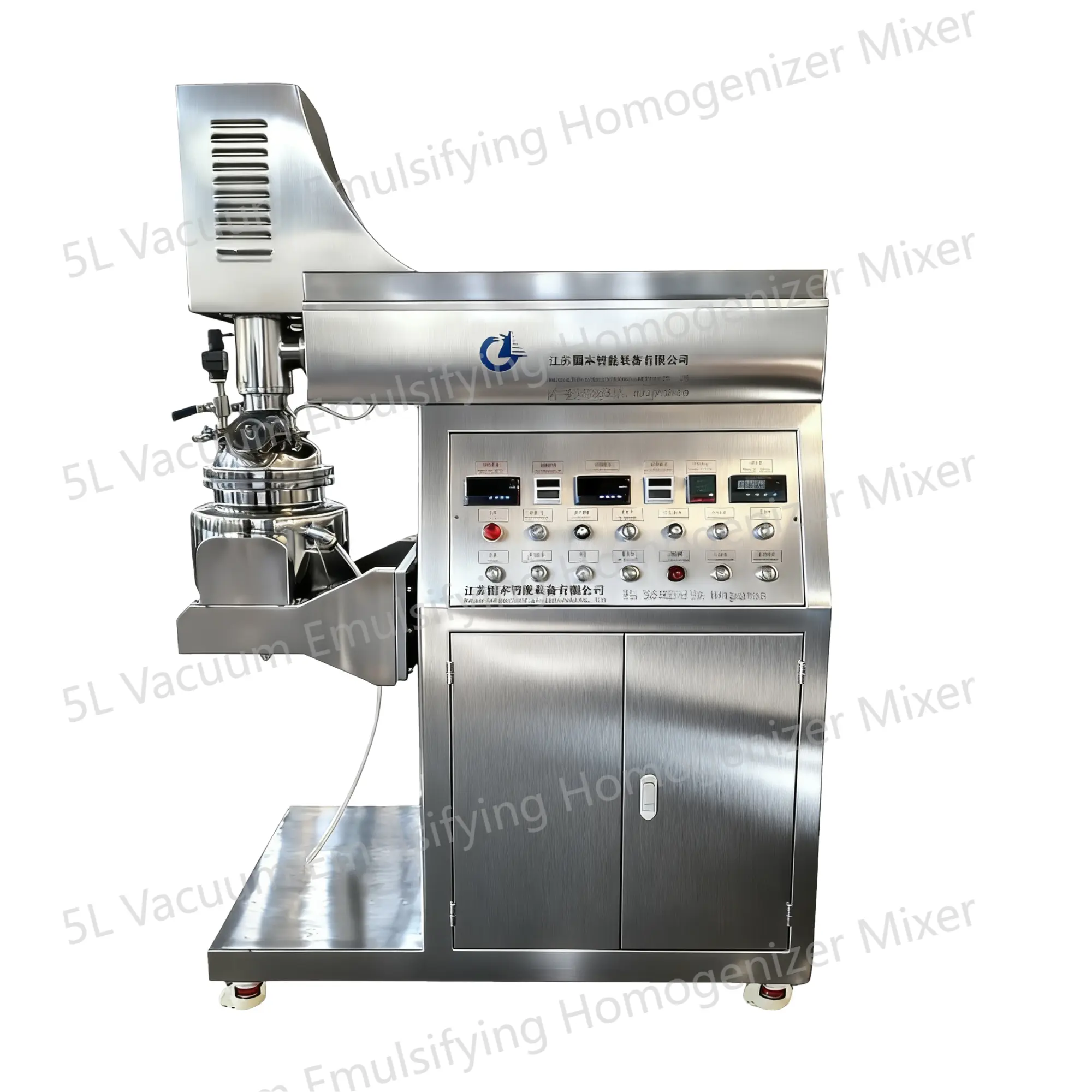 5L Vacuum Emulsifying Homogenizer Mixer
The 5L vacuum emulsifying mixer is a device designed for emulsifying and mixing various substances in a vacuum environment. This equipment is equipped with a mixing tank with a capacity of 5 liters and is widely applied in industries such as food, pharmaceuticals, cosmetics, and pesticides.
-
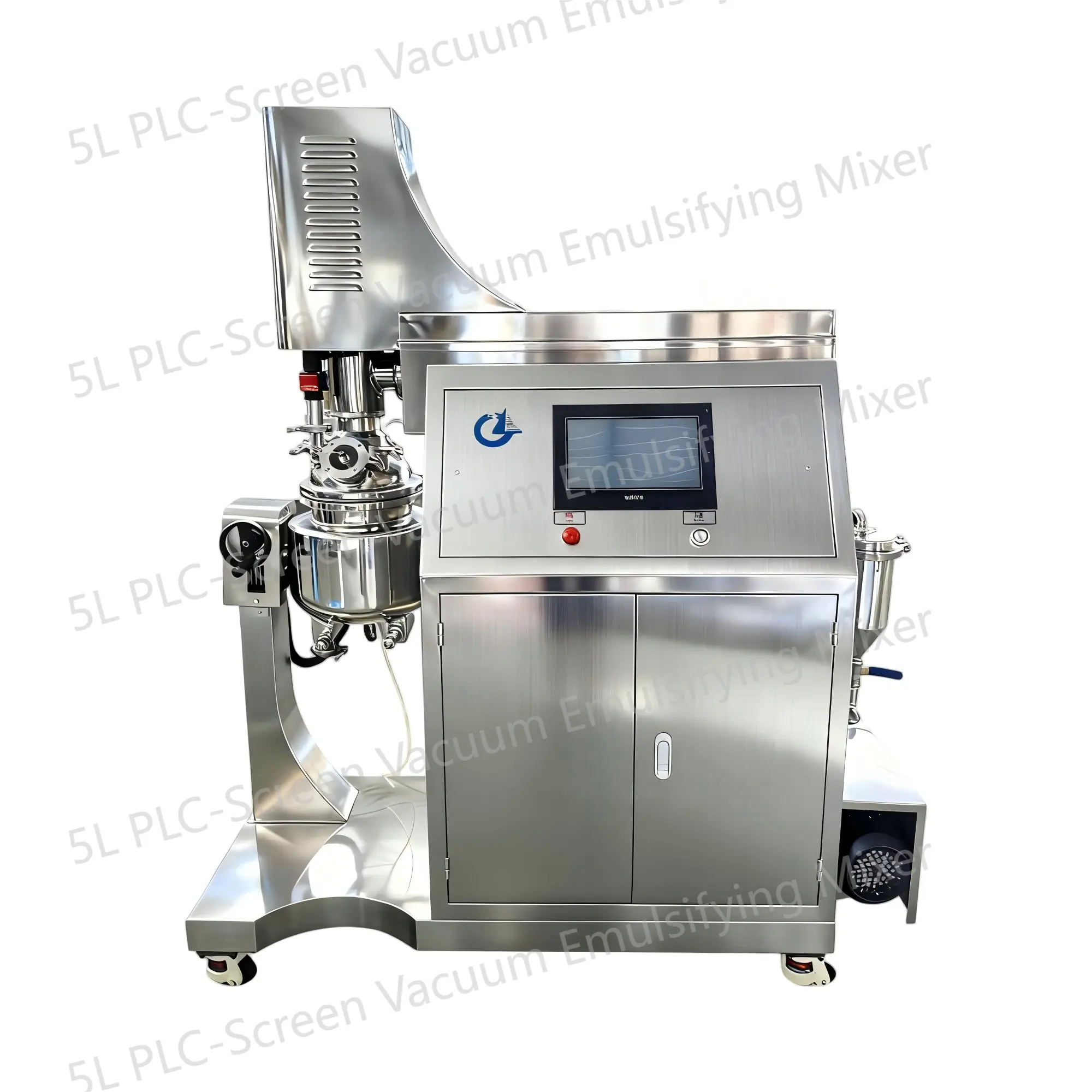 5L PLC-Screen Vacuum Emulsifying Mixer
The 5L PLC-Screen Vacuum Emulsifying Mixer is a device designed for emulsifying and mixing various substances in a vacuum environment. This equipment is equipped with a mixing tank with a capacity of 5 liters and is widely applied in industries such as food, pharmaceuticals, cosmetics, and pesticides.
-
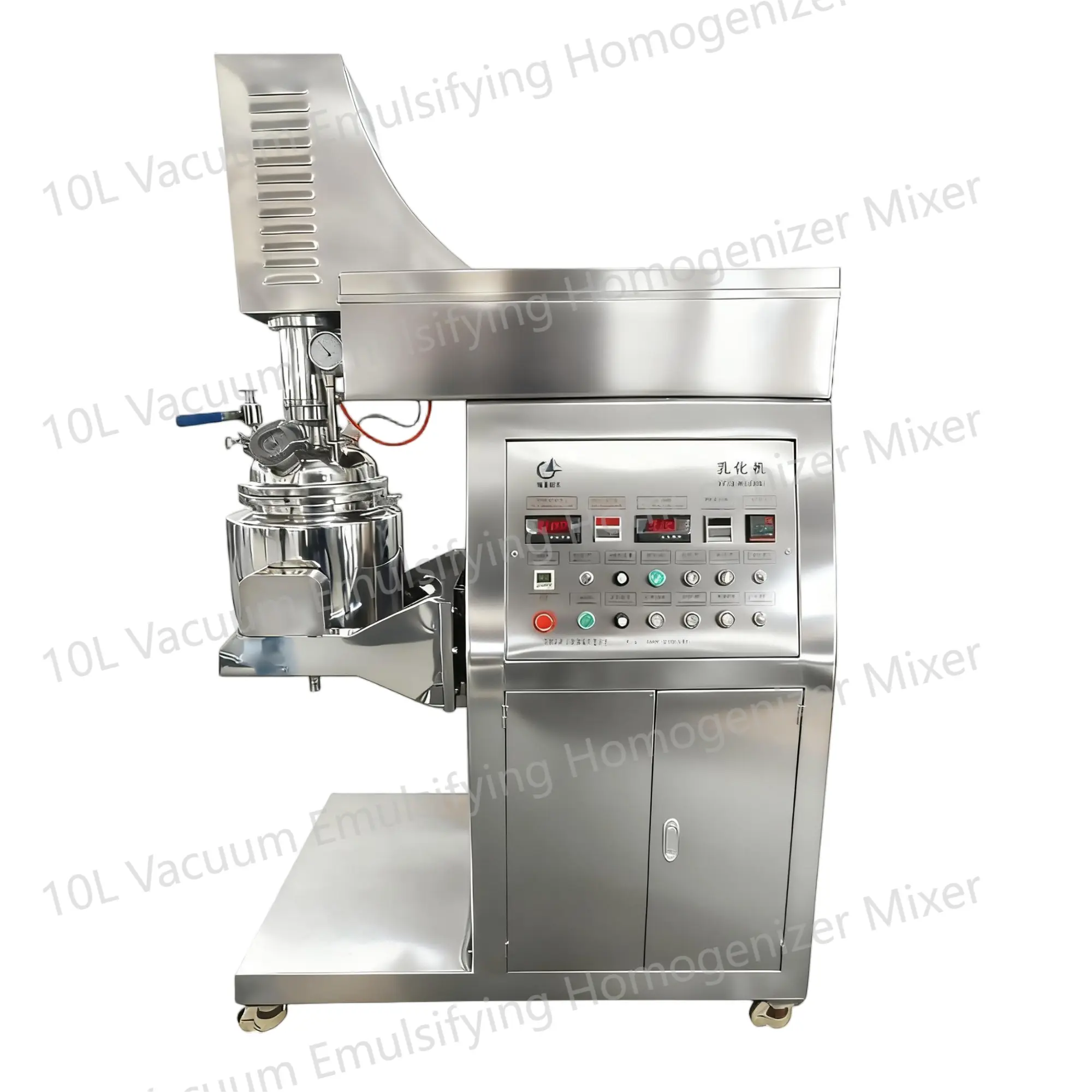 10L Vacuum Emulsifying Homogenizer Mixer
The 10L Vacuum Emulsifying Mixer is a device used for emulsifying and mixing various substances in a vacuum environment. It is commonly used in industries such as food, cosmetics, and pharmaceuticals.
Recommend Faq
-
 Sep 17,2026
The Role of Temperature and Pressure Control in Achieving Optimal Emulsification
-
 Sep 17,2026
From Dispersion to Bubble-Free Homogenization: The Road of Dual-Effect Technological Innovation Combining High Shear Force and Vacuum Degassing
-
 Sep 09,2026
Scalable Production: Full-Range Vacuum Emulsifying Mixers from 5L Lab Scale to 2000L Industrial Capacity


