

 English
 Russian
 French
 Spanish
 Portuguese
 Korean
 Japanese
 Thai
ThaiKey Factors Influencing the Emulsification Effect of Vacuum Emulsifiers
What factors affect the emulsification performance of vacuum emulsifiers? The primary considerations are outlined below:
High-Shear Mixing Emulsifiers
Capable of producing emulsions and suspensions with relatively large but narrowly distributed particle sizes. Featuring high shear rates, they ensure the stability of mixed liquids. Different working heads (stator + rotor) are tailored to specific process requirements and fluid dynamics.
High-Shear Dispersion Emulsifiers
Primarily designed for processing large volumes of emulsions and generating ultra-fine suspensions. Equipped with three working heads, they deliver extremely narrow particle size distribution and smaller droplets/particles, resulting in superior stability of the mixed liquid. The easily replaceable dispersion heads accommodate diverse applications.
High-Speed Shear Homogenizing Emulsifiers
Boasting shear rates exceeding 10,000 rpm (note: corrected from "100.00 rpm" for technical accuracy) and rotor tip speeds up to 40 m/s, these emulsifiers leverage shear-induced turbulence combined with specially engineered motors to achieve nano-scale particle sizes. They offer enhanced shear force and narrower particle size distribution.
Laboratory-Scale Dispersion Emulsifiers
Tailored for R&D purposes, these units mirror the configuration of large-scale industrial in-line production models—including matching working head types and linear speeds. Process parameters validated during pilot trials require no re-adjustment for industrial scaling, minimizing risks associated with equipment upgrade.
In-Line High-Shear Dispersion Emulsifiers
Ideal for applications demanding ultra-high precision grinding, capable of achieving nano-scale particle sizes with enhanced shear force and narrow size distribution. Particularly suited for vaccines, cell disruption, colloidal solutions, inks, printing coatings, pigment mixing, etc.
Emulsification Temperature
Temperature significantly impacts emulsification outcomes, though no strict limitations apply. For liquid oil-water systems, emulsification can be achieved at room temperature via stirring. Typically, the emulsification temperature is determined by the melting point of high-melting components in either phase, as well as emulsifier type and oil-water solubility. Critically, the two phases should be maintained at similar temperatures—especially when emulsifying oil phases containing waxes or fats with melting points above 70℃. Adding low-temperature aqueous phases to such systems may cause wax/fat crystallization, resulting in lumpy or uneven emulsions. Generally, a temperature range of 75℃–85℃ is recommended for both phases; higher temperatures may be required if the oil phase contains high-melting waxes. Additionally, if viscosity increases excessively during emulsification (impeding stirring), moderate temperature elevation can help. For emulsifiers with a specific phase inversion temperature, emulsification is best performed near this temperature. Temperature also affects droplet size: for example, when using fatty acid soap anionic emulsifiers via the nascent soap method, emulsification at 80℃ yields droplets of ~1.8–2.0μm, whereas emulsification at 60℃ results in larger droplets (~6μm). Non-ionic emulsifiers exhibit weaker sensitivity to temperature in terms of droplet size.
Emulsification Time
Emulsification time directly influences emulsion quality and is determined by oil-water volume ratio, phase viscosities, target emulsion viscosity, emulsifier type and dosage, and emulsification temperature. The core objective is to ensure thorough emulsification, which is closely linked to equipment efficiency. Optimal emulsification time can be established through experience and experimentation—for instance, homogenizers operating at 3,000 rpm typically require only 3–10 minutes.
Stirring Speed
Stirring speed is a critical factor in emulsification. Moderate speeds ensure sufficient oil-water mixing: excessively low speeds fail to achieve uniform blending, while excessively high speeds introduce air, creating an unstable three-phase system. Air entrainment must be avoided during stirring.
Additional Influencing Factors
Other key considerations include: working head type, shear rate, tooth profile, material residence time in the dispersion chamber, emulsification/dispersion duration, and circulation cycles. To maximize the performance of vacuum emulsifiers, these factors should be carefully optimized during operation.
News
- Latest News
- Solutions
- FAQ
Recommend Products
-
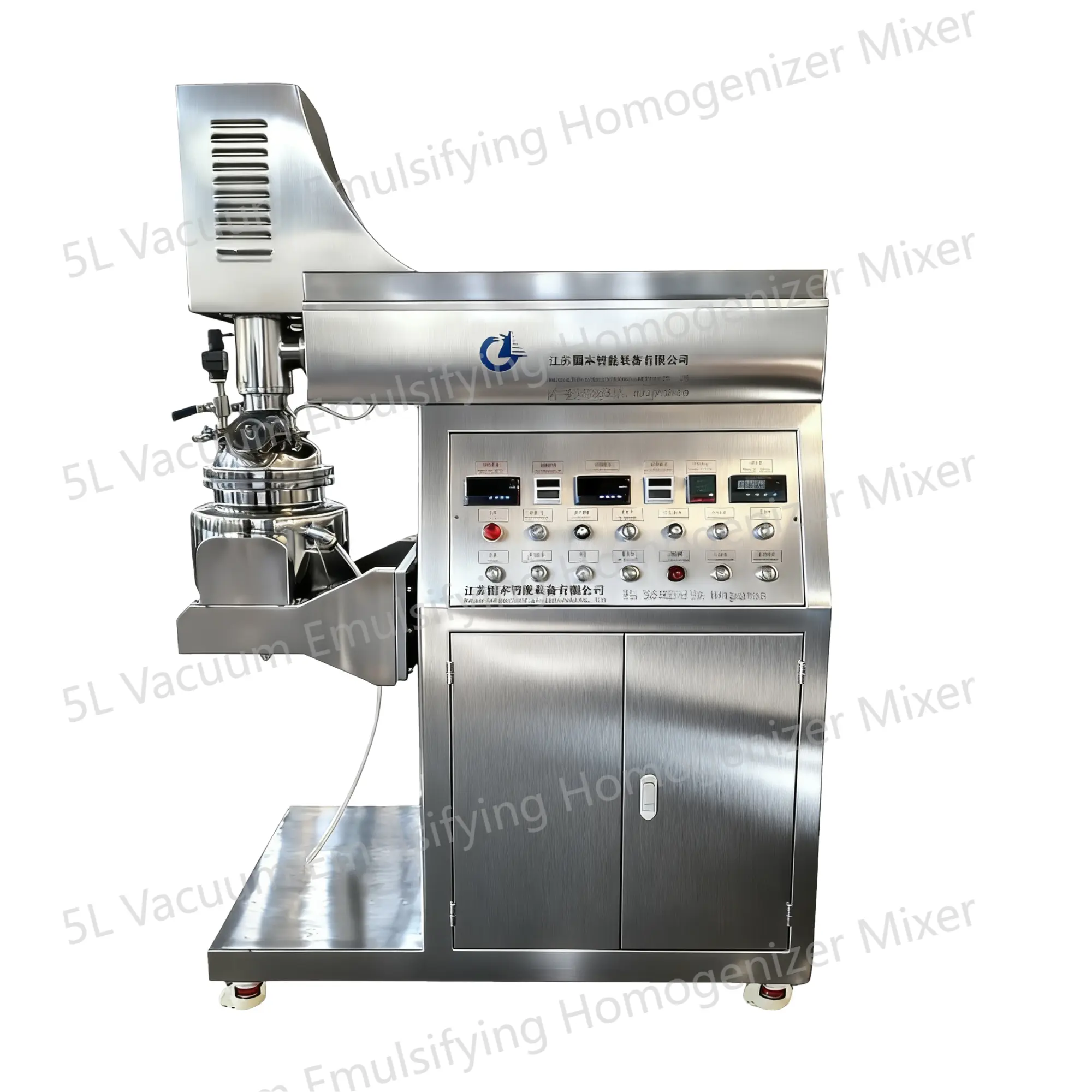 5L Vacuum Emulsifying Homogenizer Mixer
The 5L vacuum emulsifying mixer is a device designed for emulsifying and mixing various substances in a vacuum environment. This equipment is equipped with a mixing tank with a capacity of 5 liters and is widely applied in industries such as food, pharmaceuticals, cosmetics, and pesticides.
-
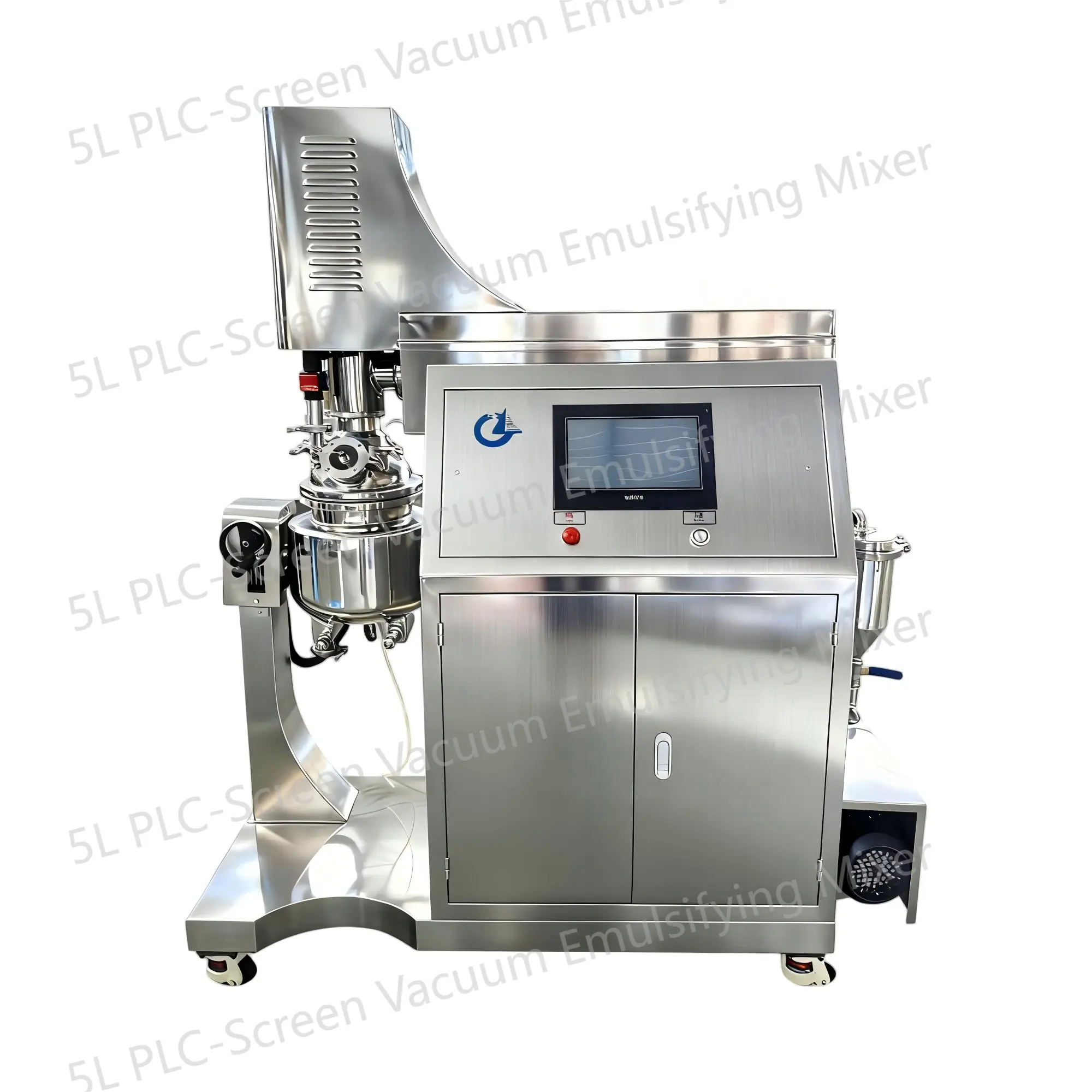 5L PLC-Screen Vacuum Emulsifying Mixer
The 5L PLC-Screen Vacuum Emulsifying Mixer is a device designed for emulsifying and mixing various substances in a vacuum environment. This equipment is equipped with a mixing tank with a capacity of 5 liters and is widely applied in industries such as food, pharmaceuticals, cosmetics, and pesticides.
-
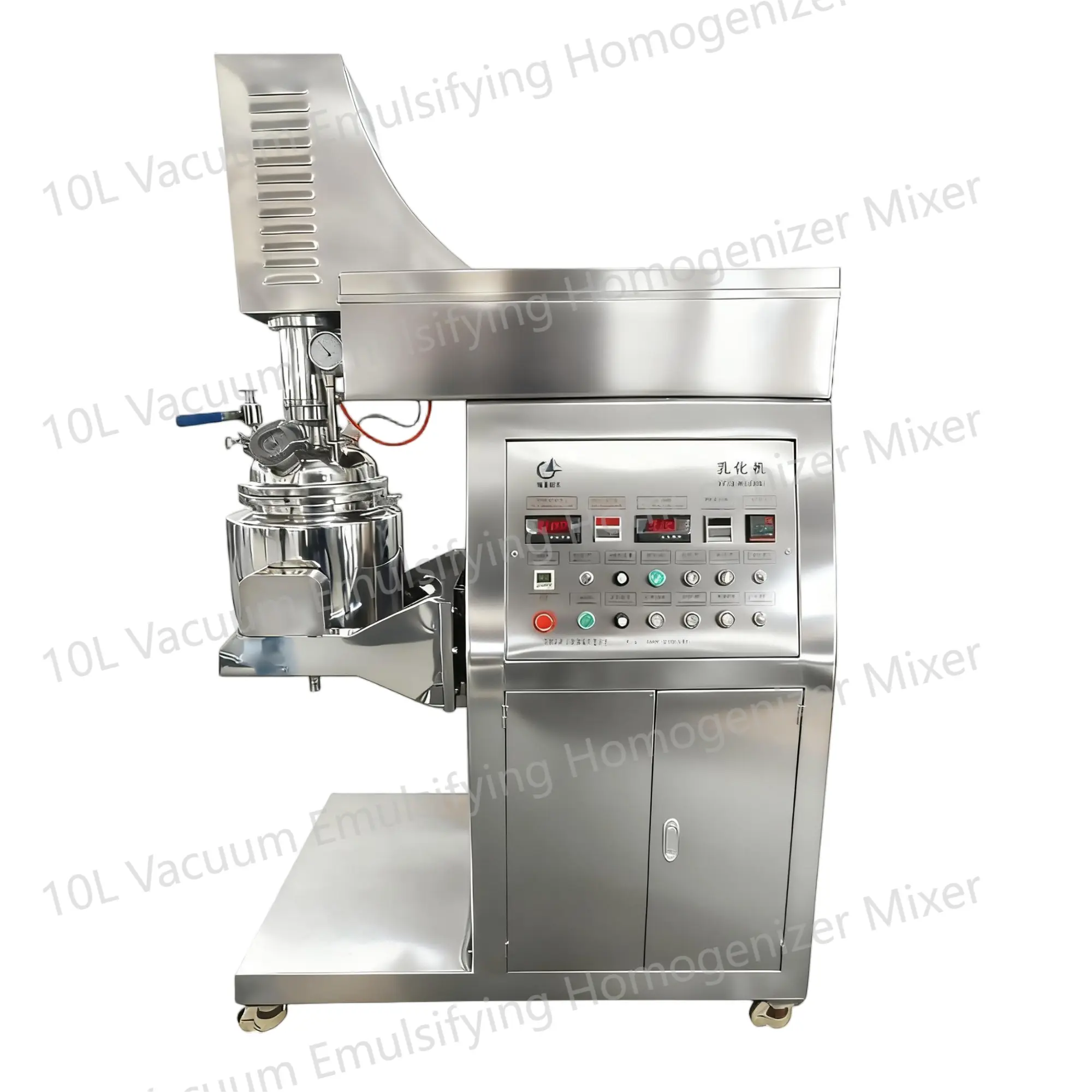 10L Vacuum Emulsifying Homogenizer Mixer
The 10L Vacuum Emulsifying Mixer is a device used for emulsifying and mixing various substances in a vacuum environment. It is commonly used in industries such as food, cosmetics, and pharmaceuticals.
Recommend Faq
-
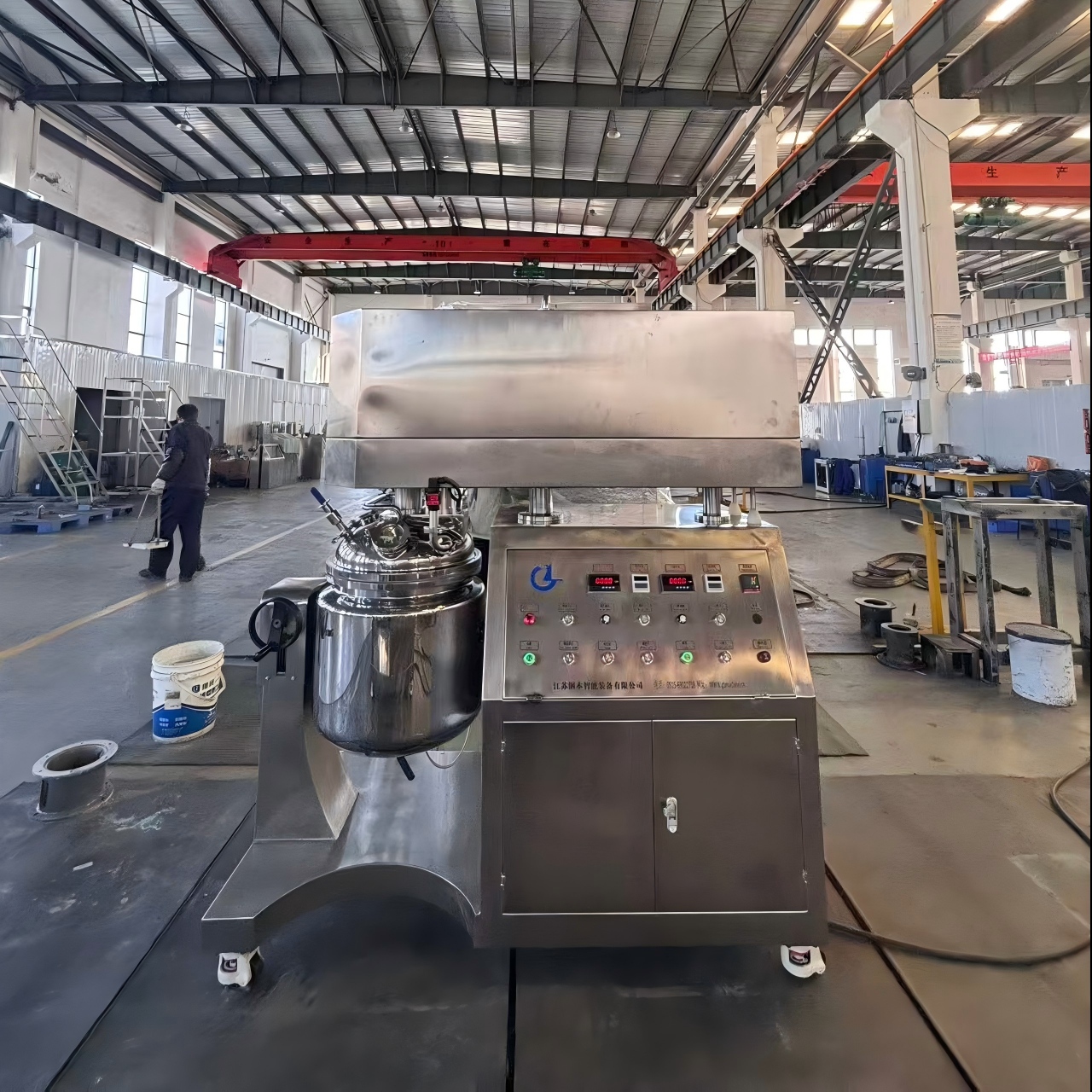 Sep 17,2026
The Role of Temperature and Pressure Control in Achieving Optimal Emulsification
-
 Sep 17,2026
From Dispersion to Bubble-Free Homogenization: The Road of Dual-Effect Technological Innovation Combining High Shear Force and Vacuum Degassing
-
 Sep 09,2026
Scalable Production: Full-Range Vacuum Emulsifying Mixers from 5L Lab Scale to 2000L Industrial Capacity


