

 English
 Russian
 French
 Spanish
 Portuguese
 Korean
 Japanese
 Thai
ThaiUpgrade Your Kitchen or Factory with a Professional-Grade Emulsifier Mixe
Whether you're a small-batch artisan cooking up the next big sauce or a factory manager pushing thousands of liters of product per shift, one piece of equipment separates the amateurs from the professionals: the Vacuum Emulsifying Mixer. It's not just a mixer. It's the single upgrade that transforms how you blend, stabilize, and scale every emulsion you make.
Why Your Current Mixer Is Holding You Back
Let's be honest. A standard kitchen blender or a basic industrial stirrer can get the job done — until it can't.
Here's what happens without a Vacuum Emulsifying Mixer:
Air gets trapped. Every time you blend oil into water, you're forcing air into the system. That air becomes micro-bubbles. In a mayo, they cause graininess. In a cosmetic cream, they create visible pores. In a factory line, they trigger premature oxidation — your product goes rancid weeks before it should.
Heat destroys actives. Friction from high-speed mixing generates uncontrolled heat. Vitamin C, plant extracts, enzymes — all of them degrade. You lose potency before the product even reaches the consumer.
Consistency is a gamble. Batch A tastes perfect. Batch B separates on the shelf. Without precise, repeatable parameters, quality control becomes a guessing game.
The Vacuum Emulsifying Mixer eliminates all three problems in a single machine.
What a Vacuum Emulsifying Mixer Actually Does
At its core, a Vacuum Emulsifying Mixer combines three technologies that no conventional mixer can match:
Technology What It Does Why It Matters
High-shear rotor-stator Shatters particles to micron/nano scale at thousands of RPM Silky texture, instant absorption, zero graininess
Vacuum chamber (-0.08 to -0.1 MPa) Removes air before and during emulsification No bubbles, no oxidation, extended shelf life
Jacketed temp control (±0.5°C) Heats or cools with surgical precision Protects heat-sensitive ingredients, ensures repeatable results
Add a 360° wall-scraping agitator and you get complete homogeneity — nothing sticks, nothing settles, nothing is wasted.
This is why the Vacuum Emulsifying Mixer has become the standard in commercial kitchens, cosmetics labs, pharmaceutical production, and food factories worldwide.
For the Kitchen: From Homemade to Sellable
If you're running a small food operation — artisan sauces, dressings, nut butters, or specialty emulsions — a Vacuum Emulsifying Mixer is the fastest path from kitchen counter to retail shelf.
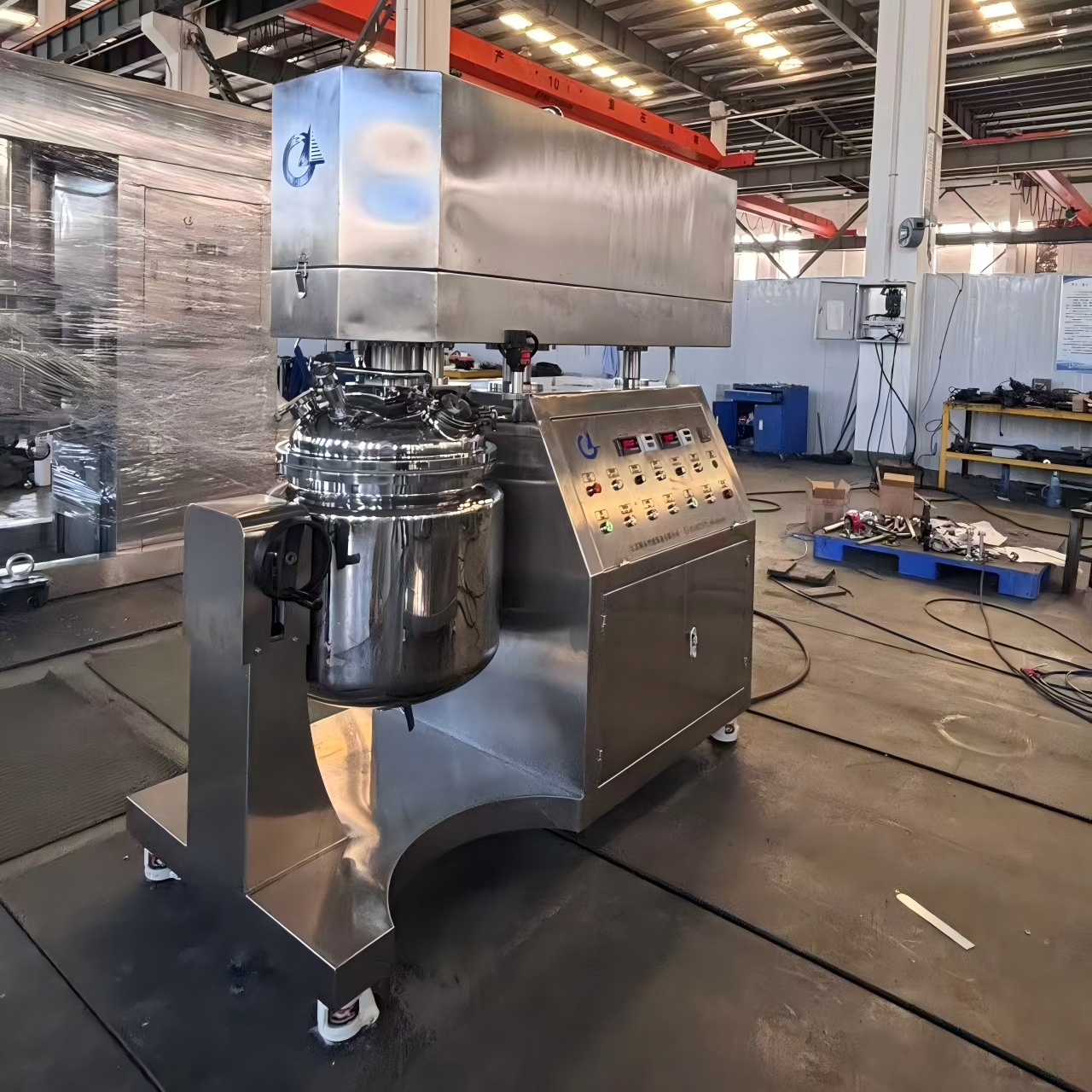
What changes overnight:
Sauces that never break. A hollandaise or vinaigrette made in a Vacuum Emulsifying Mixer stays stable for weeks, not hours. The vacuum eliminates the air that causes separation.
Textures your blender can't touch. Want a mayonnaise with zero eggy taste and restaurant-grade smoothness? The high-shear rotor-stator emulsifies at a molecular level — something no immersion blender will ever achieve.
Cleaner labels. No need for artificial stabilizers, anti-foaming agents, or preservatives. The vacuum environment and precise temperature control do the preservation work naturally.
Scalability without reformulation. A 20L Vacuum Emulsifying Mixer lets you test a recipe today and produce 500 liters tomorrow on the same machine architecture. No reformulation. No new equipment. No wasted R&D.
For a small operation, this single upgrade can mean the difference between a hobby and a brand.
For the Factory: Speed, Compliance, and Zero Downtime
In a production environment, the Vacuum Emulsifying Mixer isn't a nice-to-have. It's a bottleneck eliminator.
1. Faster Cycle Times
A conventional mixer might need 30–45 minutes of blending plus 15 minutes of manual defoaming. A Vacuum Emulsifying Mixer does both simultaneously — vacuum removes air in real time while the rotor-stator emulsifies. Industry data shows cycle times drop by 30–50%, which directly increases daily output.
2. Batch-to-Batch Consistency
Modern Vacuum Emulsifying Mixer units come equipped with PLC controllers and HMI touchscreens. Every parameter — speed, temperature, vacuum level, time — is stored digitally. Hit "repeat" and you get the exact same emulsion every single time. This is what GMP, FDA, and EU regulators expect.
3. CIP/SIP Ready
Clean-in-place (CIP) and sterilize-in-place (SIP) capabilities mean the Vacuum Emulsifying Mixer can be cleaned and sanitized without full disassembly. Downtime between batches drops from hours to minutes.
4. Flexible Product Switching
Need to go from a thick body cream to a light serum in the same shift? With modular Vacuum Emulsifying Mixer systems, you swap tools, load a new formula, and run. Changeover time under 20 minutes is now standard.
Sizing Your Vacuum Emulsifying Mixer: A Quick Guide
Scale Volume Best For
Lab / R&D 5L – 50L Formula development, small-batch testing, custom sauces
Pilot / Small Production 50L – 500L Pre-production validation, boutique brands, contract manufacturing
Mid-Scale Factory 500L – 3,000L Regional distribution, cosmetics brands, food manufacturers
Industrial 3,000L – 10,000L+ National/global supply chains, high-volume OEM production
The architecture is the same across all sizes. Upgrade later by simply moving to the next tier — your process knowledge transfers perfectly.
The Hidden ROI Nobody Talks About
Most buyers calculate the Vacuum Emulsifying Mixer cost against the price tag. Smarter operators calculate it against what they lose without one:
Hidden Cost Without a Vacuum Emulsifying Mixer With a Vacuum Emulsifying Mixer
Product recalls from phase separation Near-zero separation rate
Wasted raw materials from failed batches 95%+ material utilization
Manual defoaming labor (hours per shift) Automated — zero manual intervention
Shortened shelf life requiring faster turnover Extended shelf life — flexible distribution
Reformulation costs when scaling up Seamless scale-up, same formula
The payback period for a Vacuum Emulsifying Mixer in a mid-scale operation is typically 6–14 months. After that, it's pure margin improvement.
What to Look for When Buying
Not all Vacuum Emulsifying Mixer units are equal. Here's what separates a professional-grade machine from a cheap imitation:
Vacuum level stability — Must hold -0.08 to -0.1 MPa consistently, not just at startup.
Rotor-stator gap precision — Tighter gaps mean finer emulsions. Look for adjustable gap designs.
Jacket material — 316L stainless steel is the minimum for food and cosmetic applications.
Control system — PLC + HMI with recipe storage is non-negotiable for any production use.
Seal quality — PTFE or mechanical seals rated for continuous vacuum operation. Cheap seals leak. Leaks kill vacuum. Dead vacuum kills your emulsion.
The Bottom Line
Upgrading to a Vacuum Emulsifying Mixer is not about buying a fancier blender. It's about eliminating the three silent killers of every emulsion you make: air, heat, and inconsistency.
Whether your operation is a single kitchen or a multi-line factory, the Vacuum Emulsifying Mixer is the one upgrade that pays for itself — in quality, in speed, in compliance, and in the confidence that every batch you ship is exactly what your customer expects.
News
- Latest News
- Solutions
- FAQ
Recommend Products
-
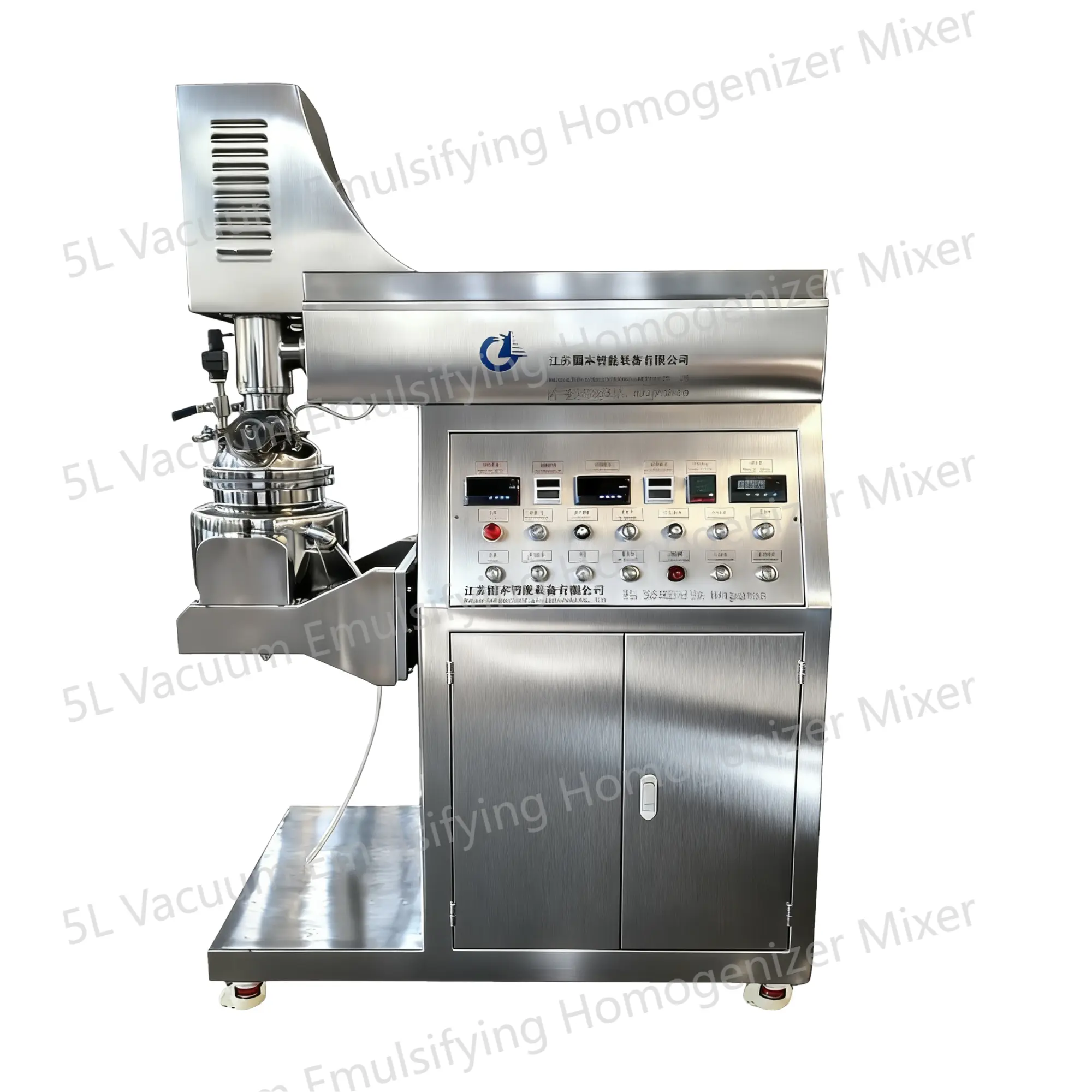 5L Vacuum Emulsifying Homogenizer Mixer
The 5L vacuum emulsifying mixer is a device designed for emulsifying and mixing various substances in a vacuum environment. This equipment is equipped with a mixing tank with a capacity of 5 liters and is widely applied in industries such as food, pharmaceuticals, cosmetics, and pesticides.
-
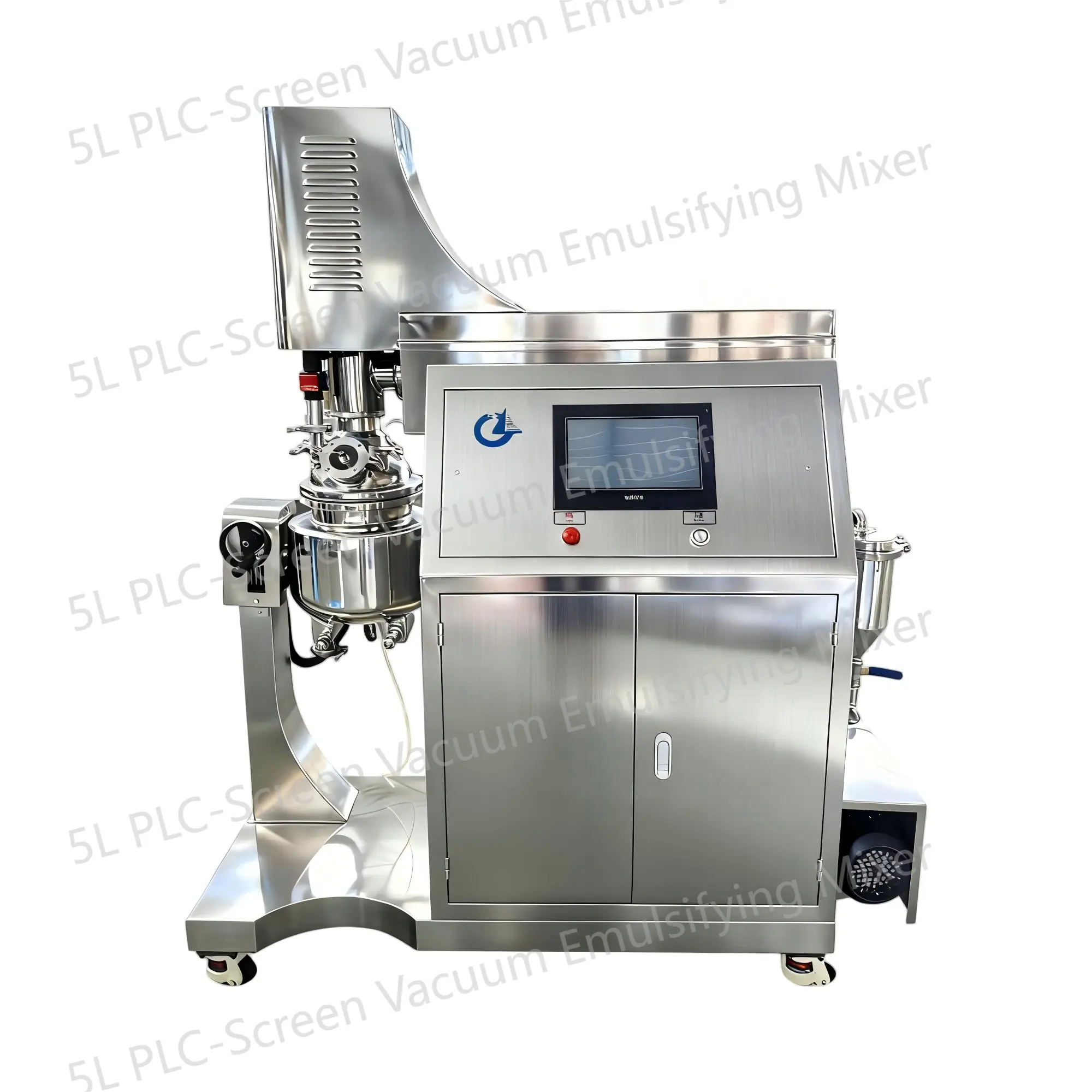 5L PLC-Screen Vacuum Emulsifying Mixer
The 5L PLC-Screen Vacuum Emulsifying Mixer is a device designed for emulsifying and mixing various substances in a vacuum environment. This equipment is equipped with a mixing tank with a capacity of 5 liters and is widely applied in industries such as food, pharmaceuticals, cosmetics, and pesticides.
-
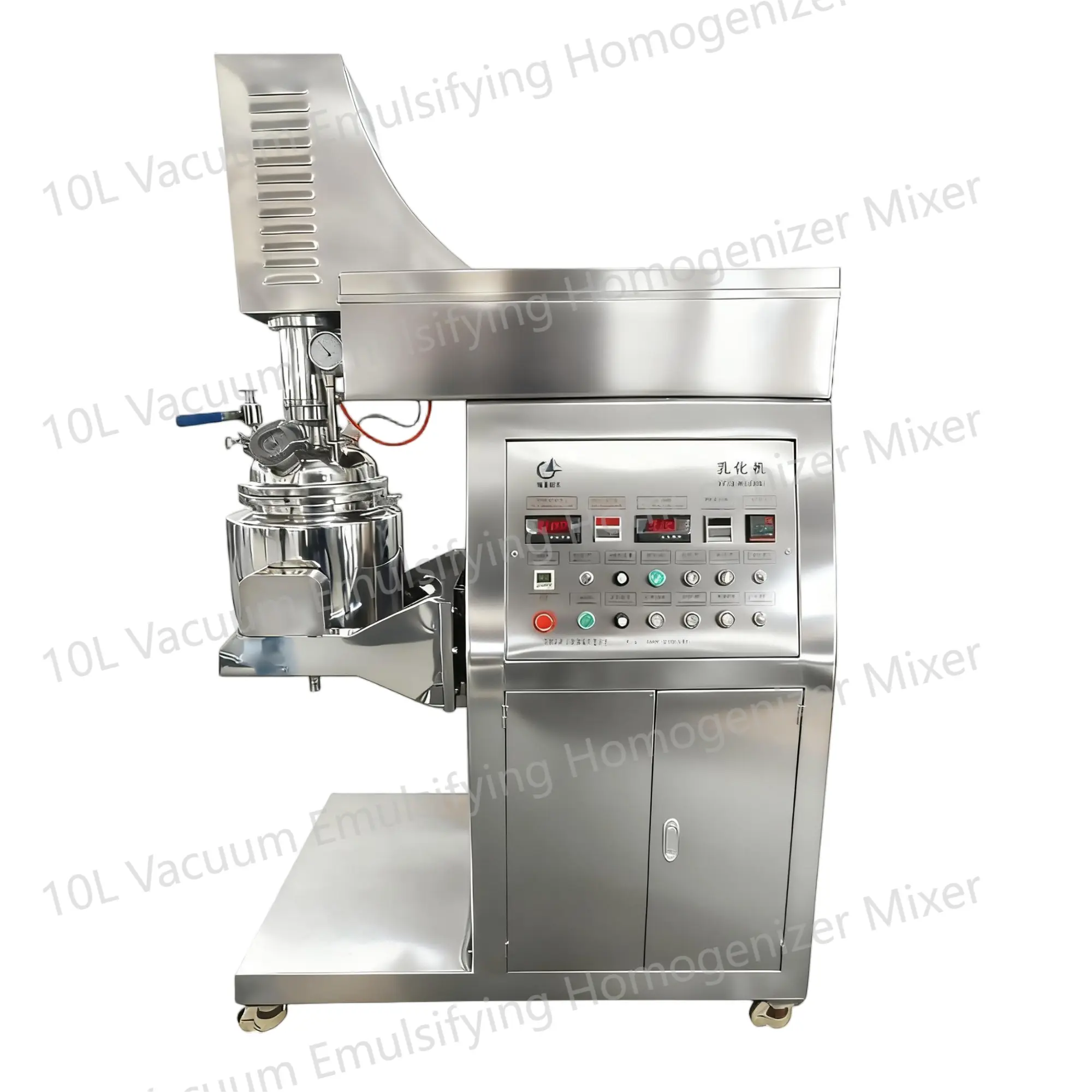 10L Vacuum Emulsifying Homogenizer Mixer
The 10L Vacuum Emulsifying Mixer is a device used for emulsifying and mixing various substances in a vacuum environment. It is commonly used in industries such as food, cosmetics, and pharmaceuticals.
Recommend Faq
-
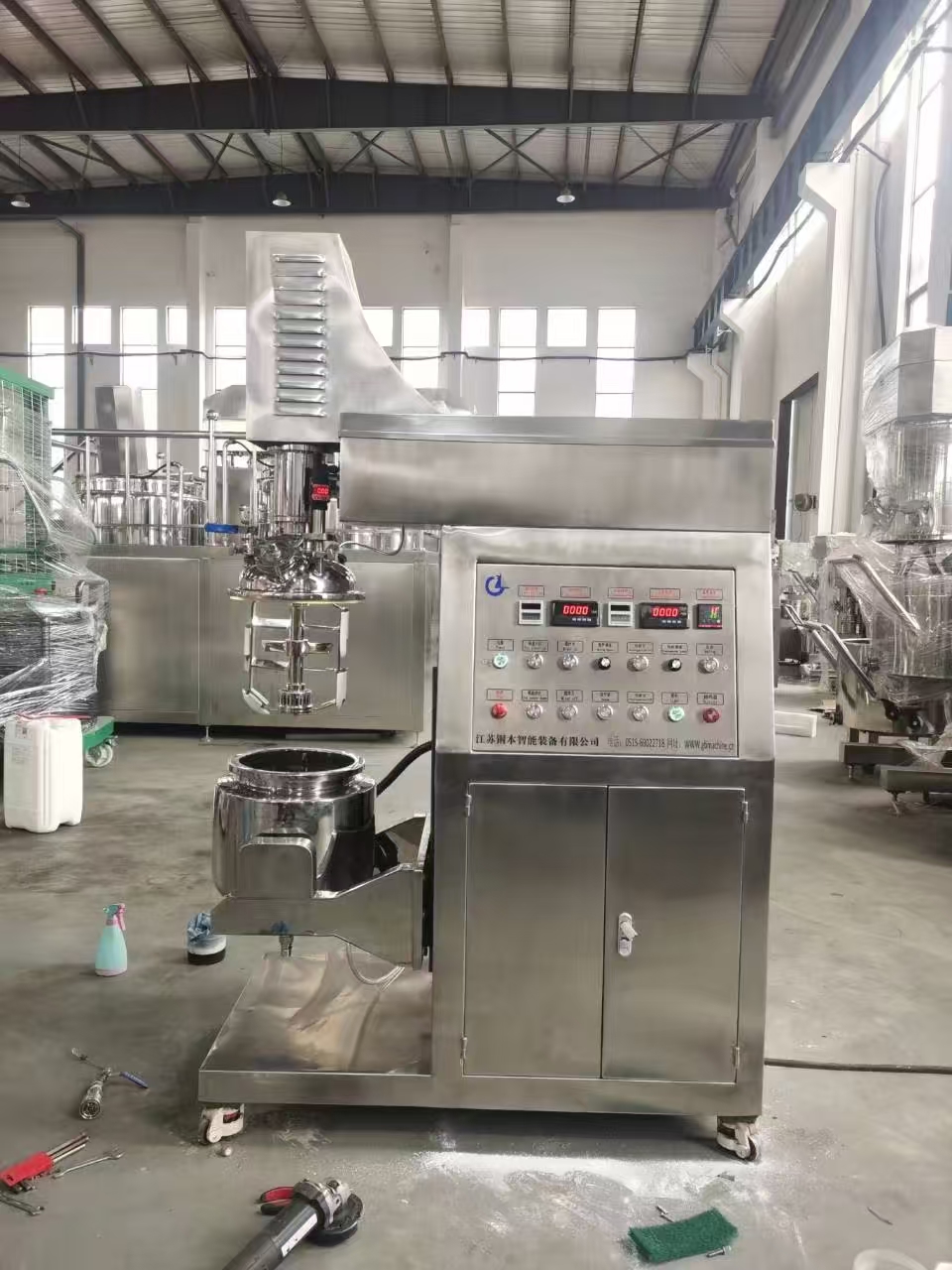 Sep 09,2026
Scalable Production: Full-Range Vacuum Emulsifying Mixers from 5L Lab Scale to 2000L Industrial Capacity
-
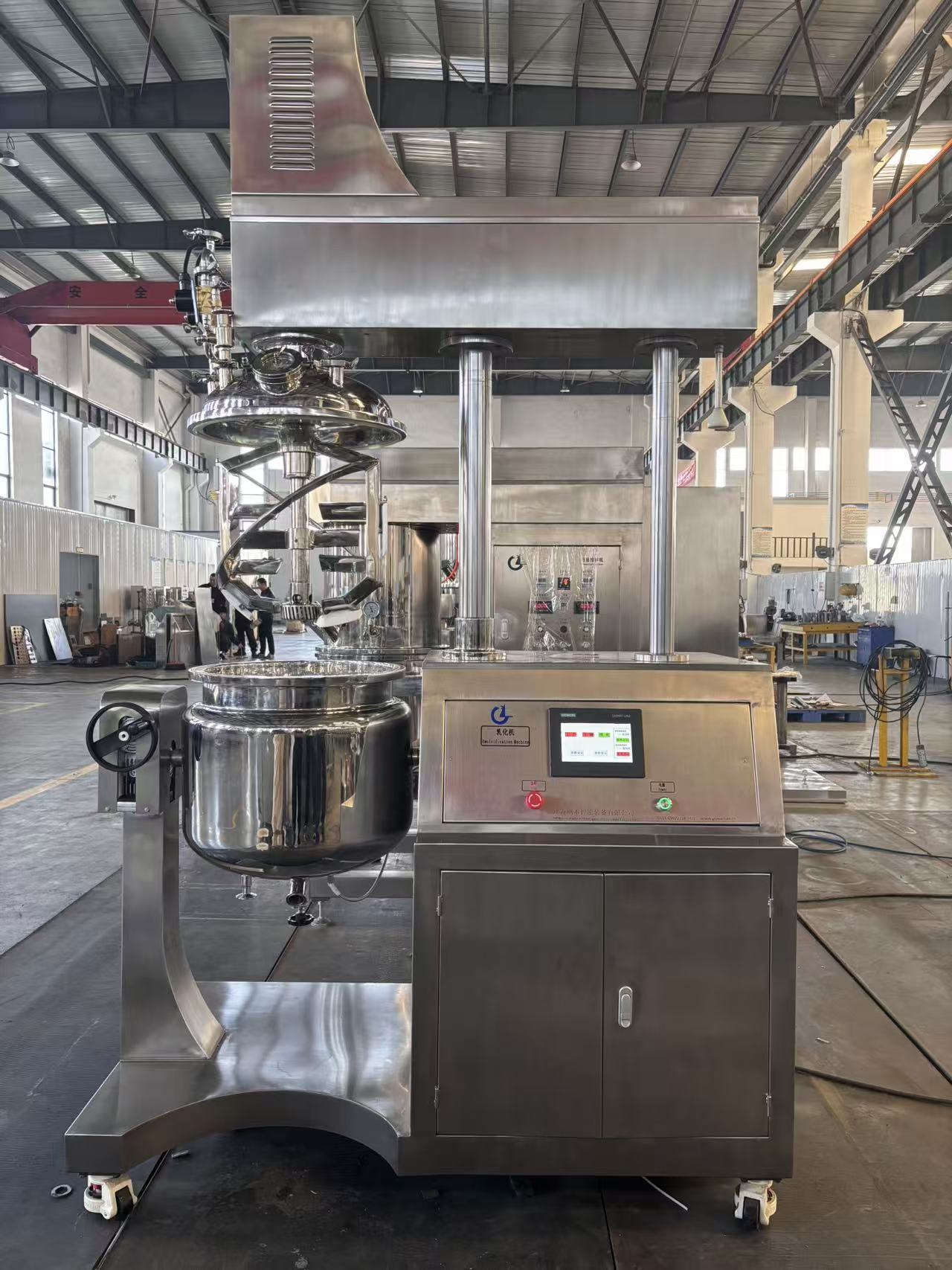 Sep 09,2026
Vacuum Emulsifying Mixer Technological Innovation: Recent Progress and Future Trends
-
 Sep 03,2026
Beyond Ordinary Mixing: How Vacuum Homogenizer Mixers Master Ultra-Fine Emulsification


