
 English
 Russian
 French
 Spanish
 Portuguese
 Korean
 Japanese
 Thai
ThaiFrom Raw Material to Finished Product: How Vacuum Emulsifying Machine Reduces 30% Production Loss Through Closed-Loop System
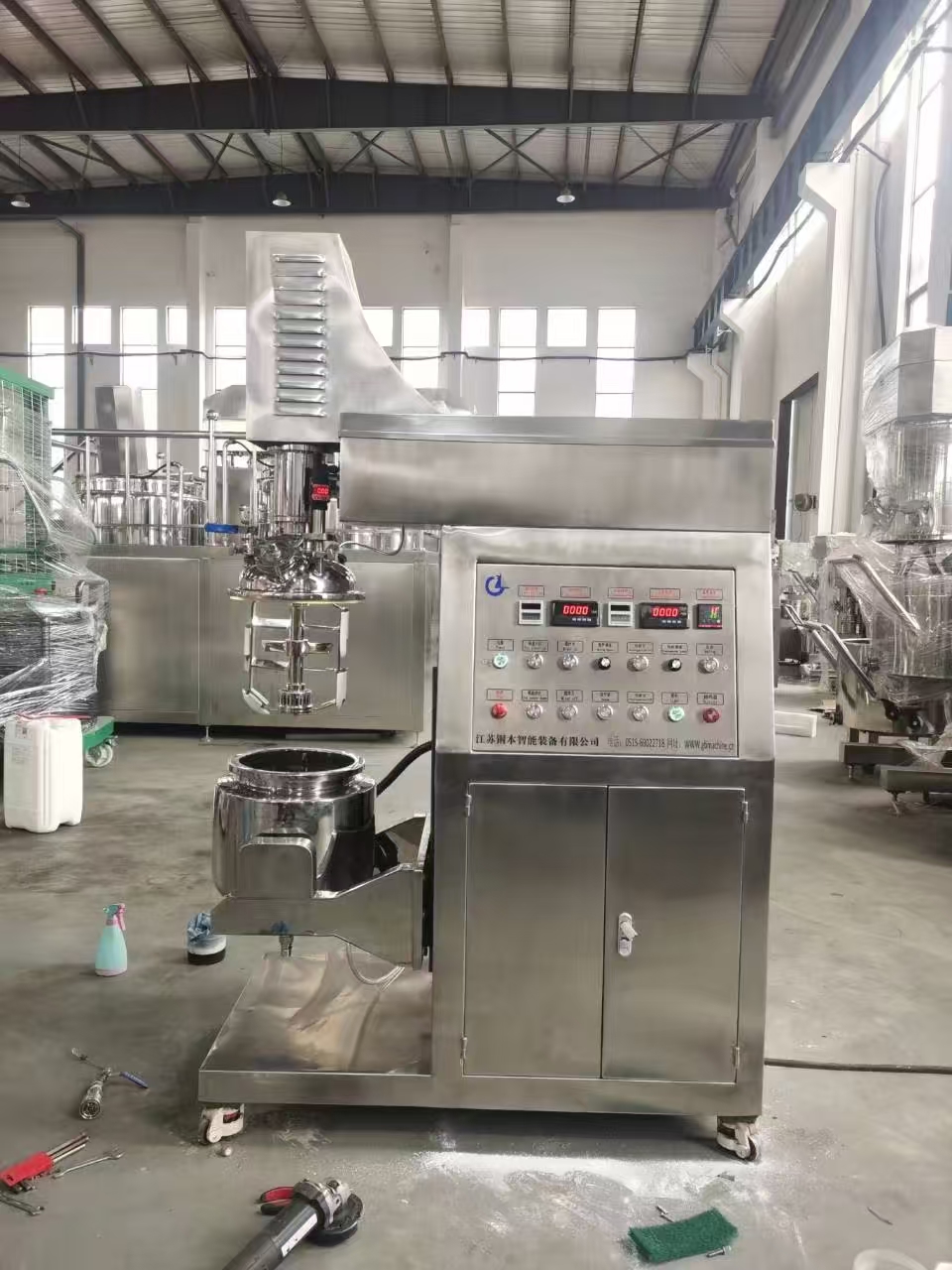
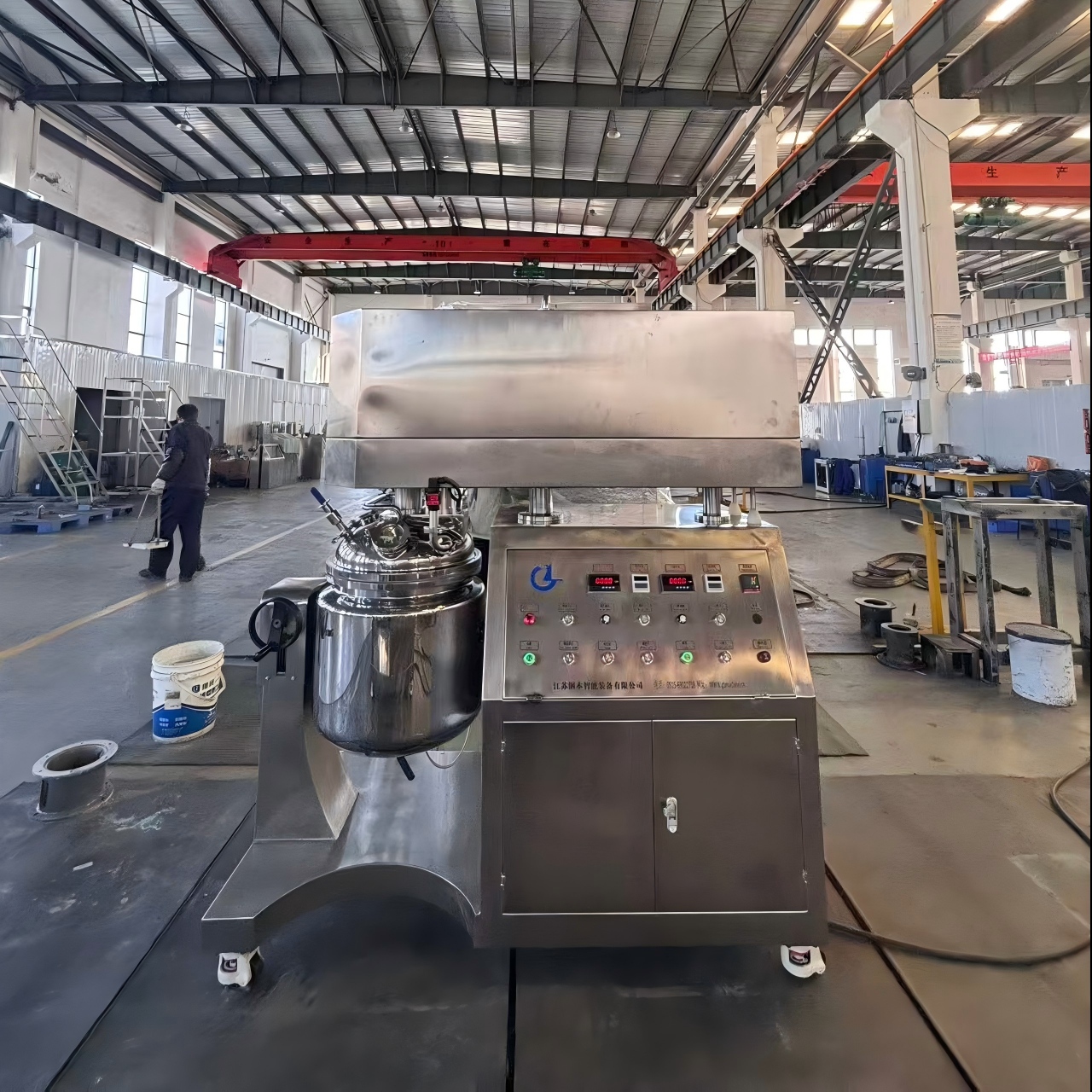
In industries with extremely high requirements for product fineness and stability, such as cosmetics, pharmaceuticals and fine chemicals, the loss in the emulsification production process has long been a core pain point that restricts production costs and product yield. In traditional open emulsification production, problems like splashing and residue of materials, deterioration caused by air mixing, and residual waste from multi-link transportation often keep the overall production loss at a high level. The vacuum emulsifying machine, relying on the technical innovation of the full-process closed-loop system, realizes precise management and control from the whole link of raw material feeding, homogeneous emulsification to finished product output. It can help manufacturing enterprises reduce the overall production loss by 30%, providing a practical technical path for the industry to cut costs and increase efficiency.
Traceability of Loss Pain Points in Traditional Emulsification Production
In the traditional emulsification production process without closed-loop design, losses are often scattered in various production links, making centralized control difficult. First, in the open feeding link, when workers pour powder or liquid raw materials, it is very easy for materials to splash and adhere to the outer wall of the container. Especially for high-value active ingredients, flavors and fragrances, the scattered loss in a single feeding can account for 2% to 5% of the feeding amount. Secondly, during the open homogenization process, a large amount of air will be mixed into the material system, which will not only generate a large number of foams in the material, prolong the subsequent defoaming waiting time, but also cause the deterioration of some easily oxidized raw materials. This part of unqualified materials can only be discarded, further pushing up production losses.
At the same time, under the traditional production mode, the oil phase tank, water phase tank and main emulsification tank usually transport materials through open pipelines. The residual materials on the inner wall of the pipeline and the bottom of the tank cannot be effectively pushed to the next link. After each batch of production, a large amount of residual materials will adhere to the inner wall of the equipment, which can only be cleaned with a large amount of clean water. This not only wastes raw materials, but also increases the cost of wastewater treatment. According to industry statistics, the comprehensive production loss of traditional open emulsification production lines is generally between 15% and 20%, and the production loss of some high-viscosity products even exceeds 25%. The waste of a large number of raw materials directly squeezes the profit margin of enterprises.
Core Loss Reduction Technical Logic of Full Closed-Loop System
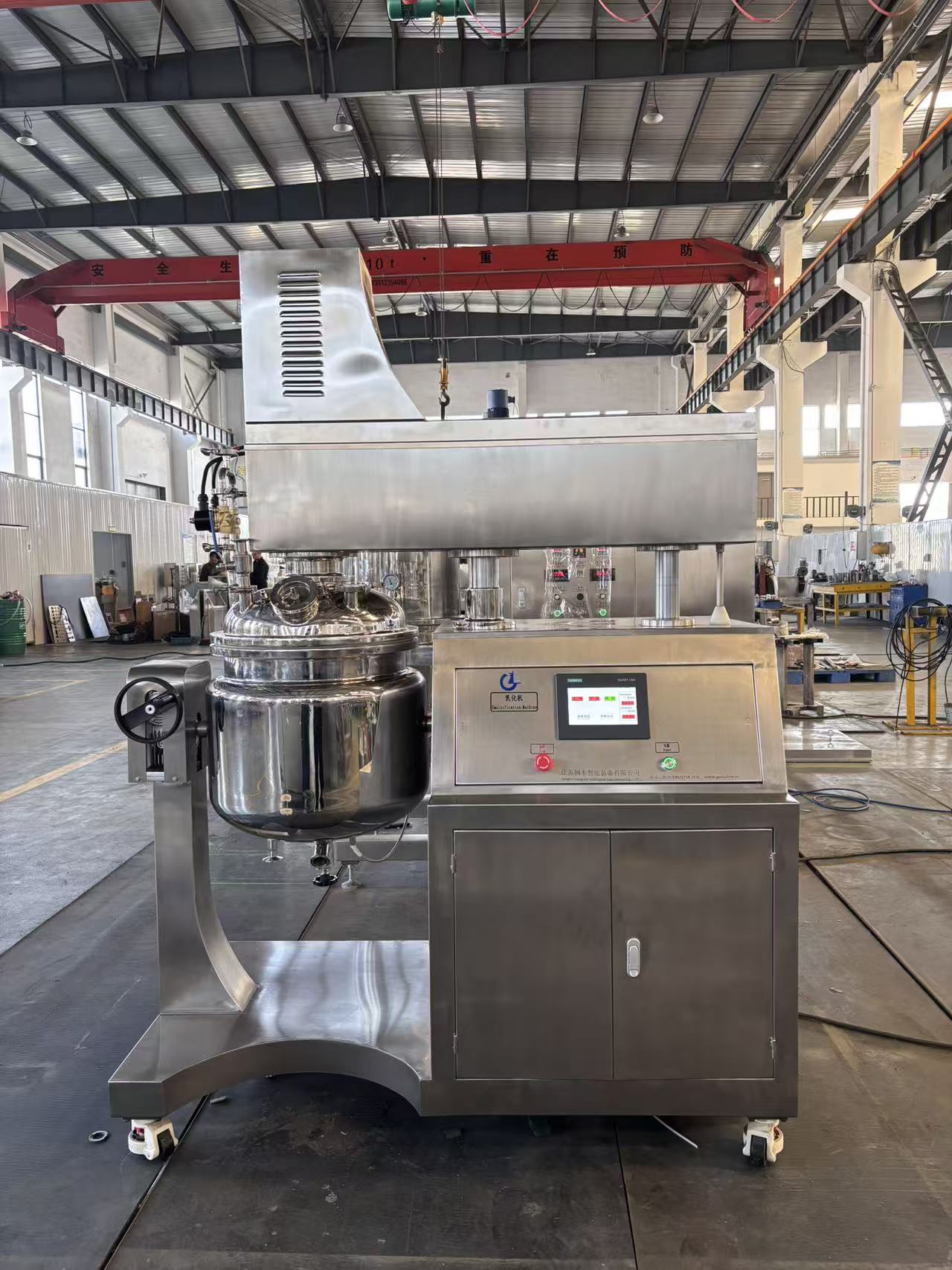
The closed-loop system of the vacuum emulsifying machine integrates all production links such as raw material pretreatment, transportation, homogeneous emulsification, defoaming and temperature control into a completely closed system. It fundamentally cuts off the ineffective contact between the external environment and materials, and realizes precise loss control through technical designs in multiple dimensions.
First is the closed-loop design of vacuum negative pressure feeding. The equipment uses the preset vacuum degree inside the main emulsification tank to suck the oil phase and water phase raw materials into the tank through closed pipelines. The entire feeding process is completed in a closed environment, completely avoiding the material splashing and scattering caused by manual feeding. At the same time, this negative pressure suction method can also make the raw materials form a preliminary mixed flow in the process of entering the tank, reducing the adhesion and residue of raw materials on the inner wall of the pipeline. The feeding link alone can reduce the raw material loss by about 10%.
The second is the closed-loop circulation in the chamber of high-shear homogenization. The internal high-shear homogenizer of the equipment provides hundreds of thousands of times of hydraulic shearing, centrifugal extrusion, impact and tearing for the material every minute in the narrow gap between the rotor and the stator, so that the material forms a continuous high-speed circulating flow in the tank. Under this circulation mode, all materials can repeatedly pass through the homogenization working surface, and there will be no local material stagnation and adhesion to the dead angle of the tank wall. It can not only quickly refine the dispersed phase particles to the sub-micron level, but also keep the high-viscosity materials in a uniform flowing state, greatly reducing the residual amount of materials inside the equipment
Furthermore, it is the construction of a full-process vacuum closed environment. The entire emulsification production process is always carried out in a controlled sub-atmospheric pressure environment, which fundamentally prevents air from being mixed into the material system. It not only eliminates the basic conditions for foam generation, reduces the material waste caused by foam overflow, but also avoids the contact between easily oxidized raw materials and air to cause deterioration, greatly reducing the scrap rate of unqualified products. At the same time, the jacket temperature control module matched with the closed-loop system can accurately complete the heating and cooling treatment of materials in a closed environment, avoiding the evaporation loss of water during the temperature control process. For products with extremely high requirements for solid content accuracy, the loss control effect in this part is particularly significant.
Practical Implementation Effect of Full-Link Loss Reduction
In the complete production cycle from raw materials entering the closed-loop system of the equipment to the final finished product output, the loss reduction effect of the vacuum emulsifying machine can cover every production detail. In the unloading link after production, relying on the residual positive pressure push inside the system, combined with the streamlined design without dead angle at the bottom of the tank, the vast majority of finished materials can be smoothly discharged from the discharge port, and the proportion of residual materials adhered to the inner wall of the tank and the pipeline is compressed to an extremely low level. Some optimized closed-loop systems can also use a small amount of compressed air to purge, completely push the residual materials in the pipeline to the finished product collection container, and there will be almost no problem that the residual materials in the pipeline cannot be used in traditional production lines.
According to a large number of actual production data in the industry, the vacuum emulsifying machine with closed-loop system can stably reduce the overall production loss by 30% compared with the traditional open emulsification equipment: the loss in the feeding link is reduced by about 8%, the loss caused by material deterioration and foam overflow in the homogenization emulsification link is reduced by about 12%, and the loss in the unloading and equipment residual links is reduced by about 10%. For cosmetics or ointment manufacturing enterprises with an annual output of 1,000 tons, the reduction of raw material loss alone can save hundreds of thousands or even millions of yuan in production costs every year. At the same time, the stability and fineness of the products have been improved synchronously, and the shelf life of the products can also be effectively extended.
In addition, the closed-loop system has also greatly reduced the amount of cleaning water and wastewater discharge after production, lowering the cost of subsequent environmental protection treatment. It makes the entire emulsification production process realize high material utilization, and also conforms to the industry development trend of green production. This full-process closed-loop management and control mode from raw materials to finished products is becoming the core technical direction for the emulsification manufacturing industry to reduce costs and increase efficiency.
News
- Latest News
- Solutions
- FAQ
Recommend Products
-
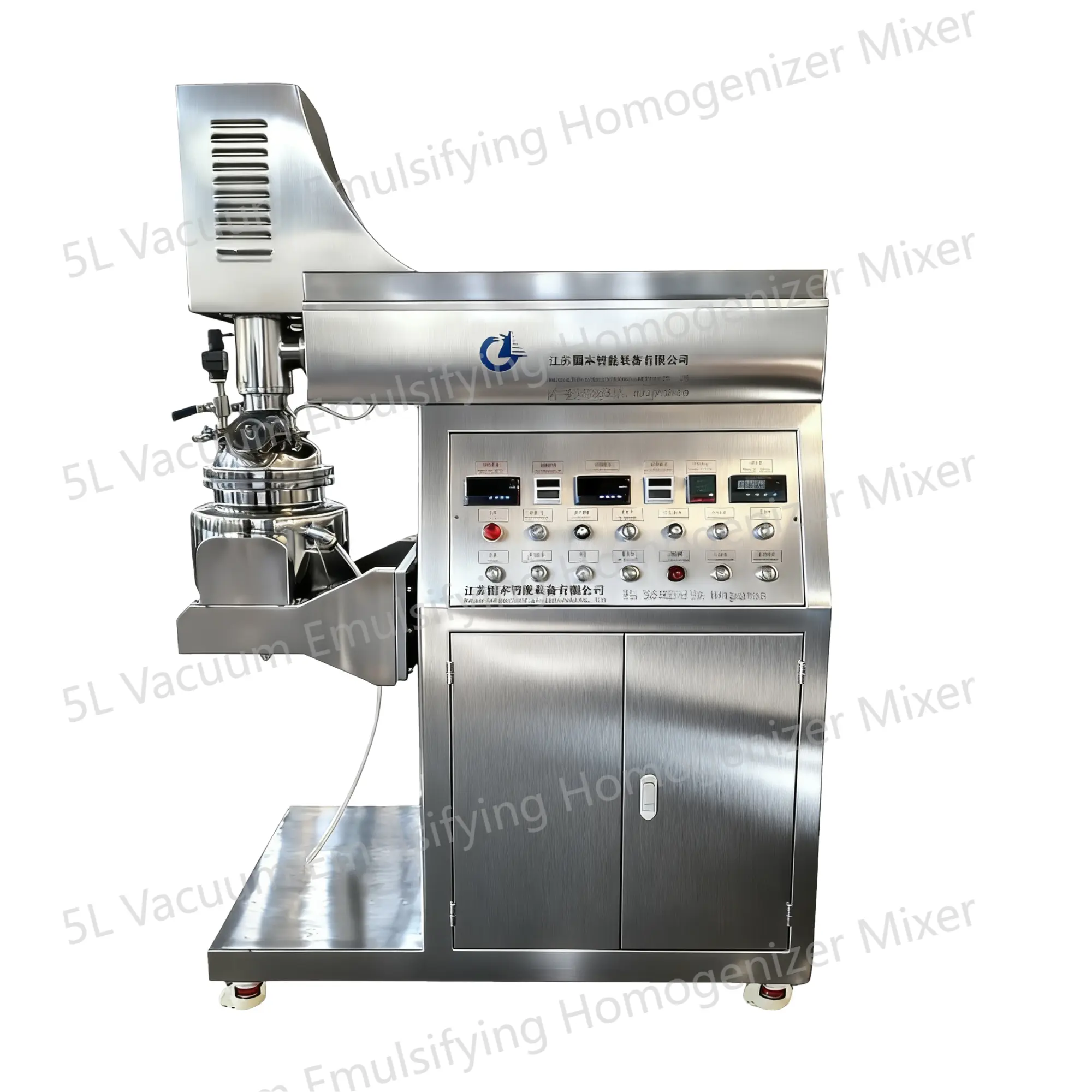 5L Vacuum Emulsifying Homogenizer Mixer
The 5L vacuum emulsifying mixer is a device designed for emulsifying and mixing various substances in a vacuum environment. This equipment is equipped with a mixing tank with a capacity of 5 liters and is widely applied in industries such as food, pharmaceuticals, cosmetics, and pesticides.
-
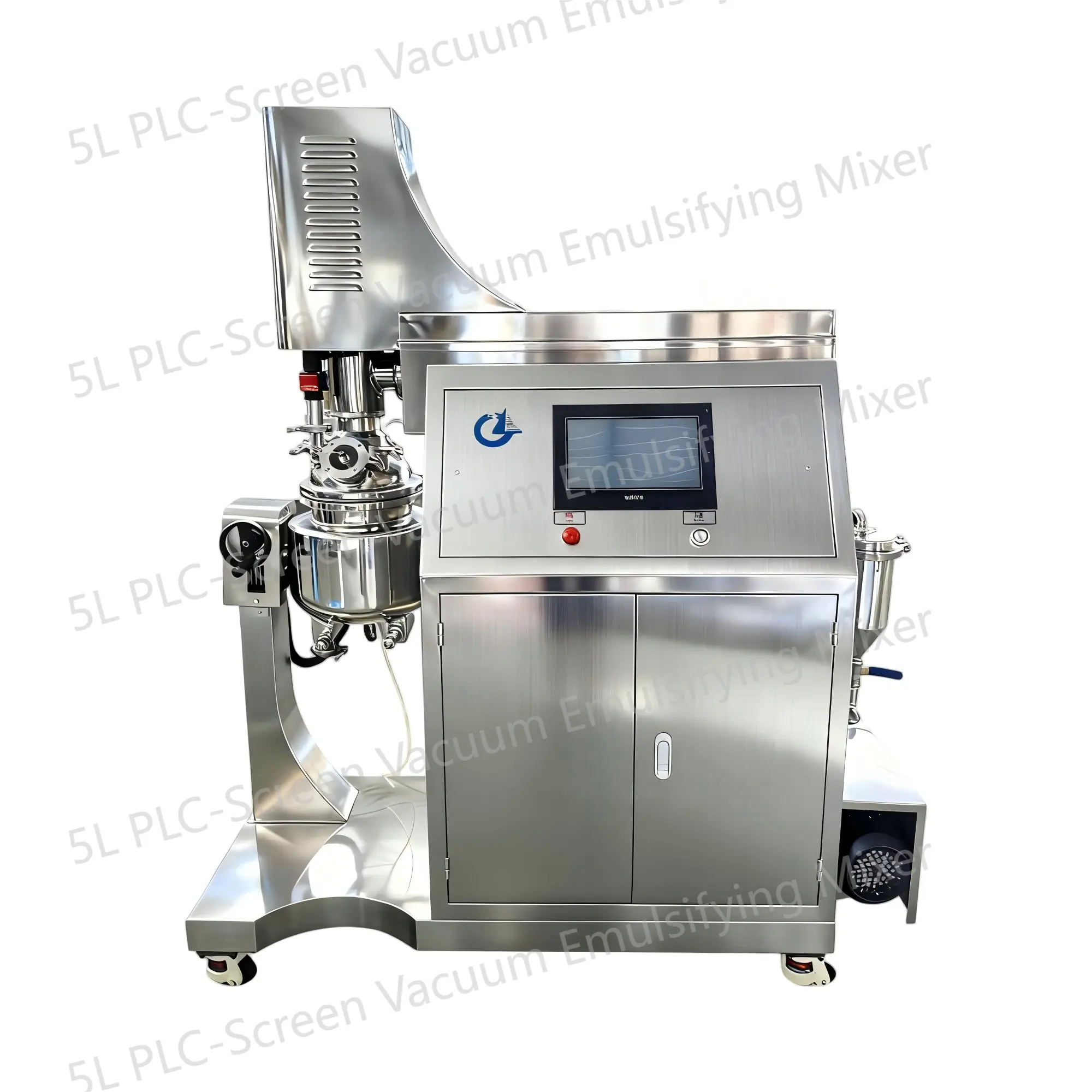 5L PLC-Screen Vacuum Emulsifying Mixer
The 5L PLC-Screen Vacuum Emulsifying Mixer is a device designed for emulsifying and mixing various substances in a vacuum environment. This equipment is equipped with a mixing tank with a capacity of 5 liters and is widely applied in industries such as food, pharmaceuticals, cosmetics, and pesticides.
-
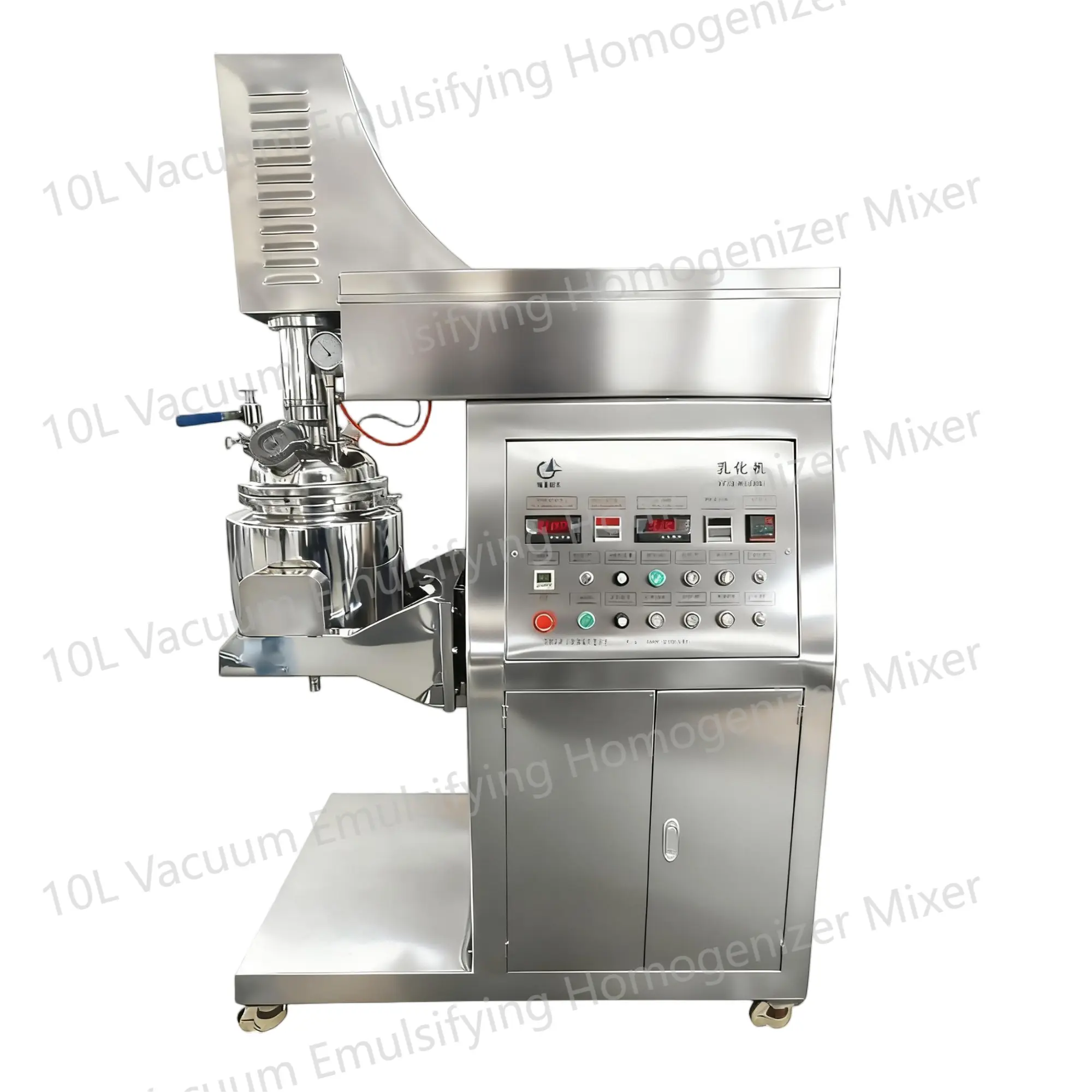 10L Vacuum Emulsifying Homogenizer Mixer
The 10L Vacuum Emulsifying Mixer is a device used for emulsifying and mixing various substances in a vacuum environment. It is commonly used in industries such as food, cosmetics, and pharmaceuticals.